

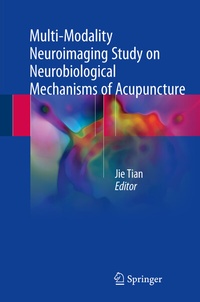
Multi-Modality Neuroimaging Study on Neurobiological Mechanisms of Acupuncture
Description

This book introduces essential advances in acupuncture studies using multi-modality neuroimaging, which provides insights into how specific brain networks are involved in acupuncture effects in humans. Stimulating different acupoints to treat various clinical conditions is usually accompanied by multi-dimensional physiological as well as psychological responses, which are regulated by the central nervous system. The book addresses disease-specific neural correlates and acupuncture-targeted regulatory encoding in the brain, and explains the temporal-spatial encoding in brain networks to clarify the acupuncture mechanisms. By highlighting the targeting mechanisms of typical indications of acupuncture, this book provides a scientific explanation for acupuncture therapy.
Reviews / Votes
"This is a very interesting use of assessment tools, as well as modern knowledge of the brain and its functions, to assess an ancient medical model. . The audience includes any medical providers or students with an interest in the efficacy of TCM . . The book incorporates a depth of knowledge of both paradigms of thought and synthesizes the science of both. ... I love this book and will incorporate its contents into classes that I teach." (Barbara J. Gosse, Doody's Book Reviews, November, 2017)More details
Other editions
Additional editions
Person
Editor Jie Tian is a Professor and Director of Key Laboratory of Molecular Imaging, Institute of Automation, Chinese Academy of Sciences, Beijing.
Content
Early Studies of acupuncture using fMRI.- Temporospatial encoding of acupuncture's effects in the brain.- Targeting mechanisms of typical indications of acupuncture.- Findings of acupuncture mechanisms using EEG and MEG.- Prospects of acupuncture research in the future.
