

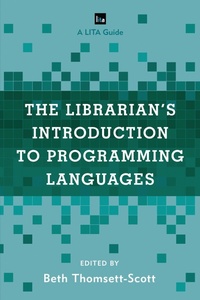
The Librarian's Introduction to Programming Languages
A LITA Guide
1st Edition
Published on 21. June 2016
1 pages
979-8-216-21567-7 (ISBN)
Description

The Librarian's Introduction to Programming Languages presents case studies and practical
applications for using the top programming languages in library and information settings. While
there are books and Web sites devoted to teaching programming, there are few works that
address multiple programming languages or address the specific reasons why programming is a
critical area of learning for library and information science professionals.
There are many books on programming languages but no recent items directly written for librarians that span a variety of programs. Many practicing librarians see programming as something for IT people or beyond their capabilities. This book will help these librarians to feel comfortable discussion programming with others by providing an understanding of when the language might be useful, what is needed to make it work, and relevant tools to extend its application. Additionally, the inclusion of practical examples lets readers try a small "app" for the language. This also will assist readers who want to learn a language but are unsure of which language would be the best fit for them in terms of learning curve and application.
Languages covered are:
JavaScriptPERLPHPSQLPythonRubyCC#Java
This book is designed to provide a basic working knowledge of each language presented, case
studies which show the programming language used in real ways and resources for exploring
each language in more detail.
applications for using the top programming languages in library and information settings. While
there are books and Web sites devoted to teaching programming, there are few works that
address multiple programming languages or address the specific reasons why programming is a
critical area of learning for library and information science professionals.
There are many books on programming languages but no recent items directly written for librarians that span a variety of programs. Many practicing librarians see programming as something for IT people or beyond their capabilities. This book will help these librarians to feel comfortable discussion programming with others by providing an understanding of when the language might be useful, what is needed to make it work, and relevant tools to extend its application. Additionally, the inclusion of practical examples lets readers try a small "app" for the language. This also will assist readers who want to learn a language but are unsure of which language would be the best fit for them in terms of learning curve and application.
Languages covered are:
JavaScriptPERLPHPSQLPythonRubyCC#Java
This book is designed to provide a basic working knowledge of each language presented, case
studies which show the programming language used in real ways and resources for exploring
each language in more detail.
More details
Other editions
Additional editions
Book
06/2016
Rowman & Littlefield Publishers
€147.07
Shipment within 10-20 days
Person
Beth Thomsett-Scott is Interim Head of the Discovery Park Library at the University of North Texas.
