

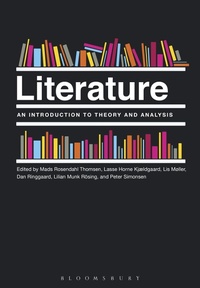
Literature: An Introduction to Theory and Analysis
1st Edition
Published on 9. March 2017
400 pages
978-1-4742-7199-8 (ISBN)
Description

How does literature work? And what does it mean? How does it relate to the world: to politics, to history, to the environment? How do we analyse and interpret a literary text, paying attention to its specific poetic and fictitious qualities? This wide-ranging introduction helps students to explore these and many other essential questions in the study of literature, criticism and theory. In a series of introductory chapters, leading international scholars present the fundamental topics of literary studies through conceptual definitions as well as interpretative readings of works familiar from a range of world literary traditions.
In an easy-to-navigate format, Literature: An Introduction to Theory and Analysis covers such topics as:
·Key definitions - from plot, character and style to genre, trope and author
·Literature's relationship to the surrounding world - ethics, politics, gender and nature
·Modes of literature and criticism - from books to performance, from creative to critical writing
With annotated reading guides throughout and a glossary of major critical schools to help students when studying, revising and writing essays, this is an essential introduction and reference guide to the study of literature at all levels.
The companion website to the book litdh.au.dk focuses on digital humanities and literary studies. For each topic in the book you will find an introduction to computational aspects of the topic, approaches for both newcomers and advanced users, and references to tools, scripts and articles. The website also has a comprehensive and well-structured reference page.
In an easy-to-navigate format, Literature: An Introduction to Theory and Analysis covers such topics as:
·Key definitions - from plot, character and style to genre, trope and author
·Literature's relationship to the surrounding world - ethics, politics, gender and nature
·Modes of literature and criticism - from books to performance, from creative to critical writing
With annotated reading guides throughout and a glossary of major critical schools to help students when studying, revising and writing essays, this is an essential introduction and reference guide to the study of literature at all levels.
The companion website to the book litdh.au.dk focuses on digital humanities and literary studies. For each topic in the book you will find an introduction to computational aspects of the topic, approaches for both newcomers and advanced users, and references to tools, scripts and articles. The website also has a comprehensive and well-structured reference page.
More details
Edition
1. Auflage
Language
English
Place of publication
London
United Kingdom
Publishing group
Bloomsbury Publishing PLC
Target group
College/higher education
Illustrations
5 b/w illustrations
ISBN-13
978-1-4742-7199-8 (9781474271998)
Copyright in bibliographic data and cover images is held by Nielsen Book Services Limited or by the publishers or by their respective licensors: all rights reserved.
Schweitzer Classification
Other editions
Additional editions
Mads Rosendahl Thomsen | Lasse Horne Kjaeldgaard | Lis Moller
Literature: An Introduction to Theory and Analysis
An Introduction to Theory and Analysis
Book
03/2017
Bloomsbury Academic
€42.50
Shipment within 15-20 days
Persons
Mads Rosendahl Thomsen is Professor with Special Responsibilities of Comparative Literature at Aarhus University, Denmark.
Lasse Horne Kjældgaard is Professor of Danish Literature at Roskilde University, Denmark
Lis Møller is Associate Professor of Comparative Literature at Aarhus University, Denmark.
Dan Ringgaard is is Professor of Professor of Scandinavian Literature at Aarhus University, Denmark.
Lilian Munk Rösing is Associate Professor of Comparative Literature at the University of Copenhagen, Denmark.
Peter Simonsen is Professor of European Literature at the University of Southern Denmark.
Lasse Horne Kjældgaard is Professor of Danish Literature at Roskilde University, Denmark
Lis Møller is Associate Professor of Comparative Literature at Aarhus University, Denmark.
Dan Ringgaard is is Professor of Professor of Scandinavian Literature at Aarhus University, Denmark.
Lilian Munk Rösing is Associate Professor of Comparative Literature at the University of Copenhagen, Denmark.
Peter Simonsen is Professor of European Literature at the University of Southern Denmark.
Content
Foreword
J. Hillis Miller, University of California Irvine
Introduction
Thomsen et el, Aarhus University
1. Literature
Lasse Horne Kjældgaard, Peter Simonsen, Roskilde University and University of Southern Denmark
2. Interpretation
Jesper Gulddal, Newcastle, AU
3. Genre
Eva Hättner Aurelius, Lund University
4. Narrative
Stefan Iversen, Aarhus University
5. Character
Lis Møller, Aarhus University
6.Narrator
Jan Alber, Freiburg University
7. Style
Lilian Munk Rösing, Copenhagen University
8. Sensation,
Isak Winkel Holm, Copenhagen University
9. Rhytm.
Dan Ringgaard, Aarhus University
10. Tropes
Christoph Bode, Ludwig-Maximilians-Universität München
11. Intertext
Elisabeth FriisLund University
12. Author
Jon Helt Haarder, University of Southern Denmark
13. Reader
Winfried Fluck, Freie Universität
14. History
Mads Rosendahl Thomsen,Aarhus University
15. Ethics
Lasse Horne Kjældgaard, Roskilde University
16. Politics
Jakob Ladegaard, Aarhus University
17. Sex
Lilla Toke and Karen Weingarten, Stony Brook and CUNY
18. Ethnicity
Tabish Khair, Aarhus University
19. Desire
Lilian Munk Rösing, Copenhagen University
20. Nature
Peter Mortensen, Aarhus University
21. Place
Frederik Tygstrup, Copenhagen University
22. Things
Karin Sanders, UC Berkeley
23. Mobility
Søren Frank, University of Southern Denmark
24. Memory
Ann Rigney, Utrecht University
25. Archives
Dennis Tenen, Columbia University
26. Books
Tore Rye Andersen, Aarhus University
27. Adaptation
Kiene Brillenburg, Utrecht University
28. Art
Peter Simonsen, University of Southern Denmark
29. Performance
Claire Warden, DeMontfort University
30. Translation
Karen Emmerich, Princeton University
31. Creative writing
Kiene Brillenburg, Utrecht University
32. Critical writing
Gloria Fisk, CUNY
33. Quality
Susan Bassnett, University of Warwick
Index of schools
Bibliography
J. Hillis Miller, University of California Irvine
Introduction
Thomsen et el, Aarhus University
1. Literature
Lasse Horne Kjældgaard, Peter Simonsen, Roskilde University and University of Southern Denmark
2. Interpretation
Jesper Gulddal, Newcastle, AU
3. Genre
Eva Hättner Aurelius, Lund University
4. Narrative
Stefan Iversen, Aarhus University
5. Character
Lis Møller, Aarhus University
6.Narrator
Jan Alber, Freiburg University
7. Style
Lilian Munk Rösing, Copenhagen University
8. Sensation,
Isak Winkel Holm, Copenhagen University
9. Rhytm.
Dan Ringgaard, Aarhus University
10. Tropes
Christoph Bode, Ludwig-Maximilians-Universität München
11. Intertext
Elisabeth FriisLund University
12. Author
Jon Helt Haarder, University of Southern Denmark
13. Reader
Winfried Fluck, Freie Universität
14. History
Mads Rosendahl Thomsen,Aarhus University
15. Ethics
Lasse Horne Kjældgaard, Roskilde University
16. Politics
Jakob Ladegaard, Aarhus University
17. Sex
Lilla Toke and Karen Weingarten, Stony Brook and CUNY
18. Ethnicity
Tabish Khair, Aarhus University
19. Desire
Lilian Munk Rösing, Copenhagen University
20. Nature
Peter Mortensen, Aarhus University
21. Place
Frederik Tygstrup, Copenhagen University
22. Things
Karin Sanders, UC Berkeley
23. Mobility
Søren Frank, University of Southern Denmark
24. Memory
Ann Rigney, Utrecht University
25. Archives
Dennis Tenen, Columbia University
26. Books
Tore Rye Andersen, Aarhus University
27. Adaptation
Kiene Brillenburg, Utrecht University
28. Art
Peter Simonsen, University of Southern Denmark
29. Performance
Claire Warden, DeMontfort University
30. Translation
Karen Emmerich, Princeton University
31. Creative writing
Kiene Brillenburg, Utrecht University
32. Critical writing
Gloria Fisk, CUNY
33. Quality
Susan Bassnett, University of Warwick
Index of schools
Bibliography
