

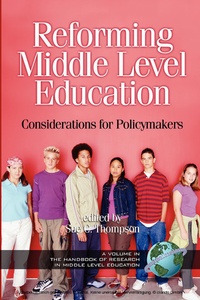
Reforming Middle Level Education
Considerations for Policymakers
1st Edition
Published on 1. June 2004
277 pages
978-1-60752-947-7 (ISBN)
Description

This volume of The Handbook of Research in Middle Level Education is a significant contribution to the literature on middle level schools because it is written specifically with policymakers in mind. Middle level scholars have illuminated the most important issues concerning the education of young adolescents of which policymakers must be knowledgeable. It is only by having informed policymakers that middle level schools can truly thrive and provide the kind of education that every young adolescent deserves. The future of our country depends on it.
All prices
More details
Other editions
Additional editions

Book
01/2004
Information Age Publishing
€122.60
Article not available at the moment
Content
- Cover
- Half Title
- Series
- Full Title
- Copyright
- Contents
- Foreword
- Introduction: Policymakers, Please Think on These "Things
- 1: Creating High-Performance Middle Schools: Recommendations from Research
- Introduction
- The Recommendations of Professional Organizations and High-Performing Middle Schools
- Implementing The Recommendations to Create High-Performing Middle Schools: "If You Build It, They Will Come
- Research That Supports The Reform of Middle Schools Utilizing Turning Points' Recommendations
- What Seems to MAnER in Creating High Performing Middle Schools: Recommendations as "Necessary but not Sufficient
- Discussion
- References
- 2. The Importance of Having a Highly Qualified Principal in Every Middle Grades School
- Interpersonal Skills that Build Relationships
- Consensus Builder and Motivator
- Results-Drive and Data-Informed
- Integrator of School and Community Service
- Policy Developer and Participant
- Conclusion
- References
- 3: Creating Academically Challenging Middle Level Schools for Every Child
- Introduction
- A Brief History of Educational Accountability
- Accountability and U.S. Schools
- Post World War II Accountability
- Contemporary Accountability Approaches
- The High-Performing Middle Level School
- Implications for The Policy Debate
- The Uniqueness of the Middle Grades' Student
- Be Clear about the Targets, Allow the Means to Vary
- Accountability Must Focus on Individual Students
- Provide Professional Development to SupportHigh-Performance
- The Requirement for Self-Accountability
- Concluding Discussion
- References
- 4: Creating Quality in the Middle School Curriculum
- Introduction
- A General Education
- Framed for Young Adolescents
- Democracy and Dignity
- Problems and Projects
- Prospects for a High Quality Middle School Curriculum
- References
- 5: Creating Socially Equitable Middle Grades Schools
- Introduction
- The Perils of Inequitable Middle Grades Schools
- The Kind of Middle Schools We Need
- Eliminating Student Disengagement: A New Pedagogy
- Inclusive, Collaborative Cultures
- Middle Schools for Social Equity
- References
- 6. The Role of Accountability in Middle Level Schools
- Introduction
- The Real Meaning of Accountability
- The Current State of Affairs: A Misuse (Abuse) of Accountability
- No One Measure can Adequately Assess A Student's Knowledge
- The Unreliability of High Stakes Tests
- The Untold Story: Pushouts and Dropouts
- The Stifling Impact on Teaching and Learning
- High Stakes Tests Encourage a Culture of Blame
- Is this What The Public Wants?
- Constructing a System to Reflect The True Meaning of Accountability
- Conclusion
- References
- 7: The Role of Teacher Preparation, Licensure, and Retention in Creating High-Performing Middle Schools
- High-Performing Middle Schools
- Research on High Performing Middle Schools
- Preparing Teachers for The Middle School
- Essential Teacher Preparation Program Components
- Specialized Middle Level Teacher Licensure
- The Role of Policymakers
- No Child Left Behind Legislation
- Middle Level Teacher Licensure and Political Compromise
- Retaining Teachers for High-Performing Middle Schools
- Teacher Retention and School Culture
- Conclusion
- References
- 8: Lessons Learned from Comprehensive School Reform Models
- Background and History of CSR
- Program Impact
- The Development of Middle-Grades Models
- Lessons Learned
- Lesson #1. Ensure Staff Buy-In!
- Lesson #2. It's a Partnership, not an "Intervention
- Lesson #3. Establish the Preconditions for Change
- Lesson #4. Focus, Focus, Focus!
- Lesson #5. The Nature and Extent of the External Support Matters
- Lesson #6. Schools Must Build the Internal Capacity for Continuous Improvement
- Lesson #7. Districts Must Provide the Necessary Resources and Support
- Conclusion
- References
- 9: State-Level Policy Development
- Introduction
- Foundational Ideas
- The New York State Board of Regents
- Background
- Raising Consciousness and Documenting Need
- Informing and Educating the Policymakers
- Defining Middle-Level Education
- Establishing A Research Base
- Explaining Grade Configuration Effects on Student Achievement
- Differentiating The Middle Grades from Other Grades
- Sharing Next Steps
- Securing Buy-In from The Larger Educational Community
- Sustaining The Momentum
- Sharpening The Focus
- Engaging The Regents as Leaders in The Effort to Strengthen Middle Grades Education
- Crafting Language for A Draft Policy Statement
- Soliciting Public Reaction to The Draft Policy Statement Language
- Honoring The Results of The Public Engagement Process
- Approving The Regents Policy Statement on Middle-Level Education
- Reflecting on The Process
- Supporting Young Adolescents:Regents Policy Statement onMiddle-Level EducationJuly 2003
- Introduction
- Philosophy, Mission, and Vision
- Educational Program
- Organization and Structure
- Classroom Instruction
- Educational Leadership
- Student Academic and Personal Support
- Professional Learning
- Summary
- 10: Creating Common Middle-Level Knowledge: A New York Story
- Introduction
- Past Practice: Gaps at The Middle Level
- An Instructional Model: The Academy and Essential Elements
- Professional Development: Sharing the Message Locally
- Above And Beyond: The Leadership
- Wanted: Administrators Appropriate for Middle Level
- Specific Administrative Skills
- Creating Common Vision and Shared Leadership
- The Future: New York State's Plan
- References
- 11: A New Vision for Professional Learning
- Introduction
- Results-Driven
- Job-Embedded
- Standards-Based
- Standards for Staff Development Promote Quality
- Context Standards
- Process Standards
- Content Standards
- Connecting Staff Development and Student Results
- Award Winning School Districts and Schools: Making Connections
- Strategies for Advancing Quality Staff Development States
- School Boards of Education
- References
- 12: What of the Future?
- Introduction
- Major Trends Through The Decades
- Middle Grades: The Century Awaits
- Conclusion
- References
- Appendix
- Schools to Watch Criteria
- About the Authors

