

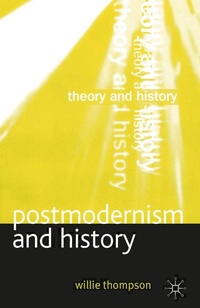
Postmodernism and History
1st Edition
Published on 14. March 2017
176 pages
978-1-350-31748-2 (ISBN)
Description

In this clear, jargon-free guide, Willie Thompson provides a concise introduction to postmodernist theory and its significant impact on the study of history. Although this is a hotly-debated topic, with much of the current literature being both polemical and inaccessible to the beginner, Thompson offers straightforward explanations of complex concepts and shows how the debates are relevant to students' own work.
Postmodernism and History:
- Considers the origins of postmodernism in both the ideas of poststructuralist thinkers, particularly Michel Foucault, and the political and cultural developments of the late 20th century
- Explores themes such as the treatment of historical evidence, problems of historical representation, feminist history, ethical judgements on past events, and the validity of metanarrative or long-term historical explanation
- Discusses critically the work of a number of current and recent practicing historians - including Joan Scott, Roy Porter, Patrick Joyce and James Vernon - who have used postmodernist ideas in their writing
- Enquires how far postmodern thought has been absorbed into mainstream historiography
Postmodernism and History:
- Considers the origins of postmodernism in both the ideas of poststructuralist thinkers, particularly Michel Foucault, and the political and cultural developments of the late 20th century
- Explores themes such as the treatment of historical evidence, problems of historical representation, feminist history, ethical judgements on past events, and the validity of metanarrative or long-term historical explanation
- Discusses critically the work of a number of current and recent practicing historians - including Joan Scott, Roy Porter, Patrick Joyce and James Vernon - who have used postmodernist ideas in their writing
- Enquires how far postmodern thought has been absorbed into mainstream historiography
More details
Series
Edition
1. Auflage
Language
English
Place of publication
London
United Kingdom
Publishing group
Bloomsbury Publishing PLC
Target group
Professional and scholarly
College/higher education
ISBN-13
978-1-350-31748-2 (9781350317482)
Copyright in bibliographic data and cover images is held by Nielsen Book Services Limited or by the publishers or by their respective licensors: all rights reserved.
Schweitzer Classification
Person
WILLIE THOMPSON was Professor of Contemporary History at Glasgow Caledonian University and is currently Visiting Professor of History at Northumbria University in Newcastle.
Content
Preface and Acknowledgements
Introduction
What is 'Postmodernism'?
Status of Historical Evidence
Problems of Representation
Representation, Narrative and Emplotment
Michel Foucault Representation and Power
Representation and Relativism, Cognitive and Moral
Representation, Metanarratives and Microhistories
Conclusion
Glossary
Notes
Further Reading
Index.
Introduction
What is 'Postmodernism'?
Status of Historical Evidence
Problems of Representation
Representation, Narrative and Emplotment
Michel Foucault Representation and Power
Representation and Relativism, Cognitive and Moral
Representation, Metanarratives and Microhistories
Conclusion
Glossary
Notes
Further Reading
Index.
