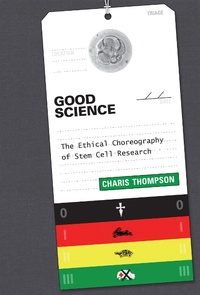
Good Science
Description

After a decade and a half, human pluripotent stem cell research has been normalized. There may be no consensus on the status of the embryo—only a tacit agreement to disagree—but the debate now takes place in a context in which human stem cell research and related technologies already exist. In this book, Charis Thompson investigates the evolution of the controversy over human pluripotent stem cell research in the United States and proposes a new ethical approach for "good science.” Thompson traces political, ethical, and scientific developments that came together in what she characterizes as a "procurial” framing of innovation, based on concern with procurement of pluripotent cells and cell lines, a pro-cures mandate, and a proliferation of bio-curatorial practices.
Thompson describes what she calls the "ethical choreography” that allowed research to go on as the controversy continued. The intense ethical attention led to some important discoveries as scientists attempted to "invent around” ethical roadblocks. Some ethical concerns were highly legible; but others were hard to raise in the dominant procurial framing that allowed government funding for the practice of stem cell research to proceed despite controversy. Thompson broadens the debate to include such related topics as animal and human research subjecthood and altruism. Looking at fifteen years of stem cell debate and discoveries, Thompson argues that good science and good ethics are mutually reinforcing, rather than antithetical, in contemporary biomedicine.
More details
Other editions
Additional editions