

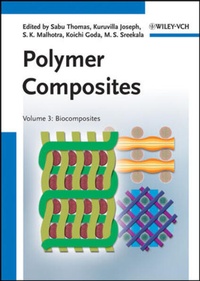
Polymer Composites
Volume 3
1st Edition
Published on 10. October 2013
608 pages
978-3-527-67425-1 (ISBN)
Description

The first systematic reference on the topic with an emphasis on the characteristics and dimension of the reinforcement.
This third and final volume, authored by leading researchers in the field from academia, government, industry, as well as private research institutions around the globe, focuses on biocomposites.
As such, it discusses the state of the art before moving on to investigate the synthesis, structure and properties of natural and synthetic biopolymers, as well as the preparation, microstructure and properties of biofibers, together with their surface modification, characterization, and manufacturing. Following an introduction to the manufacturing and processing of biocomposites, the authors look at biofiber reinforced thermoset and thermoplastic composites, hybrid biofiber, textile and bionanocomposites. The last section deals with fully biodegradable green composites and their application and future scope in terms of environmental effects, biodegradation and life cycle analysis.
This third and final volume, authored by leading researchers in the field from academia, government, industry, as well as private research institutions around the globe, focuses on biocomposites.
As such, it discusses the state of the art before moving on to investigate the synthesis, structure and properties of natural and synthetic biopolymers, as well as the preparation, microstructure and properties of biofibers, together with their surface modification, characterization, and manufacturing. Following an introduction to the manufacturing and processing of biocomposites, the authors look at biofiber reinforced thermoset and thermoplastic composites, hybrid biofiber, textile and bionanocomposites. The last section deals with fully biodegradable green composites and their application and future scope in terms of environmental effects, biodegradation and life cycle analysis.
More details
Other editions
Additional editions
S. Thomas
Polymer Composites Volume 3
Software
10/2013
Wiley-VCH
€272.61
No shipping information available
Book
10/2013
1st Edition
Wiley-VCH
€215.00
Article exhausted; check different version
Persons
Sabu Thomas is a Professor of Polymer Science and Engineering at Mahatma Gandhi University (India). He is a Fellow of the Royal Society of Chemistry and a Fellow of the New York Academy of Sciences. Thomas has published over 430 papers in peer reviewed journals on polymer composites, membrane separation, polymer blend and alloy, and polymer recycling research and has edited 17 books. He has supervised 60 doctoral students.
Kuruvilla Joseph is a Professor of Chemistry at Indian Institute of Space Science and Technology (India). He has held a number of visiting research fellowships and has published over 50 papers on polymer composites and blends.
S. K. Malhotra is Chief Design Engineer andHead of the Composites Technology Centre at the Indian Institute of Technology, Madras. He has published over 100 journal and proceedings papers on polymer and alumina?zirconia composites.
Koichi Goda is a Professor of Mechanical Engineering at Yamaguchi University. His major scientific fields of interest are reliability and engineering analysis of composite materials and development and evaluation of environmentally friendly and other advanced composite materials.
M. S. Sreekala is an Assistant Professor of Chemistry at Post Graduate Department of Chemistry, SreeSankara College, Kalady (India). She has published over 40 papers on polymer composites (including biodegradable and green composites) in peer reviewed journals and has held a number of Scientific Positions and Research Fellowships including those from the Humboldt Foundation, Germany, and Japan Society for Promotion of Science, Japan.
Kuruvilla Joseph is a Professor of Chemistry at Indian Institute of Space Science and Technology (India). He has held a number of visiting research fellowships and has published over 50 papers on polymer composites and blends.
S. K. Malhotra is Chief Design Engineer andHead of the Composites Technology Centre at the Indian Institute of Technology, Madras. He has published over 100 journal and proceedings papers on polymer and alumina?zirconia composites.
Koichi Goda is a Professor of Mechanical Engineering at Yamaguchi University. His major scientific fields of interest are reliability and engineering analysis of composite materials and development and evaluation of environmentally friendly and other advanced composite materials.
M. S. Sreekala is an Assistant Professor of Chemistry at Post Graduate Department of Chemistry, SreeSankara College, Kalady (India). She has published over 40 papers on polymer composites (including biodegradable and green composites) in peer reviewed journals and has held a number of Scientific Positions and Research Fellowships including those from the Humboldt Foundation, Germany, and Japan Society for Promotion of Science, Japan.
Content
ADVANCES IN POLYMER COMPOSITES: BIOCOMPOSITES - STATE OF THE ART, NEW CHALLENGES, AND OPPORTUNITIES
Introduction
Development of Biocomposite Engineering
Classification of Biocomposites
SYNTHESIS, STRUCTURE, AND PROPERTIES OF BIOPOLYMERS (NATURAL AND SYNTHETIC)
Introduction
Classification
Natural Biopolymers
Synthetic Biopolymers
Need for Biopolymers
Exceptional Properties of Biopolymers
Biomedical Polymers
Composite Material
Blends
Applications of Biopolymers
Partially Biodegradable Packaging Materials
Nonbiodegradable Biopolymers
Conversion of Nonbiodegradable to Biodegradable Polymers
Current Research Areas in Biopolymers and Bioplastics
General Findings and Future Prospects
PREPARATION, MICROSTRUCTURE, AND PROPERTIES OF BIOFIBERS
Introduction
Structure of Natural Plant Fibers
Ultimate Properties of Natural Fibers
Mechanical and Thermal Properties of Cellulose Microfibrils and Macrofibrils
All-Cellulose Composites and Nanocomposites
Conclusions
SURFACE TREATMENT AND CHARACTERIZATION OF NATURAL FIBERS: EFFECTS ON THE PROPERTIES OF BIOCOMPOSITES
Introduction
Why is Surface Treatment of Natural Fibers Important in Biocomposites?
What are the Surface Treatment Methods of Natural Fibers?
How does the Surface Treatment Influence the Properties of Biocomposites?
Concluding Remarks
MANUFACTURING AND PROCESSING METHODS OF BIOCOMPOSITES
Processing Technology of Natural Fiber-Reinforced Thermoplastic Composite
Processing Technology of Wood Plastic Composite (WPC)
BIOFIBER-REINFORCED THERMOSET COMPOSITES
Introduction
Materials and Fabrication Techniques
Biofiber-Reinforced Synthetic Thermoset Composites
Biofiber-Reinforced Biosynthetic Thermoset Composites
End-of-Life Treatment of NFR Thermoset Composites
Conclusions
BIOFIBER-REINFORCED THERMOPLASTIC COMPOSITES
Introduction
Source of Biofibers
Types of Biofibers
Advantages of Biofibers
Disadvantages of Biofibers
Graft Copolymerization of Biofibers
Surface Modifications of Biofibers Using Bacterial Cellulose
Applications of Biofibers as Reinforcement
Biofiber Graft Copolymers Reinforced Thermoplastic Composites
Bacterial Cellulose and Bacterial Cellulose-Coated, Biofiber-Reinforced, Thermoplastic Composites
Applications of Biofiber-Reinforced Thermoplastic Composites
Conclusions
BIOFIBER-REINFORCED NATURAL RUBBER COMPOSITES
Introduction
Natural Rubber (NR)
Biofibers
Processing
Biofiber-Reinforced Rubber Composites
Approaches to Improve Fiber-Matrix Adhesion
Applications
Conclusions
IMPROVEMENT OF INTERFACIAL ADHESION IN BAMBOO POLYMER COMPOSITE ENHANCED WITH MICROFIBRILLATED CELLULOSE
Introduction
Materials
Experiments
Results and Discussion
Conclusion
TEXTILE BIOCOMPOSITES
Elastic Properties of Twisted Yarn Biocomposites
Fabrication Process for Textile Biocomposites
BIONANOCOMPOSITES
Introduction
Bionanocomposites
Final Remarks
FULLY BIODEGRADABLE "GREEN" COMPOSITES
Introduction
Soy Protein-Based Green Composites
Starch-Based Green Composites
Biodegradation of "Green" Composites
BIOMEDICAL POLYMER COMPOSITES AND APPLICATIONS
Introduction
Biocompatibility Issues
Natural Matrix Based Polymer Composites
Synthetic Polymer Matrix Biomedical Composites
Smart Polymers and Biocomposites
Polymer-Nanosystems and Nanocomposites in Medicine
Conclusions
Outlook
ENVIRONMENTAL EFFECTS, BIODEGRADATION, AND LIFE CYCLE ANALYSIS OF FULLY BIODEGRADABLE "GREEN" COMPOSITES
Introduction
Environmental Aspects
Environmental Impacts of Green Composite Materials
Choice of Impact Categories
Environmental Impact of Polylactide
Environmental Effect of Polyvinyl Alcohol (PVA)
Potential Positive Environmental Impacts
Potential Negative Environmental Impacts
Biodegradation
Advantages of Green Composites over Traditional Composites
Disadvantages of Green Composites
Application and End-Uses
Biodegradation of Polyvinyl Alcohol (PVA) under Different Environmental Conditions
Biodegradation of Polylactic Acid
Biodegradation of Polylactic Acid and Its Composites
Biodegradation of Cellulose
Cellulose Fiber-Reinfor
Introduction
Development of Biocomposite Engineering
Classification of Biocomposites
SYNTHESIS, STRUCTURE, AND PROPERTIES OF BIOPOLYMERS (NATURAL AND SYNTHETIC)
Introduction
Classification
Natural Biopolymers
Synthetic Biopolymers
Need for Biopolymers
Exceptional Properties of Biopolymers
Biomedical Polymers
Composite Material
Blends
Applications of Biopolymers
Partially Biodegradable Packaging Materials
Nonbiodegradable Biopolymers
Conversion of Nonbiodegradable to Biodegradable Polymers
Current Research Areas in Biopolymers and Bioplastics
General Findings and Future Prospects
PREPARATION, MICROSTRUCTURE, AND PROPERTIES OF BIOFIBERS
Introduction
Structure of Natural Plant Fibers
Ultimate Properties of Natural Fibers
Mechanical and Thermal Properties of Cellulose Microfibrils and Macrofibrils
All-Cellulose Composites and Nanocomposites
Conclusions
SURFACE TREATMENT AND CHARACTERIZATION OF NATURAL FIBERS: EFFECTS ON THE PROPERTIES OF BIOCOMPOSITES
Introduction
Why is Surface Treatment of Natural Fibers Important in Biocomposites?
What are the Surface Treatment Methods of Natural Fibers?
How does the Surface Treatment Influence the Properties of Biocomposites?
Concluding Remarks
MANUFACTURING AND PROCESSING METHODS OF BIOCOMPOSITES
Processing Technology of Natural Fiber-Reinforced Thermoplastic Composite
Processing Technology of Wood Plastic Composite (WPC)
BIOFIBER-REINFORCED THERMOSET COMPOSITES
Introduction
Materials and Fabrication Techniques
Biofiber-Reinforced Synthetic Thermoset Composites
Biofiber-Reinforced Biosynthetic Thermoset Composites
End-of-Life Treatment of NFR Thermoset Composites
Conclusions
BIOFIBER-REINFORCED THERMOPLASTIC COMPOSITES
Introduction
Source of Biofibers
Types of Biofibers
Advantages of Biofibers
Disadvantages of Biofibers
Graft Copolymerization of Biofibers
Surface Modifications of Biofibers Using Bacterial Cellulose
Applications of Biofibers as Reinforcement
Biofiber Graft Copolymers Reinforced Thermoplastic Composites
Bacterial Cellulose and Bacterial Cellulose-Coated, Biofiber-Reinforced, Thermoplastic Composites
Applications of Biofiber-Reinforced Thermoplastic Composites
Conclusions
BIOFIBER-REINFORCED NATURAL RUBBER COMPOSITES
Introduction
Natural Rubber (NR)
Biofibers
Processing
Biofiber-Reinforced Rubber Composites
Approaches to Improve Fiber-Matrix Adhesion
Applications
Conclusions
IMPROVEMENT OF INTERFACIAL ADHESION IN BAMBOO POLYMER COMPOSITE ENHANCED WITH MICROFIBRILLATED CELLULOSE
Introduction
Materials
Experiments
Results and Discussion
Conclusion
TEXTILE BIOCOMPOSITES
Elastic Properties of Twisted Yarn Biocomposites
Fabrication Process for Textile Biocomposites
BIONANOCOMPOSITES
Introduction
Bionanocomposites
Final Remarks
FULLY BIODEGRADABLE "GREEN" COMPOSITES
Introduction
Soy Protein-Based Green Composites
Starch-Based Green Composites
Biodegradation of "Green" Composites
BIOMEDICAL POLYMER COMPOSITES AND APPLICATIONS
Introduction
Biocompatibility Issues
Natural Matrix Based Polymer Composites
Synthetic Polymer Matrix Biomedical Composites
Smart Polymers and Biocomposites
Polymer-Nanosystems and Nanocomposites in Medicine
Conclusions
Outlook
ENVIRONMENTAL EFFECTS, BIODEGRADATION, AND LIFE CYCLE ANALYSIS OF FULLY BIODEGRADABLE "GREEN" COMPOSITES
Introduction
Environmental Aspects
Environmental Impacts of Green Composite Materials
Choice of Impact Categories
Environmental Impact of Polylactide
Environmental Effect of Polyvinyl Alcohol (PVA)
Potential Positive Environmental Impacts
Potential Negative Environmental Impacts
Biodegradation
Advantages of Green Composites over Traditional Composites
Disadvantages of Green Composites
Application and End-Uses
Biodegradation of Polyvinyl Alcohol (PVA) under Different Environmental Conditions
Biodegradation of Polylactic Acid
Biodegradation of Polylactic Acid and Its Composites
Biodegradation of Cellulose
Cellulose Fiber-Reinfor
