

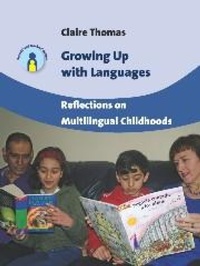
Growing Up with Languages
Reflections on Multilingual Childhoods
Published on 24. May 2012
272 pages
978-1-84769-717-2 (ISBN)
Description

A unique new insight into multilingual families, this book views multilingual childhoods from the point of the child and is based on over 50 interviews with adults who grew up in multilingual settings. The book charts their recollections of their childhoods and includes many different types of families, discusses many of the common issues that arise in multilingual families, and draws examples from all over the world. The book fills a significant gap in the literature and resources available to multilingual parents. It was researched and written by a self-help group of multilingual parents and thus the book remains very practical and gives clear and realistic advice to multilingual parents facing choices or dilemmas. However, because of its unique viewpoint, this book also includes much new material that will be of interest to researchers and students of bilingualism.
Reviews / Votes
This book looks at the lives and the trajectories of multilinguals and lets them talk about their experiences. The author demonstrates how fluid and dynamic bilingualism is within a family, but it also shows what bilingual families have in common and what can be done to maintain bilingualism. A great book! -- Jean-Marc Dewaele, Birkbeck, University of London, UK This book takes a unique approach in addressing the complexity of multilingual families through the voices of multilinguals. Based on accounts by adults of their multilingual childhood experiences and memories, the author clearly demonstrates the different circumstances of multilingual families and their diverse language practices. The book vividly depicts what it means to be multilingual and spells out the benefits and the challenges associated with it. It is definitely a must for all parents who are raising multilingual children. -- Xiao-lei Wang, Pace University, USA Claire Thomas' Growing Up with Languages is a very welcome addition to the growing number of practical books on bilingualism. Straightforward and accessible, it provides information about and insights into bilingual upbringing that parents will find helpful as they chart their way through unknown waters, by giving them a glimpse of possible futures. The approach is original, basing the text on the stories of how adult bilinguals grew up with two or more languages, and providing advice and suggestions that are always grounded in real experience that is easy to understand and relate to. The author's voice, while authoritative, is never prescriptive and her guidance suggests rather than directs in a way that empowers parents to reach their own particular solution to the challenge of bringing up children bilingually. Eminently readable, this book will undoubtedly become a classic and an important point of reference for all those interested in how people grow up speaking more than one language. -- Ricky Lowes, Chair, Plymouth Multilingual Families The power of this book is to take the many different voices of adults who have grown up speaking different languages and start to make sense of these experiences and develop guidance and advice. -- Vicky Macleroy * EAL Journal, Spring 2017 *More details
Series
Language
English
Place of publication
Bristol
United Kingdom
Publishing group
Channel View Publications Ltd
Product notice
Reflowable
ISBN-13
978-1-84769-717-2 (9781847697172)
Copyright in bibliographic data and cover images is held by Nielsen Book Services Limited or by the publishers or by their respective licensors: all rights reserved.
Schweitzer Classification
Other editions
Additional editions
Book
05/2012
Multilingual Matters
€37.80
Article not available at the moment
Person
Claire Thomas is herself the mother of two children who are being raised bilingually. She was a founding member of Waltham Forest Bilingual Group and has been Secretary of the group for 8 years. She has helped design and run several different forms of workshops for parents and has discussed bilingual family decisions and dilemmas with literally hundreds of parents.
Waltham Forest Bilingual Group is a small, entirely voluntary, group of parents in multilingual families. It provides support to parents in such families in North East London via a regular monthly drop in event, quarterly workshops and speaker events. For more information or to get in touch, please visit www.wfbilingual.org.uk.
Waltham Forest Bilingual Group is a small, entirely voluntary, group of parents in multilingual families. It provides support to parents in such families in North East London via a regular monthly drop in event, quarterly workshops and speaker events. For more information or to get in touch, please visit www.wfbilingual.org.uk.
Content
Acknowledgements
Introduction
Part 1: Different Types of Family and Issues that Only Affect Some Kinds of Family
1 Issues for Families Speaking More than One Language at Home
2 Issues for Families Using One Language at Home, Another in the Community and at School
3 Interviewees who are Bilingual Solely through Attending School in Another Language
4 Interviewees who Learnt Languages Solely from the Community
5 Changes as a Result of Divorce or Separation
6 Changes as a Result of the Death of One Parent
7 Changes as a Result of Advice Given to Parents
8 Changes as a Result of Interviewees' Choices or Decisions
Part 2: Issues at Home that will Affect Most, if Not All, Families at Some Time
9 Consistency Versus Flexibility in Languages Used at Home
10 Rewards, Encouragement, Sanctions and Disapproval Linked to Language Use
11 Resistance - Children Who Prefer Not to Speak a Language
12 Fitting In/Standing Out
13 Input from Others, Resources and Holidays
Part 3: Education
14 Starting School and Changing Schools
15 Home Language Support/Teaching in Mainstream Schools
16 Additional Support Outside (or as an alternative to) Mainstream Schools
17 Help with Homework
Part 4: Language Policies and Politics
18 Language Status, Links to Politics and Racism
Part 5: Interviewees as Adults
19 Advantages and Disadvantages of Having Been Raised Bilingually
20 One Thing You Would Change about Your Bilingual Childhood and Advice to a Family Just Starting Out
21 Low Input and Language Loss and Retention
22 Identities
23 Studying and Working Abroad as Young Adults, Choosing Where to Live More Permanently and Using Bilingualism at Work
24 Relationships
25 Raising Children Monolingually or Bilingually and the Reasons Given
26 Access to Culture as Adults
27 Accents
28 Learning Additional Languages
Part 6: Overall Analysis and Recommendations
29 Factors Linked to Success or Failure
30 Recommendations to Parents Raising Multilingual Children
31 Suggested Reading
About Waltham Forest Bilingual Group and How This Project Got Started
Introduction
Part 1: Different Types of Family and Issues that Only Affect Some Kinds of Family
1 Issues for Families Speaking More than One Language at Home
2 Issues for Families Using One Language at Home, Another in the Community and at School
3 Interviewees who are Bilingual Solely through Attending School in Another Language
4 Interviewees who Learnt Languages Solely from the Community
5 Changes as a Result of Divorce or Separation
6 Changes as a Result of the Death of One Parent
7 Changes as a Result of Advice Given to Parents
8 Changes as a Result of Interviewees' Choices or Decisions
Part 2: Issues at Home that will Affect Most, if Not All, Families at Some Time
9 Consistency Versus Flexibility in Languages Used at Home
10 Rewards, Encouragement, Sanctions and Disapproval Linked to Language Use
11 Resistance - Children Who Prefer Not to Speak a Language
12 Fitting In/Standing Out
13 Input from Others, Resources and Holidays
Part 3: Education
14 Starting School and Changing Schools
15 Home Language Support/Teaching in Mainstream Schools
16 Additional Support Outside (or as an alternative to) Mainstream Schools
17 Help with Homework
Part 4: Language Policies and Politics
18 Language Status, Links to Politics and Racism
Part 5: Interviewees as Adults
19 Advantages and Disadvantages of Having Been Raised Bilingually
20 One Thing You Would Change about Your Bilingual Childhood and Advice to a Family Just Starting Out
21 Low Input and Language Loss and Retention
22 Identities
23 Studying and Working Abroad as Young Adults, Choosing Where to Live More Permanently and Using Bilingualism at Work
24 Relationships
25 Raising Children Monolingually or Bilingually and the Reasons Given
26 Access to Culture as Adults
27 Accents
28 Learning Additional Languages
Part 6: Overall Analysis and Recommendations
29 Factors Linked to Success or Failure
30 Recommendations to Parents Raising Multilingual Children
31 Suggested Reading
About Waltham Forest Bilingual Group and How This Project Got Started
