

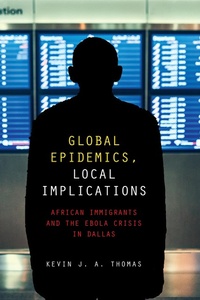
Global Epidemics, Local Implications
African Immigrants and the Ebola Crisis in Dallas
Published on 11. February 2020
272 pages
978-1-4214-3300-4 (ISBN)
Description

How fear and stigma affected the lives of African immigrants during the global Ebola epidemic-and the resilient ways in which immigrant communities responded.
In December 2013, a series of Ebola infections in Meliandou, Guinea, set off a chain of events culminating in the world's largest Ebola epidemic. Concerns about the virus in the United States reached a peak when Thomas Duncan, a Liberian national visiting family in Dallas, became the first person to be diagnosed with Ebola and die of the disease on US soil.
In Global Epidemics, Local Implications, Kevin J. A. Thomas highlights the complex ways in which disease outbreaks that begin in one part of the world affect the lives of immigrants in another. Drawing on information from a community survey, participant observations, government documents, and newspapers, Thomas examines how African immigrants were negatively affected by public backlash and their agency and resilience in responding to the consequences of epidemic. Ultimately, this book shows how these responses underscore the importance of immigrant resources for developing public health interventions.
In December 2013, a series of Ebola infections in Meliandou, Guinea, set off a chain of events culminating in the world's largest Ebola epidemic. Concerns about the virus in the United States reached a peak when Thomas Duncan, a Liberian national visiting family in Dallas, became the first person to be diagnosed with Ebola and die of the disease on US soil.
In Global Epidemics, Local Implications, Kevin J. A. Thomas highlights the complex ways in which disease outbreaks that begin in one part of the world affect the lives of immigrants in another. Drawing on information from a community survey, participant observations, government documents, and newspapers, Thomas examines how African immigrants were negatively affected by public backlash and their agency and resilience in responding to the consequences of epidemic. Ultimately, this book shows how these responses underscore the importance of immigrant resources for developing public health interventions.
More details
Language
English
Place of publication
Baltimore
United States
Target group
Professional and scholarly
File size
1,36 MB
ISBN-13
978-1-4214-3300-4 (9781421433004)
DOI
10.1353/book.69486
Copyright in bibliographic data and cover images is held by Nielsen Book Services Limited or by the publishers or by their respective licensors: all rights reserved.
Schweitzer Classification
Other editions
Additional editions
Kevin J. A. Thomas
Global Epidemics, Local Implications
African Immigrants and the Ebola Crisis in Dallas
Book
02/2020
Johns Hopkins University Press
€61.00
Article not available at the moment
Person
Kevin J. A. Thomas is a professor of sociology at the Pennsylvania State University. He is the author of Contract Workers, Risk, and the War in Iraq: Sierra Leonean Labor Migrants at US Military Bases and Diverse Pathways: Race and the Incorporation of Black, White, and Arab-Origin Africans in the United States.
Content
Acknowledgments
Chapter 1. International Migration, Ebola, and Responses to Global Epidemics
Chapter 2. Fear, Blame, and the Social Response to Epidemics
Chapter 3. Solidarity and Support among Africans in Dallas
Chapter 4. Experiencing the Consequences of the Epidemic in West Africa
Chapter 5. The Tragedy in Dallas
Chapter 6. Africans as Untouchables
Chapter 7. Fighting Back
Chapter 8. Conclusion
Notes
References
Index
Chapter 1. International Migration, Ebola, and Responses to Global Epidemics
Chapter 2. Fear, Blame, and the Social Response to Epidemics
Chapter 3. Solidarity and Support among Africans in Dallas
Chapter 4. Experiencing the Consequences of the Epidemic in West Africa
Chapter 5. The Tragedy in Dallas
Chapter 6. Africans as Untouchables
Chapter 7. Fighting Back
Chapter 8. Conclusion
Notes
References
Index
