

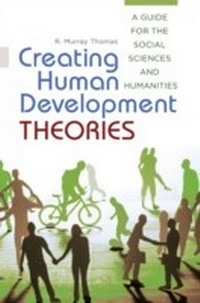
Creating Human Development Theories
A Guide for the Social Sciences and Humanities
1st Edition
Published on 12. May 2014
240 pages
978-1-4408-3169-0 (ISBN)
Description

How-and why-do humans develop as they do? This book clearly explains the key components of human development theories and describes how to compose novel theories regarding this age-old puzzle.
As college students progress through bachelor's degree programs and then advance to their master's degree theses and doctoral dissertations, they are bombarded with studies of countless theories, often adopting some author's theory for interpreting information about human development, even when the theory does not precisely meet their needs. One way to solve the problem-a way especially tuned to the current classroom push for creative, critical thinking-is for the student to create his or her own theory. Unfortunately, even students as high as the doctoral level often don't understand how to create a well-ordered, workable theory of their own-a crucial gap in their "critical thinking" skillsets. This book is the solution to that specific problem. In these pages, in clear and detailed steps, is a complete explanation for developing a theory.
The book addresses key topics such as attention to need, population, basic assumptions, key terms, causes and stages, interpreting evidence, and applications. Author R. Murray Thomas-a well-known and highly respected elder in the social sciences-also details five illustrative theories, covering their history and providing insights about how they were developed. This work will be valuable to students of psychology, human development, child development, and theory as well as those in other disciplines seeking an understanding of theory building.
As college students progress through bachelor's degree programs and then advance to their master's degree theses and doctoral dissertations, they are bombarded with studies of countless theories, often adopting some author's theory for interpreting information about human development, even when the theory does not precisely meet their needs. One way to solve the problem-a way especially tuned to the current classroom push for creative, critical thinking-is for the student to create his or her own theory. Unfortunately, even students as high as the doctoral level often don't understand how to create a well-ordered, workable theory of their own-a crucial gap in their "critical thinking" skillsets. This book is the solution to that specific problem. In these pages, in clear and detailed steps, is a complete explanation for developing a theory.
The book addresses key topics such as attention to need, population, basic assumptions, key terms, causes and stages, interpreting evidence, and applications. Author R. Murray Thomas-a well-known and highly respected elder in the social sciences-also details five illustrative theories, covering their history and providing insights about how they were developed. This work will be valuable to students of psychology, human development, child development, and theory as well as those in other disciplines seeking an understanding of theory building.
More details
Edition
1. Auflage
Language
English
Place of publication
United States
Publishing group
Bloomsbury Publishing Plc
Target group
Interest Age: From 7 to 17 years
ISBN-13
978-1-4408-3169-0 (9781440831690)
Copyright in bibliographic data and cover images is held by Nielsen Book Services Limited or by the publishers or by their respective licensors: all rights reserved.
Schweitzer Classification
Other editions
Additional editions
Book
05/2014
Praeger Publishers Inc
€68.30
Shipment within 10-20 days
Person
R. Murray Thomas, PhD, is professor emeritus of educational psychology at the University of California, Santa Barbara.
