

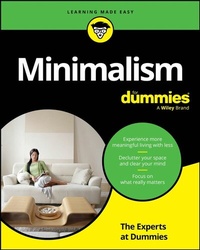
Minimalism For Dummies
Description

Start your journey toward a more intentional, less cluttered life
Tired of feeling buried under your belongings? Ready to break free from the cycle of buying, storing, and managing stuff that doesn't actually make you happier? Minimalism For Dummies shows you how to create space for what truly matters by letting go of what doesn't.
This practical guide covers the fundamentals of minimalist living, from your first decluttering session to mindful spending strategies. You'll learn how to downsize without sacrifice, build budgets that align with your values, and even explore game-changing concepts like the F.I.R.E. movement that's helping people retire decades early.
- Start your minimalist journey with confidence-even if you're a natural collector
- Transform cluttered spaces into calm, functional environments
- Make smarter money decisions that fund experiences over possessions
- Join a community of people choosing intention over accumulation
Stop managing your stuff and start designing your life. Your journey to freedom, clarity, and genuine contentment starts here.
More details
Other editions
Additional editions
Person
The Experts at Dummies The wisdom of authors including Athena Valentine Lent, Jane Stoller, Eric Tyson, Ralph R. Roberts, Kathleen Roberts, Eileen Roth, Elizabeth Miles, Paula N. Mugabi, David N. Greenfield, Shamash Alidina, and more.
Content
- Intro
- Title Page
- Copyright Page
- Table of Contents
- Introduction
- About This Book
- Foolish Assumptions
- Icons Used in This Book
- Beyond the Book
- Where to Go from Here
- Part 1 Getting into a Minimalist Mindset
- Chapter 1 Meeting Minimalism
- Getting the Lowdown on Minimalism
- Mentioning minimalism's meaning
- Gaining more by having less
- Decluttering Your Physical Spaces
- Considering how long it'll take
- Getting going, one space at a time
- Being Minimalist with Your Money
- Benefiting from a budget
- Ditching debt
- Making investments
- Escaping from Digital Doom
- Extending Minimalism to the Rest of Your Life
- Supporting your body with minimalism
- Leaning on minimalism to navigate life's changes
- Building Momentum If Getting Going Feels Hard
- Chapter 2 Realizing How Less Really Is More
- Contemplating the Consequences of Too Much Stuff
- Understanding How Minimalism Can Help You Stress Less
- Knowing why minimalism works
- Determining your "too much" threshold
- Discovering the Secret to Change
- Designing your life for minimalism
- Starting small: The secret to creating new habits
- Generating Minimalism Motivation with Some Quick Wins
- Chapter 3 Defining "Enough" and Setting Goals to Get There
- Finding Your Balance between Less and Living
- Creating your own definition of wealth
- Acknowledging what money and things can't buy
- Understanding how focus helps with priorities
- Setting Your Goals and Seeing How Minimalism Supports Them
- Defining some longer-term goals and figuring out how to achieve them
- Evaluating your lifestyle
- Getting Clear on What You Need
- Letting Go of Stuff
- Releasing yesterday to make room for tomorrow
- Busting through the "I might need it" syndrome
- Fending Off Clutter of All Types
- Being proactive versus reactive
- Creating a system that you stick to
- Maximizing efficiency
- Avoiding the all-or-nothing approach
- Feeling intimidated
- Feeling overwhelmed
- Part 2 Living Lighter, One Room at a Time
- Chapter 4 Creating Functional Minimalist Spaces
- Understanding What Makes a Space Functional
- Getting Organized before You Purge
- Organizers and planners: Lists to live by
- Maximizing your time with P-L-A-NTM
- Designing any space with a layout
- Everything in its P-L-A-C-ETM: Organizing space
- Mastering Decluttering Basics
- Getting into the downsizing mindset
- Saving or tossing using W-A-S-T-ETM
- Organizing What Remains
- No-strain containers: Types, shapes, and sizes
- Selecting the material
- Choosing clear or colored containers
- Doing geometry: Shape and size
- Identifying with labels
- The Three Ds: Using containers as clutter busters
- Distribute box
- Donate box
- Dump box, bag, or can
- Making Decluttering Fun
- Chapter 5 Restoring Simplicity to Getting Dressed
- Understanding How an Overstuffed Closet Wastes Your Time
- Creating Your Definition of a Minimalist Wardrobe
- Figuring out what clothes you really need
- Finding the right clothing balance
- Auditing Your Closet and Sorting the Keepers from the Clingers
- Organizing Closets of Different Sizes
- Evaluating your space
- Organizing a walk-in closet
- Organizing a reach-in closet
- Storing Smart So You Can Grab and Go
- Getting Minimalist with Accessories
- Sorting your seasonal shoes and boots
- Scaling back your handbags, totes, and backpacks
- Examining inside your bag
- Storing your scarves
- Choosing the jewelry you'll keep
- Assessing belts and everything else
- Getting Rid of Your Discards and Keeping Your Closet Minimalist
- Chapter 6 Creating Calm Where You Rest and Refresh
- Restoring Order to Your Sleep Space
- Clearing chaos from the nightstand
- Considering hidden storage areas
- Cutting clutter from corners
- Furnishing for the Win
- Figuring out your bedroom essentials
- Focusing on your bedroom's star: Your bed
- Encouraging your sleeping partner
- Taking a Minimalist Approach to Your Bathroom
- Minimizing unwanted products
- Assessing what you have and deciding what to keep
- Examining your bathroom goodies, item by item
- Your toothbrush and other must-have items
- Cosmetics
- Makeup brushes
- Skin care
- Trial sizes
- Hair brushes/combs
- Hair accessories
- Nail polish
- Perfume/cologne
- Appliances/gadgets
- Bath accessories/toys
- First-aid supplies
- Getting Minimal with Your Medicine Cabinet
- Deciding what to keep
- Deciding where to put your keepers
- Figuring out what to do with the remains
- Setting Strict Timelines for Product Lifetimes
- Makeup
- Everything else
- Keeping Dry the Minimalist Way
- Chapter 7 Clearing the Kitchen
- Taking the Scary Out of Starting
- Discovering the Basics of Kitchen Decluttering
- Determining your needs
- Taking stock of your stock
- Scaling back your kitchen stuff, item by item
- Eliminating excess kitchen tools
- Figuring Out How Many Dishes, Cutlery, and Other Items You Need
- Dishes
- Silverware, flatware, or cutlery
- Coffee mugs
- Kids' stuff
- Fine china
- Kitchen knives
- Cooking utensils
- Plastic bags
- Holiday items
- Freezer items
- Getting rid of junk drawers forever
- Optimizing Your Kitchen for Efficiency
- Chapter 8 Simplifying Where You Work and Unwind
- Decluttering Your Rooms
- Creating Calm Where You Kick Back
- Designing a Layout for Living
- Sorting Your Books
- Minimalizing Your Workspace So It Works for You
- Command central: Your desk
- Downsizing your desk supplies
- Designating Your Drawers as Work Centers
- Containing the contents
- Holding onto personal possessions
- Tackling Storage Spaces
- Getting started with a handful of steps
- Figuring out what shouldn't be stored (but likely is)
- Getting realistic
- Determining a Strategy for Sentimental Items
- How much is too much?
- Saving only the best
- Giving it time
- Where to store them?
- Chapter 9 Practicing Mindful Consumption and Quality Care
- Staying Minimalist When Shopping
- Avoiding Impulse Buys
- Making Some Lists, Checking Them Twice
- Avoiding repeat purchases
- Getting inspiration
- Separating your needs from your wants
- Researching your purchases before buying
- Becoming a Slow Shopper
- Scheduling Your Shopping Trips
- Detoxing Your Social Media and Inbox
- Scheduling your online shopping
- Unlinking your digital payment methods
- Caring for Your Clothes to Help Them Last
- Doing laundry with longevity in mind
- Making sense of laundry labels
- Part 3 Aligning Your Money with What Matters
- Chapter 10 Aligning Your Purchases with Your Priorities
- Seeing Minimalism as a Smarter Way to Spend
- Understanding Why You Spend What You Do
- Lacking good financial habits
- Overspending and living beyond your means
- Figuring Out Your Values and Goals
- Going Minimal with F.I.R.E.
- Using Net Worth to See Where You Stand
- Understanding why net worth matters
- Calculating your net worth
- Chapter 11 Bringing Intention to Your Spending
- Knowing What a Budget Is and Why You Should Use One
- Understanding the benefits of budgeting
- Figuring out why budgets sometimes fail
- Budgeting Basics: Breaking Down a Budget's Parts
- Starting with a Spending Check
- Listing what you own and what you owe
- Assets
- Liabilities
- Reviewing your spending for the past three months
- Moving from Awareness to Action with Zero-Based Budgeting
- Setting up your zero-based budget
- Adding up expenses and subtracting them from your income
- Assigning your total income to budget categories
- Having enough money to pay for your monthly expenses
- Tracking your spending for a month
- Making sure you track as you spend
- Evaluating your success at the end of the month
- Ramping Up to Zero-Based Budgeting with the Envelope System
- Chapter 12 Ditching Debt to Lighten Your Minimalist Load
- Looking at the Different Types of Debt
- Demystifying student loans
- Understanding credit card debt
- Unpacking big-ticket borrowing: Home and auto loans
- Home loans
- Auto loans
- Sorting out everything else
- Paying Off Your Debt
- Compiling a list of what you owe
- Considering different payoff methods
- The snowball method
- The avalanche method
- The fireball method
- Applying additional pay-down strategies
- Avoiding Accumulating More Debt
- Looking into refinancing options
- Saving an emergency fund
- Steering clear of new cards and switching to debit
- Investing in the right insurance
- Chapter 13 Building Wealth without Building Stress
- Establishing Your Investment Goals
- Understanding the Primary Investment Types
- Looking at lending investments
- Exploring ownership investments
- Understanding Investment Returns
- Sizing Investment Risks
- Comparing the risks of stocks and bonds
- Benefiting from diversity
- Using Technology to Make Money Management Easier
- Making it easier to manage your finances
- Paying your bills, finding ways to save, and tracking your money
- Planning for retirement
- Researching investments
- Paying your bills online
- Using autopay for fixed expenses
- Saving stealthily with automatic savings account transfers
- Part 4 Dialing Down the Digital Overload
- Chapter 14 Understanding Digital Overload
- Figuring Out What's Interrupting Our Zen
- Understanding how files, photos, and emails can be problems
- Figuring out how sharing, watching, and playing can go wrong
- Social media
- Streaming audio and video
- Video games
- Living Mindfully in the Digital Age
- Assessing your level of attention to technology
- Detaching yourself physically from your tech
- Using tech functionality to support your mindfulness
- Enhancing mindful awareness through apps
- Chapter 15 Bringing Order to Digital Chaos
- Jump-Starting Your Minimalist Journey
- Organizing Your Digital Files
- Finding a home within the clouds
- Deleting what you don't need and sorting the files you do
- Making use of subfolders
- Naming your files and folders
- Restoring Order to an Overwhelmed Inbox
- Taking stock and deleting what you don't need
- Leaving behind worries about junk mail
- Unsubscribing to lists of all kinds
- Filing away what you want to keep
- Keeping your inbox lean
- Addressing Apps Across All Devices
- Managing Your Digital Photos and Videos
- Locating all of your pics and vids
- Creating a strategy to review your photos or videos
- Taking photos like a minimalist
- Dealing with Other Digital Devices
- Minimalizing your phone
- Clearing out your digital bookshelf
- Remembering your tablet, too
- Chapter 16 Getting Minimalist When Sharing, Watching, and Playing
- Getting to Know Social Media
- Recognizing what makes you come back for more
- Understanding the social hamster wheel
- Struggling to resist the possible "maybe"
- Exploring the downsides of social media
- Finding relief: Life beyond social media
- Binge Watching TV and Online Entertainment
- Knowing that too much of a good thing can be bad
- Realizing that instant gratification can make you watch more
- Looking at other problems of watching TV all the time
- Screening your streaming
- Exploring Video Games
- Checking out the risks of gaming
- Being an intentional gamer
- Mixing Minimalism into Your Digital Fun
- Part 5 Following a Minimalist Lifestyle
- Chapter 17 Simplifying Your Meals, Moves, and Moments
- Eating with Intention
- Meal Planning Made Easy
- Determining when and what to eat at home
- Considering the ingredients already in your kitchen
- Making a grocery list and sticking to it
- Pantry staples: Keeping basic ingredients on hand
- Perishable items: Buying for the week to avoid food waste
- Following Formulas for Minimalist Meals and Snacks
- Sticking with the pantry
- Fridge foraging
- Freezer bingeing
- Fast food the minimalist way
- Becoming a Minimalist in Motion
- Building strength and staying supple
- Simplifying your mindset
- Living Like a Minimalist but Sleeping Like a Maximalist
- Stages and states of sleep
- NREM sleep
- REM sleep
- Getting enough rest
- Chapter 18 Planning for Major Life Transitions
- Making a Big Purchase: Buying a Home
- Deciding how much you can afford by using the 28/36 rule
- Determining your down payment
- Researching your financing options
- Considering other homeownership costs
- Funding a Family: Budgeting for Kids
- Making space in your house
- Researching childcare options
- Creating an ongoing sinking fund for miscellaneous school expenses
- Suffering a Financial Setback: Getting Laid Off
- Filing for unemployment and other state benefits
- Understanding eligibility requirements
- Applying for unemployment
- Qualifying for additional state benefits
- Assessing your overall financial situation
- Focusing on essentials
- Communicating with lenders if paying down debt
- Taking care of your mental health
- Downsizing: Making Your Move Mindfully
- Drafting a budget
- Identifying your start-up costs
- Determining your operational costs
- Making a to-do list
- Scheduling activities from your list
- Delegating duties
- Finally Retiring: Living Off What You've Saved
- Examining your savings ten years before retirement
- Making your retirement budget last
- Trimming your expenses and taking care of lingering debt
- Making sure you're signed up for senior discounts
- Prioritizing your needs over those of others
- Part 6 The Part of Tens
- Chapter 19 Ten Benefits of Minimalism
- Spending Time and Money on What Really Matters
- Saving Time and Effort Cleaning and Maintaining What You Own
- Reducing Stress
- Reclaiming Focus from Digital Distractions
- Spending More Time with Loved Ones
- Gaining More Financial Breathing Room
- Focusing on Quality over Quantity
- Optimizing Your Health and Fitness
- Becoming More Flexible in How You Live
- Alleviating the Future Burden on Loved Ones
- Chapter 20 Ten Tips to Make Minimizing Easier
- Start with the Easy Wins
- Focus on What to Keep, Not What to Get Rid Of
- Follow the One-Year Rule
- Tackle One Room at a Time
- Set a Manageable Deadline and Milestones
- Follow the OHIO Rule
- Host a Sorting/Packing Party
- Have Your Adult Children Clear Out Their Belongings
- Create a Yes and No Pile (But No Maybe Pile)
- Digitize What You Can
- Chapter 21 Ten Ways to Reduce Your Living Expenses
- Slash Your Insurance Costs
- Reduce TV, Internet, and Phone Costs
- Cancel Subscriptions
- Reduce or Eliminate Vehicle Expenses
- Clear Out Your Storage Unit
- Take Better Care of Yourself
- Use Cash-Back Credit Cards
- Buy Your Groceries Online
- Set Spending Caps
- Ask about Senior Discounts
- Chapter 22 Ten Ways to Support Minimalism with Mindfulness
- Spend Some Quiet Time Every Day
- Connect with People
- Enjoy the Beauty of Nature
- Change Your Daily Routine
- See the Wonder of the Present Moment
- Listen to Unpleasant Emotions
- Remember that Thoughts Are Just Thoughts
- Be Grateful Every Day
- Use Technology Mindfully
- Breathe and Smile!
- Index
- EULA
