

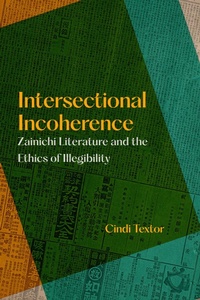
Intersectional Incoherence
Zainichi Literature and the Ethics of Illegibility
1st Edition
Published on 5. November 2024
224 pages
978-0-520-39873-3 (ISBN)
Description

A free ebook version of this title is available through Luminos, University of California Press's Open Access publishing program. Visit www.luminosoa.org to learn more.
Intersectional Incoherence stages an encounter between the critical discourse on intersectionality and texts produced by Korean subjects of the Japanese empire and their postwar descendants in Japan, known as Zainichi Koreans. Arguing for intersectionality as a reading method rather than strictly a tool of social analysis, Cindi Textor reads moments of illegibility and incoherent language in these texts as a product of the pressures on Zainichi Koreans and their literature to represent both Korean difference from and affinity with Japan. Rejecting linguistic norms and representational imperatives of identity categories, Textor instead demands that the reader grapple with the silent, absent, illegible, or unintelligible. Engaging with the incoherent, she argues, allows for a more ethical approach to texts, subjects, and communities that resist representation within existing paradigms.
Intersectional Incoherence stages an encounter between the critical discourse on intersectionality and texts produced by Korean subjects of the Japanese empire and their postwar descendants in Japan, known as Zainichi Koreans. Arguing for intersectionality as a reading method rather than strictly a tool of social analysis, Cindi Textor reads moments of illegibility and incoherent language in these texts as a product of the pressures on Zainichi Koreans and their literature to represent both Korean difference from and affinity with Japan. Rejecting linguistic norms and representational imperatives of identity categories, Textor instead demands that the reader grapple with the silent, absent, illegible, or unintelligible. Engaging with the incoherent, she argues, allows for a more ethical approach to texts, subjects, and communities that resist representation within existing paradigms.
More details
Other editions
Additional editions
Book
11/2024
1st Edition
University of California Press
€37.20
Shipment within 10-20 days
Person
Cindi Textor is Associate Professor of World Languages and Cultures at the University of Utah.
