


Teaching STEM Literacy
Description

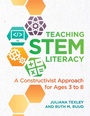
Teaching STEM Literacy is comprised of ready-made, open-ended lessons reviewed and tested by teachers, which help educators integrate STEM learning into the early childhood classroom. Lessons are linked to the Next Generation Science Standards, and encourage creative ideas for three-dimensional STEM learning that are developmentally appropriate and exemplified through children's literature. The three-dimensional STEM learning-content, concepts, and practices-comes in twelve, ready-made open-ended teaching units that make it easy to teach science and inquiry to young children. This book uses the 5E framework (engagement, exploration, explanation, elaboration, and evaluation) to cultivate children's skills of observation, questioning, and data collection by combining discovery, problem solving, and engineering solutions to authentic questions that young children might ask.
Juliana Texley holds a master's in biology and chemistry, and a PhD in curriculum development/science education from Wayne State University, and has over thirty years of teaching experience. She is a graduate-level adjunct professor specializing in educational technology and assessment, science, and science teaching at Central Michigan University and Lesley University in Massachusetts. Texley has been a National Science Teachers Association (NSTA) member for thirty years, and served as president from 2014-2015. She is on the board for Young Voices for the Planet and led the development and evaluation of online learning programs for JASON Learning.
Ruth M. Ruud has over thirty-five years of teaching experience ranging from early childhood to undergraduate studies. She has a master's degree in education with additional coursework in all areas of science. A former Delta Education FOSS (Full Option Science System) consultant, Ruth currently works as an adjunct professor teaching physical geography courses at Cleveland State University. She served as president of the Pennsylvania Science Teachers Association and has chaired a number of committees of the National Science Teachers Association (NSTA), is a member of the NSTA Recommends committee, and is the head reviewer for the NSTA Shell Science Lab Challenge.
More details
Other editions
Additional editions
Persons
Ruth M. Ruud has over thirty-five years of teaching experience ranging from early childhood to undergraduate studies. She has a master's degree in education with additional coursework in all areas of science. A former Delta Education FOSS (Full Option Science System) consultant, Ruud currently works as an adjunct professor teaching physical geography courses at Cleveland State University. Ruud has been president of the Pennsylvania Science Teachers Association and has chaired a number of committees of the National Science Teachers Association (NSTA). Ruud is a member of the NSTA Recommends committee and is the head reviewer for the NSTA Shell Science Lab Challenge.
Content
Unit 1: Pushes and Pulls
Unit 2: Falling Down
Unit 3: Heavy and Light
Unit 4: Rolling, Rolling, Rolling
Unit 5: Slipping, Sliding
Unit 6: What's the Matter?
Unit 7: Drop by Drop
Unit 8: It's In the Air
Unit 9: Sun and Shadow
Unit 10: Hot Stuff, Cool Science
Unit 11: Wind and Water
Unit 12: Growing Up Engineers
Appendix I: Science Books for Students
Appendix II: Web Resources for Students
Appendix III: Best STEM Books of 2016
Appendix IV: Resources for Teachers
Appendix V: Selected Standards
