

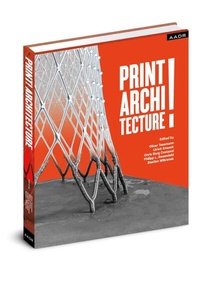
PRINT! ARCHITECTURE
1st Edition
Published on 27. September 2022
254 pages
978-3-88778-942-8 (ISBN)
Description

We live in a time when 3D printing has matured from a hobbyist and prototyping tool to a technology with
potential to disrupt entire industries in and around the built environment. The developments in additive
manufacturing are transforming architecture and design no less than they impact engineering and
construction. The book portrays the rapid advances in research and industrial processes that have paved
the road for this upheaval.
In five chapters that cover historical development, engineering aspects, the digital design process,
interactions with other technologies and potential for functionalization through additive manufacturing, the
editors have curated a text that illustrates how a complex network of actors inspires and influences each
other to make this technological transformation possible.
The book follows the trail of scientists who prove the technology's viability and documents design
explorations, prototypes and entire buildings that are demonstrating their readiness for the commercial
market.
potential to disrupt entire industries in and around the built environment. The developments in additive
manufacturing are transforming architecture and design no less than they impact engineering and
construction. The book portrays the rapid advances in research and industrial processes that have paved
the road for this upheaval.
In five chapters that cover historical development, engineering aspects, the digital design process,
interactions with other technologies and potential for functionalization through additive manufacturing, the
editors have curated a text that illustrates how a complex network of actors inspires and influences each
other to make this technological transformation possible.
The book follows the trail of scientists who prove the technology's viability and documents design
explorations, prototypes and entire buildings that are demonstrating their readiness for the commercial
market.
More details
Edition
1. Auflage
Language
English
Place of publication
Baunach
Germany
Target group
Young adult
Professional and scholarly
College/higher education
Adult education
Edition type
New edition
Product notice
Fixed format
File size
231,65 MB
ISBN-13
978-3-88778-942-8 (9783887789428)
Schweitzer Classification
Other editions
Additional editions
Oliver Tessmann | Ulrich Knaack | Chris Borg Costanzi
PRINT! ARCHITECTURE
Book
09/2022
1st Edition
AADR - Art Architecture Design Research
€44.00
Shipment within 5-7 days
Persons
Oliver Tessmann is an architect, designer, and researcher specializing in digital fabrication and innovative construction techniques. With a focus on 3D printing and additive manufacturing in architecture, Tessmann explores how emerging technologies can transform design processes and material experimentation. In Print Architecture, he bridges theory and practice, offering insights into the future of architectural production and sustainable building methods.
