


Building, Defending, and Regulating the Self
A Psychological Perspective
Published on 5. July 2005
312 pages
978-1-135-42387-2 (ISBN)
Description

This volume pulls together research on several aspects of the self. One set of chapters deals with the importance of building a self based on authenticity and "Who I really am."; a second group deals with the ways in which we defend views of the self as positive and powerful; a third group is concerned with multiple aspects of self regulation. Each of the chapters is a well-written, non-technical description of an important, currently active research program.
Reviews / Votes
"Much has been written on the self in modern psychology, but rarely are so many fresh perspectives found between the covers of a single volume. Tesser, Wood, and Stapel have organized some of the field's excellent thinkers and writers and produced a book that tackles enduring issues in new ways: How malleable is the self? What about one's identity is genuine? How tied up is the self in considerations of conscious experience? Under what conditions is the self defensive to the point of delusion? In the spirit of Narcissus, we all love to reflect on the self, and this volume will help students and investigators do so in intriguing new ways." - Peter Salovey, Yale University"In the last 20 years, research on the self has grown from street musician to corporate status. Abe Tesser and his colleagues are partly responsible for this explosion of interest. Now, with the publication of their most recent edited volume on the self, Tesser, Wood, and Stapel bring a structure to this increasingly complex research domain. The eleven chapters reflect three often-conflicting assumptions of the self -- self-as-good (Carl Rogers), self-as-bad (Freud), and self-as-self-regulating-blank-slate (Locke). The editors have assembled a phenomenal group of researchers in social psychology who are superb scientists and writers. This is an excellent book." - James W. Pennebaker, University of Texas at Austin
More details
Language
English
Place of publication
London
United Kingdom
Publishing group
Taylor & Francis Ltd
Target group
College/higher education
Illustrations
12 s/w Abbildungen, 10 s/w Tabellen
10 Tables, black and white; 12 Illustrations, black and white
File size
1,63 MB
ISBN-13
978-1-135-42387-2 (9781135423872)
Copyright in bibliographic data and cover images is held by Nielsen Book Services Limited or by the publishers or by their respective licensors: all rights reserved.
Schweitzer Classification
Other editions
Additional editions
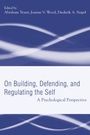
Abraham Tesser | Joanne V. Wood | Diederik A. Stapel
Building, Defending, and Regulating the Self
A Psychological Perspective
Book
12/2004
Psychology Press Ltd
€215.41
Shipment within 3-4 weeks
Persons
Abraham Tesser, Research Professor Emeritus at the University of Georgia, is a former Editor of the Journalof Personality and Social Psychology and a former President of the Society for Personality and Social Psychology. Recognition of his research on self-evaluation and on thought and ruminative processes includes the Donald T. Campbell Award from the Society for Personality and Social Psychology and the Career Award from the International Society for Self and Identity.
After completing her Ph.D. at UCLA, Joanne Wood has held faculty positions at SUNY-Stony Brook and at the University of Waterloo. She has served as an associate editor of Personality and SocialPsychology Bulletin and on the editorial boards for Journal of Personality and Social Psychology, Journal ofExperimental Social Psychology, Personality and SocialPsychology Bulletin, and Self and Identity. Wood's publications concern affect regulation, social comparison, and mechanisms underlying the maintenance of self-esteem.
Diederik Stapel, Professor at the University of Groningen, is a former Associate Editor of the British Journal of Social Psychology and has served on the editorial boards of Self and Identity, EuropeanJournal of Social Psychology, and Personality and SocialPsychology Bulletin. For his research on knowledge accessibility effects he earned the Jos Jaspars Award of the European Association of Experimental Social Psychology. Stapel's publications concern person perception, unconscious emotional responses, and social comparison.
After completing her Ph.D. at UCLA, Joanne Wood has held faculty positions at SUNY-Stony Brook and at the University of Waterloo. She has served as an associate editor of Personality and SocialPsychology Bulletin and on the editorial boards for Journal of Personality and Social Psychology, Journal ofExperimental Social Psychology, Personality and SocialPsychology Bulletin, and Self and Identity. Wood's publications concern affect regulation, social comparison, and mechanisms underlying the maintenance of self-esteem.
Diederik Stapel, Professor at the University of Groningen, is a former Associate Editor of the British Journal of Social Psychology and has served on the editorial boards of Self and Identity, EuropeanJournal of Social Psychology, and Personality and SocialPsychology Bulletin. For his research on knowledge accessibility effects he earned the Jos Jaspars Award of the European Association of Experimental Social Psychology. Stapel's publications concern person perception, unconscious emotional responses, and social comparison.
Content
About the Editors
Contributors
Introduction: Building, defending and regulating the self: An overview
Abraham Tesser, Joanne V. Wood and DiederikA. Stapel
I. Building the self: The Ideal, theauthentic and the open self
Chapter 1: The Michelangelo Phenomenon in Close Relationships
CarylE. Rusbult, Madoka Kumashiro, Shevaun L. Stocker, andScott T. Wolf
Chapter 2: From Thought and Experience to Behavior and Interpersonal Relationships: A Multicomponent Conceptualization of Authenticity
Michael H. Kernis and Brian M. Goldman
Chapter 3: Transportation into Narrative Worlds: Implications for the Self
Melanie C. Green
Chapter 4: Conflict and Habit: A Social Cognitive neuroscience Approach to the Self
Matthew D. Lieberman and Naomi I.Eisenberger
II. Defending the self
Chapter 5: Ideal Agency: The Perception of Self as an Origin of Action
Jesse Preston and Daniel M. Wegner
Chapter 6: Reflections in Troubled Waters: Narcissism and the Vicissitudes of an Interpersonally Contextualized Self
Frederick Rhodewalt and CarolynC. Morf
Chapter 7: Nagging Doubts and a Glimmer of Hope: The Role of Implicit Self-Esteem in Self-Image Maintenance
Steven J. Spencer, ChristianH. Jordan, Christine E.R. Logel, and Mark P.Zanna
III. Regulating the self
Chapter 8: Approach Avoidance Motivation and Self-Concept Evaluation
Andrew J. Elliot and Rachel R. Mapes
Chapter 9: Self Conscious Emotion and Self-Regulation
Dacher Keltner and Jennifer S. Beer
Chapter 10: On the Hidden Benefits of State Orientation: Can People Prosper without Efficient Affect Regulation Skills?
Sander L. Koole, Julius Kuhl, NilsJostmann, and Kathleen D. Vohs
Chapter 11: The Roles of the Self in Priming-to-Behavior Effects.
S.Christian Wheeler, Kenneth G. DeMarree, and Richard E.Petty
Author Index
Subject Index
Contributors
Introduction: Building, defending and regulating the self: An overview
Abraham Tesser, Joanne V. Wood and DiederikA. Stapel
I. Building the self: The Ideal, theauthentic and the open self
Chapter 1: The Michelangelo Phenomenon in Close Relationships
CarylE. Rusbult, Madoka Kumashiro, Shevaun L. Stocker, andScott T. Wolf
Chapter 2: From Thought and Experience to Behavior and Interpersonal Relationships: A Multicomponent Conceptualization of Authenticity
Michael H. Kernis and Brian M. Goldman
Chapter 3: Transportation into Narrative Worlds: Implications for the Self
Melanie C. Green
Chapter 4: Conflict and Habit: A Social Cognitive neuroscience Approach to the Self
Matthew D. Lieberman and Naomi I.Eisenberger
II. Defending the self
Chapter 5: Ideal Agency: The Perception of Self as an Origin of Action
Jesse Preston and Daniel M. Wegner
Chapter 6: Reflections in Troubled Waters: Narcissism and the Vicissitudes of an Interpersonally Contextualized Self
Frederick Rhodewalt and CarolynC. Morf
Chapter 7: Nagging Doubts and a Glimmer of Hope: The Role of Implicit Self-Esteem in Self-Image Maintenance
Steven J. Spencer, ChristianH. Jordan, Christine E.R. Logel, and Mark P.Zanna
III. Regulating the self
Chapter 8: Approach Avoidance Motivation and Self-Concept Evaluation
Andrew J. Elliot and Rachel R. Mapes
Chapter 9: Self Conscious Emotion and Self-Regulation
Dacher Keltner and Jennifer S. Beer
Chapter 10: On the Hidden Benefits of State Orientation: Can People Prosper without Efficient Affect Regulation Skills?
Sander L. Koole, Julius Kuhl, NilsJostmann, and Kathleen D. Vohs
Chapter 11: The Roles of the Self in Priming-to-Behavior Effects.
S.Christian Wheeler, Kenneth G. DeMarree, and Richard E.Petty
Author Index
Subject Index
