

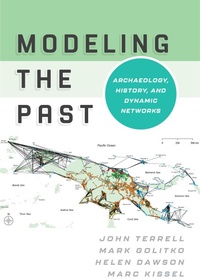
Modeling the Past
Description

How do researchers use dynamic network analysis (DYRA) to explore, model, and try to understand the complex global history of our species? Reduced to bare bones, network analysis is a way of understanding the world around us - a way called relational thinking - that is liberating but challenging. Using this handbook, researchers learn to develop historical and archaeological research questions anchored in DYRA. Undergraduate and graduate students, as well as professional historians and archaeologists can consult on issues that range from hypothesis-driven research to critiquing dominant historical narratives, especially those that have tended to ignore the diversity of the archaeological record.
More details
Other editions
Additional editions
Persons
John Terrell is Regenstein Curator of Pacific Anthropology at Field Museum of Natural History in Chicago. His most recent books are A Talent for Friendship: Rediscovery of a Remarkable Trait (Oxford, 2014), and Understanding the Human Mind: Why You Shouldn't Trust What Your Brain is Telling You (written with his son Gabriel Stowe Terrell, Routledge, 2020).
Content
List of figures
Acknowledgements
Introduction: History Matters
Chapter 1. Dynamic Relational Analysis
Chapter 2. Start With a Question
Chapter 3. Theories of History
Chapter 4. Modeling Theories
Chapter 5. Developing Hypotheses
Chapter 6. Gathering Information
Chapter 7. Analyzing Data
Conclusion: So What?
Glossary
References
