

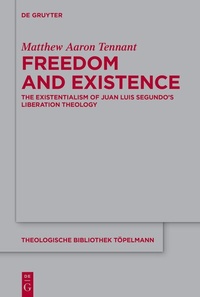
Freedom and Existence
Description

Is theology a dead corpse or living organism? For Uruguayan Jesuit Juan Luis Segundo (1925-1996), theology is dynamic. Freedom and existence for central themes. Segundo believed that theology should be transformative in human lives. For a theology to be transformative, there must be a connection to existence. That is, it must be existential. Yet most scholars have overlooked this assumption in critical analyses of liberation theology. This prima facie connection to existence is distinguishable from existentialism as a school of philosophy. By showing the significant existential dimension to Segundo's theology, assessing his work and contribution to twentieth-century theology relates to freedom, ecumenism, the role of faith in society, and the relationship between faith and ideologies.
More details
Other editions
Additional editions
Person
Content
- Intro
- Acknowledgements
- Contents
- Abbreviations
- Abstract
- 1 Which liberation theology?
- 2 Building an existential basis
- 3 Christian existentialism
- 4 Understanding freedom
- 5 Libertad, base communities and tape 24
- 6 Heidegger and existential grammar
- 7 Latent existentialism in liberation
- 8 Ideologies, faith, and freedom
- Overall conclusion
- Appendix I: "Existencialismo Cristiano"
- Appendix II: Sartre y Camus
- Appendix III: "La fenomenología"
- Works Cited
- Scripture Index
- Name Index
- Subject Index
