

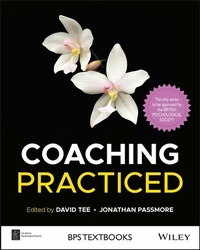
Coaching Practiced
Description

Explore the foundations of evidence-based approaches to coaching
A collection of the best papers over the last 15 years from the journal The Coaching Psychologist.
In Coaching Practiced: Coaching Psychology Tools, Techniques, and Evidence-Based Approaches for Coaches, a team of distinguished researchers delivers an insightful and complete handbook for practicing coaches. From wellbeing to the workplace, coaches of all stripes will find a fulsome discussion of effective methods, strategies, and frameworks for coaching clients.
In the book, the editors include contributions from leading experts that discuss a wide variety of essential topics in the field, including cognitive approaches, motivational interviewing, solution-focused coaching, mindfulness approaches, narrative coaching, and the influence of positive psychology in the field of coaching.
In this accessible and comprehensive resource, readers will also find:
* A thorough introduction to the psychology of coaching, including available frameworks
* In-depth examinations of reflective practice and professional development, including reflective journaling
* Comprehensive discussions of wellbeing coaching, including health and life coaching
* Fulsome explorations of workplace coaching, including the Lead, Learn, and Grow Model
Perfect for organizational and athletic leaders, Coaching Practiced: Coaching Psychology Tools, Techniques, and Evidence-Based Approaches for Coaches will also earn a place in the libraries of professional coaches, managers, executives, and others.
More details
Other editions
Additional editions
Persons
DAVID TEE is Global Director of Science, CoachHub, the digital coaching platform, Chair of the Wales Coaching Centre at the University of South Wales and editor of The Coaching Psychologist.
JONATHAN PASSMORE is Senior Vice President, CoachHub, the digital coaching platform, professor of coaching and behavioural change, Henley Business School. He is a licensed psychologist, an award-winning coach, researcher, and author. He is the editor of the eight volume Wiley Blackwell Series on Industrial Psychology, plus some 30 other titles.
Content
Section 1 The Psychology of Coaching: Coaching Psychology - Eclectic Approaches and
Diversity in Practice
Section 2 Coaching Frameworks: The Role of Frameworks, Models and Approaches in Coaching
Chapter 1 SPACE: A psychological model for use within cognitive behavioural coaching, therapy and stress management
Nick Edgerton & Stephen Palmer
Chapter 2 PEAK: A model for use within performance coaching
Garret O'Moore
Chapter 3 Is it time to REGROW the GROW model? Issues related to teaching coaching session structures
Anthony M. Grant
Chapter 4 A pluralistic approach to coaching
Zsófia Anna Utry, Stephen Palmer, John McLeod & Mick Cooper
Section 3 Reflective Practice and Professional Development: Introduction
Chapter 5 The scientist-practitioner model as a framework for coaching psychology
Sarah Corrie & David A. Lane
Chapter 6 Peer coaching framework: An exploratory technique
Manfusa Shams & Ho Law
Chapter 7 Reflection, note-taking and coaching: If it ain't written, it ain't coaching!
Anthony M. Grant
Chapter 8 Building reflective capability to enhance coaching practice
Louise Kovacs & Sarah Corrie
Section 4 Wellbeing Coaching: Introduction
Chapter 9 The impact of depression on the coaching process: How to recognise the signs and what to do next
Kasia Szymanska
Chapter 10 Anxiety and the coaching relationship: How to recognise the signs and what to do next
Kasia Szymanska
Chapter 11 Anxiety and the coaching relationship: How to recognise the signs and what to do next (Part 2)
Kasia Szymanska
Chapter 12 The challenges of working with emotion in coaching
Peter Duffell &
Section 5 Workplace Coaching: Introduction
Chapter 13 Growing the 'I' and the 'We' in Transformational Leadership: The LEAD, LEARN & GROW Model
Mary Watts & Sarah Corrie
Chapter 14 Leadership Coaching? No thanks, I'm not worthy
Vicky Ellam-Dyson & Stephen Palmer
Chapter 15 Can cognitive behavioural team coaching increase well-being?
Ulrika Hultgren, Stephen Palmer & Siobhain O'Riordan
Chapter 16 Coaching approaches for a lost sense of self - hunt it down or let it be?
Tessa Dodwell
Section 6 Cognitive Approaches
Chapter 17 A behavioural approach to BIG problems encountered in coaching: Behaviour
Incompatible with Goals
Stephen Palmer & Christine Dunkley
Chapter 18 Rational Coaching: A cognitive behavioural approach
Stephen Palmer
Chapter 19 Searching for shades of grey: Modifying polarised thinking with continuum methods
Sarah Corrie
Chapter 20 The application of the responsibility pie technique in coaching
Garret O'Moore
Chapter 21 Deserted Island technique: Demonstrating the difference between musturbatory and preferential beliefs in cognitive behavioural and rational coaching
Stephen Palmer
Section 7 Motivational Interviewing: Introduction
Chapter 22 Motivational Interviewing - a model for coaching psychology practice
Jonathan Passmore
Chapter 23 Motivational Interviewing techniques reflective listening
Jonathan Passmore
Chapter 24 MI - Balance sheet techniques
Jonathan Passmore
Chapter 25 MI techniques: The Typical Day
Jonathan Passmore
Chapter 26 MI techniques: Recognising change talk
Jonathan Passmore
Chapter 27 MI techniques: Agenda Mapping
Jonathan Passmore
Chapter 28 Motivational Interviewing: Reflecting on
ethical decisions in MI
Jonathan Passmore
Section 8 Solution-Focused Coaching: Introduction
Chapter 29 ENABLE: A solution-focused coaching model for individual and team coaching
Mark Adams
Chapter 30 Steps to Solutions: A process for putting solution-focused coaching principles into practice
Anthony M. Grant
Chapter 31 Solution-focused coaching: The basics for advanced practitioners
Anthony M. Grant
Chapter 32 Revisiting the 'P' in the PRACTICE coaching model
Stephen Palmer
Section 9 Mindfulness: Introduction
Chapter 33 The role of mindfulness in coaching
Jonathan Passmore & Oberdan Marianetti
Chapter 34 Mindfulness in coaching: A model for coaching practice
Jonathan Passmore
Chapter 35 Mindfulness in coaching: Identifying environmental distractions
Jonathan Passmore
Chapter 36 'Mindfulness in Coaching': STOP
Jonathan Passmore
Chapter 37 Mindfulness in coaching: Choosing our attitude
Jonathan Passmore
Chapter 38 Mindfulness in coaching: Being the observer
Jonathan Passmore
Chapter 39 Coaching through walking
Arthur Turner
Section 10 N arrative Coaching: Introduction
Chapter 40 Narrative coaching - Part 1: An introduction and the first step
Ho Law
Chapter 41 Narrative coaching - Part 2: Two forms of change structures: re-authoring and remembering
Ho Law
Chapter 42 Narrative coaching - Part 3: Approaches for groups, teams, organisations and community
Ho Law
Chapter 43 Narrative coaching - Part 4: Redesigning the GROW model as the 4th generation coaching
for people and the planet
Ho Law
Chapter 44 Using the four gateways to tell new stories and make new choices
David Drake
Chapter 45 Creating zones of proximal development in coaching: The power of working at thresholds
David Drake
Section 11 Positive Psychology: Introduction
Chapter 46 Positive Psychology Coaching - a model for coaching practice
Jonathan Passmore & Lindsay G. Oades
Chapter 47 Positive Psychology Techniques - Active Constructive Responding
Jonathan Passmore & Lindsay G. Oades
Chapter 48 Positive psychology techniques - Positive case conceptualisation
Jonathan Passmore & Lindsay G. Oades
Chapter 49 Positive psychology techniques - Random Acts of Kindness and Consistent Acts of Kindness and Empathy
Jonathan Passmore & Lindsay G. Oades
Chapter 50 Positive psychology techniques - gratitude
Jonathan Passmore & Lindsay G. Oades
Chapter 51 Positive psychology techniques - Three Good Things
Jonathan Passmore & Lindsay G. Oades
1
SPACE: A psychological model for use within cognitive behavioural coaching, therapy and stress management
Nick Edgerton & Stephen Palmer
Abstract
This paper introduces 'SPACE', a comprehensive psychological model that can be used within cognitive behavioural coaching, therapy and stress management to aid assessment, explain the cognitive model to the client, and assist in the development of a coaching, therapeutic or training programme. Other models, coaching processes and acronyms will be briefly covered to put 'SPACE' into a coaching context. For illustrative purposes this paper will focus on coaching.
Over the past couple of decades a number of different coaching models, processes and associated acronyms have been developed by coaching practitioners to enhance and inform their practice, and provide a useful framework. These models are usually shared with the client in a transparent manner and help to facilitate the change and goal-focused process. The next section will highlight a number of the different models including the cognitive model. Then the SPACE model will be illustrated.
Original publication details: Edgerton, N., & Palmer, S. (2005, November). SPACE: A psychological model for use within cognitive behavioural coaching, therapy and stress management. The Coaching Psychologist, 2(2), 25-31. Reproduced with permission of The British Psychological Society.
GROW MODEL
The GROW model of coaching has been popularised by Sir John Whitmore (e.g. 1996) although according to the literature (see Boyle et al., 2005) it was developed by Graham Alexander. It is probably one of the most well used models of coaching.
Whitmore (2004, p.54) describes the sequence for GROW as follows:
- GOAL setting for the session as well as short and long term;
- REALITY checking to explore the current situation;
- OPTIONS and alterative strategies or courses of action;
- WHAT is to be done, WHEN, by WHOM and the WILL to do it.
The last stage is also known as WRAP-UP by some practitioners. The GROW model appears to be taught by many coaching training centres throughout the UK. It is relatively straight forward and would be at the behavioural end of the coaching spectrum.
ACHIEVE MODEL
The ACHIEVE model was developed by Sabine Dembkowski and Fiona Elridge (2003). They believe that it is a logical progression from the GROW model and follows the development of a coaching relationship in a systematic manner:
- Assess current situation;
- Creative brainstorming of alternative to current situation;
- Hone goals;
- Initiate options;
- Evaluative options;
- Valid action programme design;
- Encourage momentum. The ACHIEVE model does allow for flexibility and individuality.
LASER: A COACHING PROCESS
Graham Lee (2003) describes LASER, a five-stage coaching process which provides a frame of reference for moving a manager through the journey of leadership coaching. According to Lee it is a flexible framework that indicates the core activities. The five stages are:
- Learning;
- Assessing;
- Story-making;
- Enabling;
- Reframing.
Unlike some of the other coaching models Lee does not conceive LASER as a rigid linear journey.
POSITIVE MODEL
Vincenzo Libri (2004) suggested the POSITIVE model developed from the GROW and ACHIEVE and influenced by psychological contributions that produce 'an optimum coaching relationship'. Examples of key questions in each phase are provided below:
- Purpose, e.g. what is it you want to achieve?
- Observations, e.g. what have you tried so far?
- Strategy, e.g. what does success look like for you?
- Insight, e.g. how committed are you in achieving this goal on a scale of 1 - 10?
- Team, e.g. who will you share your goal with?
- Initiate, e.g. when will you start to act on this?
- Value, e.g. how will you celebrate your success?
- Encourage, e.g. how are you going with your goals?
Libri (2004) provides a useful list of key questions at each stage.
TRADITIONAL PROBLEM-SOLVING MODELS
Wasik (1984) proposed a seven-step problem-solving sequence and accompanying questions that practitioners and more importantly their clients can ask themselves at each step of the process as below.
Steps Questions/Actions 1. Problem identification What is the concern? 2. Goal selection What do I want? 3. Generation of alternatives What can I do? 4. Consideration of consequences What might happen? 5. Decision making What is my decision? 6. Implementation Now do it! 7. Evaluation Did it work?Even though it does not have a convenient acronym, this seven-step model has been adapted to coaching, therapy, training and stress management (Palmer $ Burton, 1996; Palmer, 1997a, b; Neenan $ Palmer, 2001a, b). Once the client becomes adept at using the seven-step model, Neenan and Palmer (2001a, b) suggest that the client may want to use a shorter model to quicken the problem-solving process. For example, STIR and PIE:
Select a problem
Target a solution
Implement a solution
Review outcome
Problem definition
Implement a solution
Evaluate outcome
They assert that shorter models of problem-solving are usually used for rapid processing of a problem in order to deal with a crisis or make a quick decision. However, with these shorter models, deliberation is exchanged for speed, so a less satisfactory outcome may be experienced by the client.
ABCDE COGNITIVE MODEL
The problem-solving models or frameworks described above form an integrated part of the cognitive or cognitive behavioural coaching approach. If the issue or problem can be addressed by focusing on the practical aspects of the problem then the problem solving models are sufficient. However, if the client experiences a psychological or emotional block largely caused by unhelpful, goal-blocking or performance interfering thoughts (PITs), then the practitioner uses the well known ABCDE model (Ellis et al., 1997). Often this need becomes apparent when the client cannot successfully complete Step 5 of the seven-step problem-solving model:
A - Activating event - stops working on the solution chosen at step 5.
B - Beliefs or PITs, e.g. 'I can't stand all this hard work. I'll never reach the deadline.'
C - Consequences: emotion - anxiety; behaviour - procrastinates; physiological palpitations.
D - Disputing - 'I don't like it but in reality I can stand it. If I start work NOW then I'm more likely to reach the deadline.
E - Effective new approach - reduction in of anxiety. Starts to focus on the tasks involved which would assist in reaching the project deadline with the proposed solution at step 5. Cognitive Coaching or Cognitive Behavioural Coaching or Rational Emotive Behavioural Coaching can all be considered as dual systems approaches focusing on the practical and/or psychological aspects of a client's problem or issue as and when required. Palmer (1997a, b) described the integration of the ABCDE and problem-solving models as 'an intrinsically brief integrative approach'.
INTRODUCING THE SPACE MODEL - AN OVERVIEW
The SPACE model was developed in 2002 and is an attempt to portray the interactions involved in psychological process in a manner that is more graphical than the two or five column worksheets that are commonly used in cognitive behavioural approaches. It is also an easy to remember acronym:
Social context
Physiology
Action
Cognition
Emotion
The model has two further components which are also referred to when in use with clients:
Action Physiology Cognition Action Emotion Cognition EmotionThe literature relating to cognitive behaviour coaching and therapy deals largely with the importance of the Cognitions as determinates of Emotional states and the resultant Behaviours or Actions (see Beck, 1995; Ellis et al., 1997; Neenan & Palmer, 2001a, b). The 'ABCDE' model is one of the most widely used in cognitive behavioural approaches. Implicit in the model is the belief that Cognitions largely determine Emotions.
This can be depicted as:
As cognitions can lead to an emotional response, a person with anger provoking thoughts is likely to experience anger as an emotion. Cognitions include images or pictures a person may also experiences in their mind's eye. An example is provided below of a teacher in a specific...
