

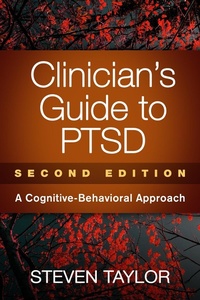
Clinician's Guide to PTSD
A Cognitive-Behavioral Approach
2nd Edition
Published on 14. June 2017
372 pages
978-1-4625-3051-9 (ISBN)
Description

Clinical psychologists, clinical social workers, psychiatrists, psychiatric nurses, and counselors. May serve as a text in graduate-level courses and clinical practica.
More details
Other editions
Additional editions
Book
08/2017
2nd Edition
Guilford Press
€47.50
Shipment within 15-20 days
Person
Steven Taylor, PhD, is a clinical psychologist and Professor in the Department of Psychiatry at the University of British Columbia. He is Associate Editor of the Journal of Obsessive-Compulsive and Related Disorders and previously served as Editor of the Journal of Cognitive Psychotherapy and Associate Editor of Behaviour Research and Therapy. Dr. Taylor's research focuses on the etiology and treatment of anxiety and related disorders, conceptualized from a biopsychosocial perspective. His work has been recognized with awards from the Association for Behavioral and Cognitive Therapies, the Anxiety Disorders Association of America, and the Canadian Psychological Association, among others. He has authored over 300 scientific journal articles and book chapters and several books.
Content
I. Conceptual and Empirical Foundations
1. Clinical Features of PTSD
2. Cognitive and Behavioral Features of PTSD: What the Research Tells Us
3. Cognitive-Behavioral Theories
4. Neurobiology for the Cognitive-Behavioral Therapist
5. Treatments: A Review of the Research
II. Treatment Methods and Protocols
6. Assessment for Treatment Planning and Evaluation
7. Cognitive-Behavioral Therapy: An Overview
8. Developing a Case Formulation and Treatment Plan
9. Psychoeducation, Treatment Engagement, and Emotion Regulation Strategies
10. Cognitive Interventions I: General Considerations and Approaches
11. Cognitive Interventions II: Methods for Specific Types of Beliefs
12. Exposure Exercises I: Imaginal and Interoceptive Exposure
13. Exposure Exercises II: Situational Exposure
14. Adjunctive Methods and Relapse Prevention
15. Combining Cognitive-Behavioral Therapy with Pharmacotherapy
References
Index
1. Clinical Features of PTSD
2. Cognitive and Behavioral Features of PTSD: What the Research Tells Us
3. Cognitive-Behavioral Theories
4. Neurobiology for the Cognitive-Behavioral Therapist
5. Treatments: A Review of the Research
II. Treatment Methods and Protocols
6. Assessment for Treatment Planning and Evaluation
7. Cognitive-Behavioral Therapy: An Overview
8. Developing a Case Formulation and Treatment Plan
9. Psychoeducation, Treatment Engagement, and Emotion Regulation Strategies
10. Cognitive Interventions I: General Considerations and Approaches
11. Cognitive Interventions II: Methods for Specific Types of Beliefs
12. Exposure Exercises I: Imaginal and Interoceptive Exposure
13. Exposure Exercises II: Situational Exposure
14. Adjunctive Methods and Relapse Prevention
15. Combining Cognitive-Behavioral Therapy with Pharmacotherapy
References
Index
