


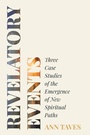
Revelatory Events
Three Case Studies of the Emergence of New Spiritual Paths
1st Edition
Published on 12. February 2018
384 pages
978-1-4008-8446-9 (ISBN)
Description

A leading scholar sheds critical light on the seemingly revelatory events behind new religions and spiritual movements
Unseen presences. Apparitions. Hearing voices. Although some people would find such experiences to be distressing and seek clinical help, others perceive them as transformative. Occasionally, these unusual phenomena give rise to new spiritual paths or religious movements. Revelatory Events provides fresh insights into what is perhaps the bedrock of all religious belief-the claim that otherworldly powers are active in human affairs.
Ann Taves looks at Mormonism, Alcoholics Anonymous, and A Course in Miracles-three cases in which insiders claimed that a spiritual presence guided the emergence of a new spiritual path. In the 1820s, Joseph Smith, Jr., reportedly translated the Book of Mormon from ancient gold plates unearthed with the help of an angel. Bill Wilson cofounded AA after having an ecstatic experience while hospitalized for alcoholism in 1934. Helen Schucman scribed the words of an inner voice that she attributed to Jesus, which formed the basis of her 1976 best-selling self-study course. In each case, Taves argues, the sense of a guiding presence emerged through a complex, creative interaction between a founding figure with unusual mental abilities and an initial set of collaborators who were drawn into the process by diverse motives of their own.
A major work of scholarship, this compelling and accessible book traces the very human processes behind such events.
Unseen presences. Apparitions. Hearing voices. Although some people would find such experiences to be distressing and seek clinical help, others perceive them as transformative. Occasionally, these unusual phenomena give rise to new spiritual paths or religious movements. Revelatory Events provides fresh insights into what is perhaps the bedrock of all religious belief-the claim that otherworldly powers are active in human affairs.
Ann Taves looks at Mormonism, Alcoholics Anonymous, and A Course in Miracles-three cases in which insiders claimed that a spiritual presence guided the emergence of a new spiritual path. In the 1820s, Joseph Smith, Jr., reportedly translated the Book of Mormon from ancient gold plates unearthed with the help of an angel. Bill Wilson cofounded AA after having an ecstatic experience while hospitalized for alcoholism in 1934. Helen Schucman scribed the words of an inner voice that she attributed to Jesus, which formed the basis of her 1976 best-selling self-study course. In each case, Taves argues, the sense of a guiding presence emerged through a complex, creative interaction between a founding figure with unusual mental abilities and an initial set of collaborators who were drawn into the process by diverse motives of their own.
A major work of scholarship, this compelling and accessible book traces the very human processes behind such events.
All prices
More details
Language
English
Place of publication
Princeton, NJ
United States
Publishing group
De Gruyter
Target group
Professional and scholarly
Edition type
Digital original
Product notice
Reflowable
Illustrations
20 halftones. 2 line illus. 4 tables. 1 map.
File size
5,77 MB
ISBN-13
978-1-4008-8446-9 (9781400884469)
Schweitzer Classification
Other editions
Additional editions
Book
11/2016
Princeton University Press
€33.00
Shipment within 10-20 days

Book
11/2016
Princeton University Press
€117.80
Shipment within 10-20 days
Person
Ann Taves is professor of religious studies at the University of California, Santa Barbara. Her books include Religious Experience Reconsidered and Fits, Trances, and Visions: Experiencing Religion and Explaining Experience from Wesley to James (both Princeton).
Content
Illustrations and Tables vii
Preface xi
Acknowledgments xv
Abbreviations xvii
Introduction 1
Part 1 Making Meaning 13
Case Study A Restored Church 17
1 Translation 23
2 Materialization 50
3 Beginnings 66
Case Study An Anonymous Fellowship 82
4 Stories 89
5 Fellowship 110
6 Seeking 129
Case Study A Course in Miracles 151
7 Emergence 157
8 Teaching(s) 180
9 Roles 195
Part 2 Creating Paths 223
10 Groups 225
11 Selves 240
12 Motives 270
Conclusion 290
Appendix Discussion of Methods 297
Appendix Charts 311
Bibliography 331
Author Index 347
Subject Index 351
Preface xi
Acknowledgments xv
Abbreviations xvii
Introduction 1
Part 1 Making Meaning 13
Case Study A Restored Church 17
1 Translation 23
2 Materialization 50
3 Beginnings 66
Case Study An Anonymous Fellowship 82
4 Stories 89
5 Fellowship 110
6 Seeking 129
Case Study A Course in Miracles 151
7 Emergence 157
8 Teaching(s) 180
9 Roles 195
Part 2 Creating Paths 223
10 Groups 225
11 Selves 240
12 Motives 270
Conclusion 290
Appendix Discussion of Methods 297
Appendix Charts 311
Bibliography 331
Author Index 347
Subject Index 351

