

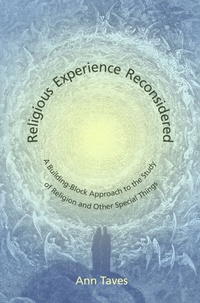
Religious Experience Reconsidered
A Building-Block Approach to the Study of Religion and Other Special Things
1st Edition
Published on 19. November 2018
232 pages
978-1-4008-3097-8 (ISBN)
Description

How the sciences of the mind can advance the study of religion
The essence of religion was once widely thought to be a unique form of experience that could not be explained in neurological, psychological, or sociological terms. In recent decades scholars have questioned the privileging of the idea of religious experience in the study of religion, an approach that effectively isolated the study of religion from the social and natural sciences. Religious Experience Reconsidered lays out a framework for research into religious phenomena that reclaims experience as a central concept while bridging the divide between religious studies and the sciences.
Ann Taves shifts the focus from "religious experience," conceived as a fixed and stable thing, to an examination of the processes by which people attribute meaning to their experiences. She proposes a new approach that unites the study of religion with fields as diverse as neuroscience, anthropology, sociology, and psychology to better understand how these processes are incorporated into the broader cultural formations we think of as religious or spiritual. Taves addresses a series of key questions: how can we set up studies without obscuring contestations over meaning and value? What is the relationship between experience and consciousness? How can research into consciousness help us access and interpret the experiences of others? Why do people individually or collectively explain their experiences in religious terms? How can we set up studies that allow us to compare experiences across times and cultures?
Religious Experience Reconsidered demonstrates how methods from the sciences can be combined with those from the humanities to advance a naturalistic understanding of the experiences that people deem religious.
The essence of religion was once widely thought to be a unique form of experience that could not be explained in neurological, psychological, or sociological terms. In recent decades scholars have questioned the privileging of the idea of religious experience in the study of religion, an approach that effectively isolated the study of religion from the social and natural sciences. Religious Experience Reconsidered lays out a framework for research into religious phenomena that reclaims experience as a central concept while bridging the divide between religious studies and the sciences.
Ann Taves shifts the focus from "religious experience," conceived as a fixed and stable thing, to an examination of the processes by which people attribute meaning to their experiences. She proposes a new approach that unites the study of religion with fields as diverse as neuroscience, anthropology, sociology, and psychology to better understand how these processes are incorporated into the broader cultural formations we think of as religious or spiritual. Taves addresses a series of key questions: how can we set up studies without obscuring contestations over meaning and value? What is the relationship between experience and consciousness? How can research into consciousness help us access and interpret the experiences of others? Why do people individually or collectively explain their experiences in religious terms? How can we set up studies that allow us to compare experiences across times and cultures?
Religious Experience Reconsidered demonstrates how methods from the sciences can be combined with those from the humanities to advance a naturalistic understanding of the experiences that people deem religious.
More details
Edition
Course Book
Language
English
Place of publication
Princeton, NJ
United States
Publishing group
De Gruyter
Target group
Professional and scholarly
Edition type
Digital original
Illustrations
7 line illus. 7 tables.
File size
1,28 MB
ISBN-13
978-1-4008-3097-8 (9781400830978)
Schweitzer Classification
Other editions
Additional editions
Ann Taves
Religious Experience Reconsidered
A Building-Block Approach to the Study of Religion and Other Special Things
Book
10/2011
Princeton University Press
€28.90
Article not available at the moment
Person
Ann Taves is professor of religious studies at the University of California, Santa Barbara, and past president of the American Academy of Religion. Her books include Fits, Trances, and Visions: Experiencing Religion and Explaining Experience from Wesley to James (Princeton).
Content
List of Illustrations and Tables ix
Acknowledgments xi
Preface xiii
Introduction: The Problem of "Religious Experience" 3
Experiences Deemed Religious 8
Previous Work 9
The Argument 12
Why an Attributional Approach Is Better 14
Chapter One: Religion: Deeming Things Religious 16
The Sui Generis and Ascriptive Models of "Religious Experience" 17
Deeming Things Religious 22
Special Things and Things Set Apart 28
Setting up Research 48
Conclusion: A Four-Fold Matrix 53
Chapter Two: Experience: Accessing Conscious Behavior 56
Clarifying the Concept 58
Accessing Experience 63
Representation and Experience Revisited 73
Conclusion 86
Chapter Three: Explanation: Attributing Causality 88
Attribution Theory: An Overview 90
An Attributional Theory of Religion 94
Four Levels of Analysis and Attribution 111
Conclusion 118
Chapter Four: Comparison: Constructing an Object of Study 120
Comparing Experiences 121
Specifying a Point of Comparison 126
Comparing Simple and Composite Formations 129
Imagination and Reality 156
Conclusion: Religions: A Building-Block Approach 161
Building Blocks 162
Religions as Composite Formations 164
Implications 165
Appendixes
Appendix A: General Attribution Theory of Religion 169
Appendix B: Personal Accounts of Stephen Bradley and William Barnard 172
Appendix C: Preliminary Thoughts on the Elaboration of Composite Formations 176
Glossary 181
Works Cited 183
Name Index 203
Subject Index 207
Acknowledgments xi
Preface xiii
Introduction: The Problem of "Religious Experience" 3
Experiences Deemed Religious 8
Previous Work 9
The Argument 12
Why an Attributional Approach Is Better 14
Chapter One: Religion: Deeming Things Religious 16
The Sui Generis and Ascriptive Models of "Religious Experience" 17
Deeming Things Religious 22
Special Things and Things Set Apart 28
Setting up Research 48
Conclusion: A Four-Fold Matrix 53
Chapter Two: Experience: Accessing Conscious Behavior 56
Clarifying the Concept 58
Accessing Experience 63
Representation and Experience Revisited 73
Conclusion 86
Chapter Three: Explanation: Attributing Causality 88
Attribution Theory: An Overview 90
An Attributional Theory of Religion 94
Four Levels of Analysis and Attribution 111
Conclusion 118
Chapter Four: Comparison: Constructing an Object of Study 120
Comparing Experiences 121
Specifying a Point of Comparison 126
Comparing Simple and Composite Formations 129
Imagination and Reality 156
Conclusion: Religions: A Building-Block Approach 161
Building Blocks 162
Religions as Composite Formations 164
Implications 165
Appendixes
Appendix A: General Attribution Theory of Religion 169
Appendix B: Personal Accounts of Stephen Bradley and William Barnard 172
Appendix C: Preliminary Thoughts on the Elaboration of Composite Formations 176
Glossary 181
Works Cited 183
Name Index 203
Subject Index 207
