

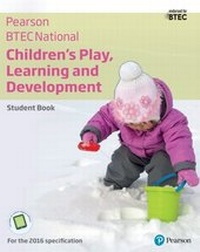
BTEC Nationals Children's Play, Learning and Development Student Book + ActiveBook
For the 2016 Specifications
1st Edition
Published on 10. December 2016
578 pages
978-0-435-18367-7 (ISBN)
Description

Updates to BTEC National Set Tasks for external assessment - April 2017As a result of feedback from the Department for Education Pearson have made updates to the Set Tasks for some BTEC National qualifications. Therefore subsequent changes have been made to this product. If you have purchased this book before 13th April 2017, details of these changes can be found here. [link to www.pearsonfe.co.uk/BTECchanges]. Corrected copies will be available to purchase by June 2017. The Student Book and ActiveBook has clearly laid out pages with a range of supportive features to aid learning and teaching: Getting to know your unit sections ensure learners understand the grading criteria and unit requirements. Getting ready for assessment sections focus on preparation for external assessment with guidance for learners on what to expect. Hints and tips will help them prepare for assessment and sample answers are provided for a range of question types including, short and long answer questions, all with a supporting commentary. Pause point features provide opportunities for learners to self-evaluate their learning at regular intervals. Each Pause point feature gives learners a Hint or Extend option to either revisit and reinforce the topic or encourage independent research or further study skills. Case study and Theory into practice features enable development of problem-solving skills and place the theory into real life situations learners could encounter. Assessment practice features provide scaffolded activities that help prepare learners for assessment. Within each assessment practice activity, a Plan, Do and Review section supports learners formative assessment by to making sure they fully understand what they are being asked to do, what their goals are and how to evaluate the task and consider how they could improve. Literacy and numeracy activities provide opportunities for reinforcement in these key areas, placing the skills into a childrens play, learning and development context. Dedicated Think future pages provide case studies from the industry, with a focus on aspects of skills development that can be put into practice in a real work environment and further study.
More details
Other editions
Additional editions
Penny Tassoni | Brenda Baker | Louise Burnham
BTEC National Children's Play, Learning and Development Student Book
For the 2016 specifications
Book
10/2016
Pearson Education Limited
€64.12
Shipment within 10-20 days
Content
- Front Cover
- Contents
- Introduction
- Chapter 1: Children's Development
- A: The principles of growth and development and how they are applied from birth up to 7 years 11 months
- A1: Principles and patterns of growth and development
- A2: Areas of development
- A3: Patterns of development
- B: Physical development from birth up to 7 years 11 months
- B1: Physical development
- B2: Promoting children's physical development
- C: Cognition, language and communication development
- C1: Theoretical approaches
- C2: How applying theories of cognition, language and communication helps practitioners understand their practice
- D: Theories of social and emotional development
- D1: The self, others and place in the world
- D2: Applying theories of social and emotional development to early years practice
- Chapter 2: Development of Children's Communication, Literacy and Numeracy Skills
- A: Stages of speech, communication and language development and its link to overall domains of development
- A1: The role of speech, communication and language in children's development
- A2: Developing children's speech, communication and language
- B: Supporting children's literacy and numeracy skills through speech, communication and language development
- B1: Development of literacy skills
- B2: Development of numeracy and mathematical skills
- B3: Supporting literacy development
- B4: Supporting writing development
- B5: Supporting numeracy development
- C: Approaches to the varied needs of individual children
- C1: Supporting the concept of multilingualism
- C2: Understand how adults support children who have additional language needs
- Chapter 3: Play and Learning
- A: Examine types of play and learning activities and the benefits for children's learning and development
- A1: Play types and opportunities
- A2: The benefits of play for children
- B: Investigate theoretical perspectives to learning and development, curriculum approaches to play and their influence on current early years practice
- B1 Theoretical perspectives to learning and development
- B2: Curriculum approaches to play
- B3: Influences on current early years practice
- C: Demonstrate skills required by early years professionals to support children's purposeful play and learning opportunities
- C1: Professional skills for supporting purposeful play and learning
- C2: Support children's purposeful play and learning activities
- Chapter 4: Enquiries into Current Research in Early Years Practice
- A: Types of issues where research is carried out in the early years sector
- A1: Purpose of research in the early years sector
- A2: Issues in early years
- B: Research methods in early years
- B1: Research methodologies
- B2: Planning research
- B3: Ethical issues
- B4: Research skills
- C: Reviewing relevant secondary research in contemporary issues affecting early years practice
- C1: Selecting appropriate secondary sources
- C2: Evaluation of research
- C3: Wider applications of research
- Chapter 5: Keeping Children Safe
- A: Investigate legal responsibilities and approaches to health and safety in early years settings
- A1: Responsibilities to children's health and safety
- A2: Approaches to promoting children's health and safety
- B: Explore procedures for prevention and control of infection in early years settings
- B1: Statutory requirements and procedures for infection prevention and control
- C: Examine how early years professionals safeguard children and respond to concerns that a child has been abused
- C1: Types and indicators of abuse
- C2: Safeguarding children
- C3: Responding to concerns about abuse
- D: Demonstrate how to recognise and assess hazards and risks to children and respond to emergencies in an early years setting
- D1: Risk assessment in early years
- D2: Recognising accidents and emergencies
- Chapter 6: Children's Physical Development, Care and Health Needs
- A: Understand the physical development and care needs of children and approaches to their healthy development
- A1: The physical needs of children
- A2: Approaches to supporting physical development and care needs
- B: Plan and support routines and activities to meet children's physical development and care needs
- B1: Planning for physical care routines and activities
- B2: Support physical development and care needs
- C: Investigate how to recognise and respond to children who are unwell and support children with ongoing health conditions
- C1: Signs of illness
- C2: Responding to children who are unwell
- C3: Support for children with ongoing health conditions
- Chapter 7: Children's Personal, Social and Emotional Development
- A: Investigate approaches in supporting children's personal, emotional and social development and influences on behaviour
- A1: Roles and responsibilities
- A2: The key person approach
- A3: Influences on children's behaviour
- B: Explore how to prepare and support children through transition and significant life events
- B1: The impact of transition and significant life events
- B2: Support transition and significant life events
- C: Support and promote children's positive behaviour
- C1: Support and promote positive behaviour
- Chapter 8: Working with Parents and Others in Early Years
- A: Explore partnership work with parents in early years settings
- A1: The impact of parental rights, views and experiences on partnership work
- A2: Approaches to effective partnerships with parents
- B: Explore partnership work with colleagues and other professionals in early years settings
- B1: Approaches to effective partnerships with colleagues and other professionals
- C: Demonstrate effective partnership work with parents and others in early years settings to meet the needs of children
- C1: Demonstrate effective partnerships with parents
- C2: Demonstrate effective partnerships with colleagues and others
- Chapter 9: Observation, Assessment and Planning
- A: Understand the importance of observation, assessment and planning in work with children
- A1: The importance of observation and assessment
- A2: Planning for children's development
- B: Carry out and record observations of children to make accurate assessments
- B1: Observation recording methods
- B2: Carry out and record observations of children
- B3: Make accurate assessments of children
- C: Create, implement and review activity plans for children
- C1: Create activity plans
- C2: Implement activity plans
- C3: Review activity plans
- Chapter 10: Reflective Practice
- A: Understand the purpose of reflective practice in relation to improving early years provision and practice
- A1: How early years professionals use reflective practice
- B: Investigate theories and approaches for reflective practice
- B1: Theories for reflective practice
- B2: Approaches to reflective practice
- C: Develop reflective practice skills in an early years setting
- C1: Reflective practice skills
- C2: Demonstrate reflective practice skills
- Chapter 11: The Early Years Foundation Stage
- A: Understand the legal status, principles, themes and aims of the Early Years Foundation Stage
- A1: The legal status of the Early Years Foundation Stage (EYFS)
- A2: Principles, themes and aims of the EYFS
- B: Examine the learning and development and assessment requirements of the Early Years Foundation Stage
- B1: Learning and development requirements
- B2: Assessment requirements
- C: Examine the safeguarding and welfare requirements of the Early Years Foundation Stage
- C1: Safeguarding and welfare requirements
- D: Apply skills to support children's progress towards early learning goals and to meet safeguarding and welfare requirements of the Early Years Foundation Stage
- D1: Support children's learning and development towards early learning goals
- D2: Support the safeguarding and welfare requirements of the EYFS
- Glossary
- Index
- Back Cover
