

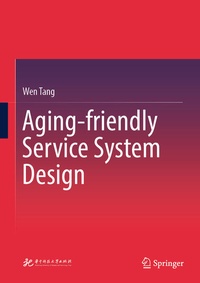
Aging-friendly Service System Design
Description

This book systematically constructs a complete knowledge system for the design of aging-friendly services. It begins with an analysis of global aging trends, examining the challenges and opportunities faced today, clarifying the necessity and strategic significance of designing for the elderly, and providing detailed interpretations of relevant policies, regulations, and data security requirements. At the theoretical level, the book delves into the physiological and psychological characteristics of the elderly population, including physical function decline, cognitive ability changes, and psychological needs characteristics, providing a scientific basis for design practice. It also emphasizes key principles such as universal design and barrier-free design, highlighting the humanistic care and ethical considerations in design. In terms of practical application, the book offers systematic methods for user needs research, as well as specific implementation plans for interface design and interaction optimization. It pays special attention to key elements such as visual presentation and operational procedures, effectively enhancing the user experience for elderly users. Finally, the book prospectively explores the application prospects of intelligent technology in aging-friendly services, including innovative solutions such as the Internet of Things and artificial intelligence, pointing out the direction for the intelligent development of aging-friendly services. The book combines theory with practice, providing comprehensive guidance for building a humanized and intelligent aging-friendly service system.
More details
Other editions
Additional editions
Person
Tang Wen , Associate Professor in the Department of Design at the Academy of Fine Arts, Central China Normal University, is a Visiting Scholar at the Aging Society Research Center (ASRC) at the University of Missouri-Columbia (MU). He is also the Director of the Smart Health Care Research Center at Central China Normal University and an Expert Committee of Hubei Provincial Committee on Aging. Additionally, he serves as a Consultant Expert for the Wuhan Elderly Care Service Industry Association.
Content
Chapter 1. Overview of Aging Societies and Age-Friendly Services.- Chapter 2. Elderly Physio-Psychological Features Analysis.- Chapter 3. Design principles for aging-friendly service systems.- Chapter 4. Elderly User Research and Needs Analysis.- Chapter 5. Interface Design of Elderly-Friendly Service System.- Chapter 6. Optimization of Interactive Experience.-Chapter 7. Intelligent Technology and Aging-friendly Services.- Chapter 8. Evaluation and Iterative Optimization of Age-Friendly Service Systems.- Chapter 9: Case Study and Future Outlook.
