

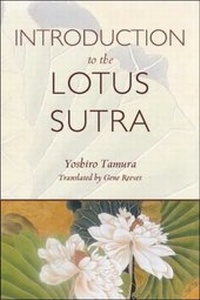
Introduction to the Lotus Sutra
1st Edition
Published on 15. July 2014
208 pages
978-1-61429-099-5 (ISBN)
Description

The Lotus Sutra--one of the most popular Buddhist classics--is here accessibly introduced by one of its most eminent scholars.
"Soon after entering university in December of 1943, I was sent to the front as a student soldier. I wondered if I were allowed to bring but a single book on the trip, possibly to my death, which would I want to bring. It was the Lotus Sutra" -- from the author's Preface.
Having developed a lifelong appreciation of the Lotus Sutra -- even carrying a dog-eared copy with him through service in World War II -- Yoshiro Tamura sought to author an introduction to this beloved work of Buddhist literature. Tamura wanted it to be different than other basic explorations of the text; his introduction would be plain-spoken, relevant and sensitive to modern concerns, and well-informed by contemporary scholarship. He succeeded marvelously with Introduction to the Lotus Sutra, which Gene Reeves -- Tamura's student and translator of the popular English edition of The Lotus Sutra -- translates and introduces in English for the first time here.
Tackling issues of authenticity in the so-called "words of Buddha," the influence of culture and history on the development of the Lotus Sutra, and the sutra's role in Japanese life, Introduction to the Lotus Sutra grounds this ancient work of literature in the real, workaday world, revealing its continued appeal across the ages.
"Soon after entering university in December of 1943, I was sent to the front as a student soldier. I wondered if I were allowed to bring but a single book on the trip, possibly to my death, which would I want to bring. It was the Lotus Sutra" -- from the author's Preface.
Having developed a lifelong appreciation of the Lotus Sutra -- even carrying a dog-eared copy with him through service in World War II -- Yoshiro Tamura sought to author an introduction to this beloved work of Buddhist literature. Tamura wanted it to be different than other basic explorations of the text; his introduction would be plain-spoken, relevant and sensitive to modern concerns, and well-informed by contemporary scholarship. He succeeded marvelously with Introduction to the Lotus Sutra, which Gene Reeves -- Tamura's student and translator of the popular English edition of The Lotus Sutra -- translates and introduces in English for the first time here.
Tackling issues of authenticity in the so-called "words of Buddha," the influence of culture and history on the development of the Lotus Sutra, and the sutra's role in Japanese life, Introduction to the Lotus Sutra grounds this ancient work of literature in the real, workaday world, revealing its continued appeal across the ages.
More details
Other editions
Additional editions
Yoshiro Tamura
Introduction to the Lotus Sutra
Book
07/2014
Wisdom Publications,U.S.
€18.50
Article not available at the moment
Persons
Content
- Cover
- Title
- Copyright
- Contents
- Publisher's Acknowledgment
- Introduction
- Tamura's Preface
- Introduction to the Lotus Sutra
- I. Formation of the Lotus Sutra
- 1. Are Sutras the Words of the Buddha?
- Some of the Wonders of Buddhism
- Mahayana Buddhism Is Not the Words of the Buddha
- Return to Early Buddhism
- The Meaning of the Words of the Buddha
- 2. The Process of Formation of the Lotus Sutra
- The Rise of Mahayana Buddhism
- The Formation of Mahayana Sutras
- The Formation of the Lotus Sutra
- Chinese Translations and Sanskrit Manuscripts of the Lotus Sutra
- II. Ideas of the Lotus Sutra
- 3. Three Major Teachings in the Lotus Sutra
- Appraisals of Lotus Ideas
- The Unifying Truth of the Universe-The Wonderful Dharma of One Vehicle
- Everlasting Personal Life-The Everlasting Original Buddha
- Human Action in This World-The Bodhisattva Way
- 4. The Development of Lotus Sutra Thought
- The Genealogy of Lotus Sutra Thought
- Lotus Sutra Thought in Tiantai
- Lotus Sutra Thought in Nichiren
- III. The Lotus Sutra among Followers of Nichiren
- 5. Town Associations and Lotus Uprisings
- 6. The Martyrdom of the Fuju-fuse
- 7. Nationalist Faith among Modern Japanese Followers of Nichiren
- 8. Transnational Faith among Modern Japanese Followers of Nichiren
- 9. People-Centered Faith-Socialist Followers of Nichiren
- Notes
- Bibliography
- Index
- About the Authors
- About Wisdom Publications
- Also Available from Wisdom Publications
