

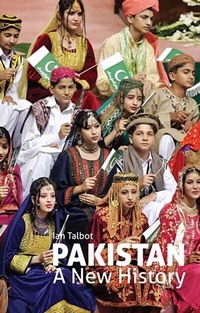
Pakistan
Description

If Pakistan is to preserve all that is good about its country — the generosity and hospitality of its people, the dynamism of its youth — it must face the deterioration of its social and political institutions. Sidestepping easy headlines to identify Pakistan's true dangers, this volume revisits the major turning points and trends of Pakistani history over the past six decades, focusing on the increasing entrenchment of Pakistan's army in its political and economic arenas; the complex role of Islam in public life; the tensions between central and local identities and democratic impulses; and the effect of geopolitical influences on domestic policy and development.
While Ian Talbot's study centres on Pakistan's many failures — the collapse of stable governance, the drop in positive political and economic development, and, most of all, the unrealised goal of securing a separate Muslim state — his book unequivocally affirms the country's potential for a positive reawakening. These failures were not preordained, Talbot argues, and such a fatalistic reading does not respect the complexity of historical events, individual actors, and the state's own rich resources. While he acknowledges grave crises still lie ahead for Pakistan, Talbot's sensitive historical approach makes it clear that favourable opportunities still remain for Pakistan, in which the state has a chance to reclaim its priorities and institutions and reestablish political and economic sustainability.
All prices
More details
Other editions
Additional editions
Person
Content
- Intro
- Half Title
- Title
- Copyright
- Dedication
- Contents
- Preface and Acknowledgements
- Glossary
- Abbreviations
- Introduction
- 1. Pakistan: Land, People, Society
- 2. Understanding the Failure of Pakistan's First Experiment with Democracy 1947-58
- 3. Ayub's Pakistan: The End of the Beginning
- 4. Bhutto's Pakistan: A Missed Opportunity
- 5. Zia and the Quest for Pakistan's Stability
- 6. Pakistan's Democratic Interlude 1988-99
- 7. The Janus State: Pakistan Under Musharraf
- 8. Surviving the Storm: Zardari's Pakistan
- 9. Abbottabad to the Azadi March
- Epilogue: Future Long-term Challenges, Prospects and Possibilities
- Notes
- Bibliography
- Index
- Back Cover
