

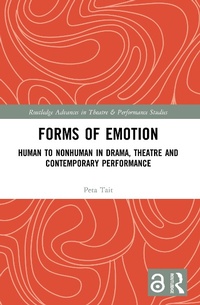
Forms of Emotion
Human to Nonhuman in Drama, Theatre and Contemporary Performance
1st Edition
Published on 29. November 2021
266 pages
978-1-000-46436-8 (ISBN)
Description

Forms of Emotion analyses how drama, theatre and contemporary performance present emotion and its human and nonhuman diversity.
This book explores the emotions, emotional feelings, mood, and affect, which make up a spectrum of 'emotion', to illuminate theatrical knowledge and practice and reflect the distinctions and debates in philosophy, neuroscience, psychology, and other disciplines. This study asserts that specific forms of emotion are intentionally unified in drama, theatre, and performance to convey meaning, counteract separation and subversively champion emotional freedom. The book progressively shows that the dramatic and theatrical representation of the nonhuman reveals how human dominance is offset by emotional connection with birds, animals, and the natural environment.
This book will be of great interest to students and researchers interested in the emotions and affect in dramatic literature, theatre studies, performance studies, psychology, and philosophy as well as artists working with emotionally expressive performance.
This book explores the emotions, emotional feelings, mood, and affect, which make up a spectrum of 'emotion', to illuminate theatrical knowledge and practice and reflect the distinctions and debates in philosophy, neuroscience, psychology, and other disciplines. This study asserts that specific forms of emotion are intentionally unified in drama, theatre, and performance to convey meaning, counteract separation and subversively champion emotional freedom. The book progressively shows that the dramatic and theatrical representation of the nonhuman reveals how human dominance is offset by emotional connection with birds, animals, and the natural environment.
This book will be of great interest to students and researchers interested in the emotions and affect in dramatic literature, theatre studies, performance studies, psychology, and philosophy as well as artists working with emotionally expressive performance.
More details
Series
Edition
1. Auflage
Language
English
Place of publication
London
United Kingdom
Publishing group
Taylor & Francis Ltd
Target group
College/higher education
Illustrations
12 Halftones, black and white; 12 Illustrations, black and white
ISBN-13
978-1-000-46436-8 (9781000464368)
Copyright in bibliographic data and cover images is held by Nielsen Book Services Limited or by the publishers or by their respective licensors: all rights reserved.
Schweitzer Classification
Other editions
Additional editions
Book
05/2023
1st Edition
Routledge
€63.40
Shipment within 15-20 days
Book
11/2021
1st Edition
Routledge
€206.60
Shipment within 15-20 days
Person
Peta Tait is Professor of Theatre and Drama at La Trobe University, Australia and a Fellow of the Australian Academy of the Humanities.
Content
List of Figures
Acknowledgements
Introduction
Forms of Emotion
Chapter Summaries
Framing the Emotions, Emotional Feelings, Mood and Affect
Performing Is Not Feeling that Emotion
Chapter one: Affect Theory and Performance Intention
Performance Distinctions
Feeling Divided
Affect Currents
Contested Intentions
Live Performance - In Theory
Impersonal Affect and Personal Feeling
Presence and Transmission
Resistance
Formless Affect and Aesthetic Form
Chapter two: Judging Pity, Fear and Humanness
Pity and Fear in Action
Fear of Shame
Opposition Shocks
Wonder and Catharsis
Social Obedience
Mimetic Natures
Towards Compassion
Fear and Animalness
Chapter three: Appraising Emotional Feeling
Talk of Feeling
Navigating Obstruction
Substitute Passions
Appraisal of Emotional Feeling
Ugly Metaphor
Inexplicable Feeling
Cruel Structures of Colonized Feeling
Chapter four: Performing Moods, Tears and Bodily Phenomena
Theatrical Exchange
Modernist Convergence
Acting an Inner Self
Imagined spaces of Longing and Happiness
Doing Bodily Affect
Performing Freedom
Unifying Aesthetic Moods
Chapter five: Political Belief and Social Cognition of Emotions
Contesting Courage
Acting Science and the Brain-Body
Trauma's Affect
Unifying Empathy
Theatre's Emotional Economy
Emotional Feeling as Belief
Chapter six: En/Acting Diverse Emotional Freedoms
Rule-breaking Paradox
Love's Force Fields
Human Right to Emotional Feeling
Politics of Fear
Rage Against Postemotional Denial
Theatrical Freedoms
Chapter seven: Animals and Anthropocentric Emotionalism
Comic Surrogates
Tragic Symbols
Sensory Body Insensitivity
Performing Emotional Connections
Chapter eight: Enveloping the Nonhuman: Contemporary Indigenous Performance
Collaborating Traditions
Continuities in Storytelling
Bodily Perceiving Movement
Unity in Bangarra's Dark Emu
Enveloping Affect and Emotional Movement
Feeling Knowledge and Nonhuman Time
Chapter nine: Prosodies of Affect and Emotional Climates
Walking
Weather Worlds
Motivating
Talking
Breathing
Conclusion: Sharing
References
Index
Acknowledgements
Introduction
Forms of Emotion
Chapter Summaries
Framing the Emotions, Emotional Feelings, Mood and Affect
Performing Is Not Feeling that Emotion
Chapter one: Affect Theory and Performance Intention
Performance Distinctions
Feeling Divided
Affect Currents
Contested Intentions
Live Performance - In Theory
Impersonal Affect and Personal Feeling
Presence and Transmission
Resistance
Formless Affect and Aesthetic Form
Chapter two: Judging Pity, Fear and Humanness
Pity and Fear in Action
Fear of Shame
Opposition Shocks
Wonder and Catharsis
Social Obedience
Mimetic Natures
Towards Compassion
Fear and Animalness
Chapter three: Appraising Emotional Feeling
Talk of Feeling
Navigating Obstruction
Substitute Passions
Appraisal of Emotional Feeling
Ugly Metaphor
Inexplicable Feeling
Cruel Structures of Colonized Feeling
Chapter four: Performing Moods, Tears and Bodily Phenomena
Theatrical Exchange
Modernist Convergence
Acting an Inner Self
Imagined spaces of Longing and Happiness
Doing Bodily Affect
Performing Freedom
Unifying Aesthetic Moods
Chapter five: Political Belief and Social Cognition of Emotions
Contesting Courage
Acting Science and the Brain-Body
Trauma's Affect
Unifying Empathy
Theatre's Emotional Economy
Emotional Feeling as Belief
Chapter six: En/Acting Diverse Emotional Freedoms
Rule-breaking Paradox
Love's Force Fields
Human Right to Emotional Feeling
Politics of Fear
Rage Against Postemotional Denial
Theatrical Freedoms
Chapter seven: Animals and Anthropocentric Emotionalism
Comic Surrogates
Tragic Symbols
Sensory Body Insensitivity
Performing Emotional Connections
Chapter eight: Enveloping the Nonhuman: Contemporary Indigenous Performance
Collaborating Traditions
Continuities in Storytelling
Bodily Perceiving Movement
Unity in Bangarra's Dark Emu
Enveloping Affect and Emotional Movement
Feeling Knowledge and Nonhuman Time
Chapter nine: Prosodies of Affect and Emotional Climates
Walking
Weather Worlds
Motivating
Talking
Breathing
Conclusion: Sharing
References
Index
