

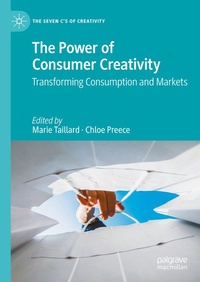
The Power of Consumer Creativity
Description

This edited book explores the many dimensions of consumption as a creative act using the seven C's of creativity framework. Leading scholars from marketing and consumer research illustrate how acts of consumption are infused with novel thinking, cultural expression, and personal meaning across cutting-edge topics including vintage retail, gaming, biohacking, parenting and degrowth. By highlighting the generative potential of consumer creativity, this collection offers a compelling argument for recognising creativity as a fundamental and pervasive human capability rather than a rare talent. It is essential reading for researchers, students, and practitioners seeking to understand the evolving intersections of creativity, consumption, and market transformation.
Reviews / Votes
"This highly engaging edited book argues that in the age of AI, consumption IS creativity. This provocative view is explored by leading thinkers on consumer creativity in a variety of contexts, from healthcare to online gaming to biohacking. A must-read for scholars of consumer behavior, creativity, and their intersection." (Giana M. Eckhardt, Professor of Marketing, King's Business School, King's College London)
"The Power of Consumer Creativity offers an in-depth exploration of how everyday acts of consumption can become sites of innovation and transformation. It brilliantly reframes consumption as a deeply creative, purposeful and transformative human activity. A must-read for anyone interested in the evolving relationship between consumers, markets, culture and creativity." (Vlad Glaveanu, Full Professor of Psychology, School of Psychology, Dublin City University)
More details
Other editions
Additional editions
Persons
Marie Taillard is L'Oréal Professor of Creativity Marketing and Head of Faculty at ESCP Business School, London. She teaches across graduate and executive programmes, and sectors from technology and pharmaceuticals to beauty, luxury, retail and consumer products.
Chloe Preece is Professor of Marketing at ESCP Business School, London, and Academic Director of the MSc in Marketing and Creativity. Her research interest lies at the intersection of marketing and the arts and creative industries.
Content
1. Consumption Is an Act of Creativity Through and Through.- 2. Conventional and Ontological Consumer Creativity.- 3. Between the Limits of Creativity and the Creativity of Limits: A Degrowth Exploration of Consumer Creativity.- 4. Creative Practices in Vintage Retailing. - 5. Consumer Creativity in Crisis: Practice Adaptation in Life-Sustaining Care-Giving Consumption Journeys.- 6. Zowie, It's a Zuri! Exploring Consumer Creativity Within a Virtual Fan Community.- 7. Crafting the Game World: Creative Communities and Participatory Culture in Elden Ring.- 8. Enactivism and the Rebel Creativity of Consumer Biohackers.- 9. Conclusion.
