

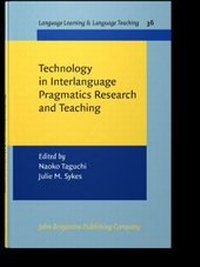
Technology in Interlanguage Pragmatics Research and Teaching
The Archaeology of Magic in Roman Egypt, Cyprus, and Spain
1st Edition
Published on 20. June 2013
VIII, 276 pages
978-90-272-7193-8 (ISBN)
Description

Technology-informed approaches to L2 research and teaching have prompted great interest by both researchers and practitioners alike. This book highlights the relationship between digitally-mediated technologies and second language pragmatics by presenting exemplary applications of technology for both research and pedagogy. Part I presents technology-informed research practices that range from measuring response times when processing conversational implicature to studies examining systematic pragmatic learning via online activities and multiuser virtual environments, as well as analyzing features of pragmatic language use in social networking and longitudinal learner corpora. Part II surveys a variety of technology-assisted tools for teaching pragmatics, including: place-based mobile games, blogging, web-based testing, and automated text analysis software. The volume will be of interest for those interested in technological tools to expand the scope of traditional methods of data collection, analysis, and teaching and critically examining how technology can best be leveraged as a solution to existing barriers to pragmatics research and instruction.
More details
Other editions
Additional editions
Naoko Taguchi | Julie M. Sykes
Technology in Interlanguage Pragmatics Research and Teaching
Book
06/2013
John Benjamins Publishing Co
€100.70
Shipment within 10-15 days
Persons
Content
- Technology in Interlanguage Pragmatics Research and Teaching
- Editorial page
- Title page
- LCC data
- Table of contents
- Contributors
- 1. Introduction: Technology in interlanguage pragmatics research and teaching
- 1. Technology in interlanguage pragmatics research
- 2. Technology in interlanguage pragmatics teaching
- References
- Part I. Technology in researching pragmatics
- 2. Comprehension of conversational implicature: What response times tell us
- 1. Introduction
- 2. Background
- 3. Processing study: Comprehension load in implicature
- 4. Developmental study: Accurate and speedy comprehension of implicature
- 5. Conclusion
- References
- 3. Amount of practice and pragmatic development of request-making in L2 Chinese
- 1. Technology in pragmatics instruction
- 2. Accuracy and speed as instructional targets
- 3. Methods
- 4. Analysis of data
- 5. Results
- 6. Discussion
- 7. Concluding remarks and directions for future research
- References
- 4. Multiuser virtual environments: Learner apologies in Spanish
- 1. Introduction
- 2. Background information
- 3. Research question
- 4. Methodology
- 5. Results
- 6. Discussion
- 7. The future of SIEs and L2 pragmatic development
- 8. Conclusion
- References
- Appendix A
- Appendix B
- 5. Development of politeness strategies in participatory online environments: A case study
- 1. Introduction
- 2. Literature review
- 3. Methodology
- 4. Results and discussion
- 5. Discussion
- 6. Conclusion
- References
- 6. Pronominal choice and self-positioning strategies in second language academic writing: A pragmati
- 1. Introduction
- 2. Background
- 3. Research approach
- 4. The study
- 5. Results
- 6. Discussion
- 7. Conclusions
- References
- Appendix A
- Part II. Technology in teaching and assessing pragmatics
- 7. Complex L2 pragmatic feedback via place-based mobile games
- 1. Introduction
- 2. Background information
- 3. A look at the Mentira project: Design-based research and curricular implementation
- 4. L2 pragmatic feedback and place-based mobile games
- 5. Conclusion
- References
- 8. Blogging: Crosscultural interaction for pragmatic development
- 1. Introduction
- 2. Method
- 3. Findings and interpretation
- 4. Discussion
- 5. Pedagogical implications
- 6. Conclusion
- References
- 9. Technology and tests of L2 pragmatics
- 1. Tests of second language pragmatics
- 2. The promise of computer-based testing
- 3. Computer-based tests of L2 pragmatics
- 4. Research questions and rationale
- 5. Methodology
- 6. Results
- 7. Discussion
- 8. Conclusion
- References
- 10. DocuScope for genre analysis: Potential for assessing pragmatic functions in second language wri
- 1. Introduction: Pragmatics and genre
- 2. DocuScope: Assessing and visualizing pragmatic effects in English genre writing
- 3. The DocuScope study
- 4. Results
- 5. Conclusions and implication
- References
- Appendix
- Commentary on Technology in Interlanguage Pragmatics Research and Teaching
- 1. Comments on the chapters with a research focus
- 2. Commentary on the chapters with a pedagogical focus
- 3. Closing words
- Prologue. The future of pragmatics and technology: Where are we headed?
- 1. Technology in interlanguage pragmatics research
- 2. Technology in interlanguage pragmatics teaching
- 3. Rethinking pragmatics
- Index
