

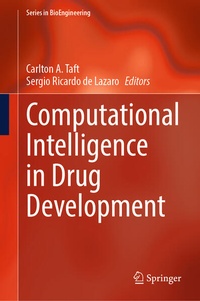
Computational Intelligence in Drug Development
Description

This book offers a comprehensive overview of cutting-edge computational strategies in drug discovery, with a focus on in silico approaches that accelerate the identification and optimization of therapeutic candidates. Readers will find detailed insights into molecular docking, molecular dynamics simulations, and structure-based drug design, alongside predictive models for toxicity, pharmacokinetics (ADMET), and enzyme inhibition. By combining theoretical foundations with practical applications, the volume highlights how artificial intelligence and computational chemistry are reshaping modern pharmaceutical research and enabling the development of safer, more effective drugs.
More details
Other editions
Additional editions
Persons
Professor Dr. Carlton A. Taft earned the Master of Science (Physics) at the University of Illinois (USA) in 1969; the Phd in Physics at the Centro Brasileiro de Pesquisas Físicas (CBPF) in 1975 and did post-doctoral work as a periodic senior visitor to the Chemistry Department, University of California, Berkeley; Lawrence Berkeley Laboratory (USA) in 1988-1993. He was hired at CBPF in 1976 and worked his way up to Full Professor. He works in multidisciplinary areas with focus on theoretical-computational simulation, physical/chemical/biological/engineering applications in Molecular and Material Sciences.
Doctor Sergio R. de Lazaro (was born October 1977, in São Paulo, Brazil) received his undergraduate degree in Chemistry 1999 and his Ph.D. in Chemistry in 2006 from the Federal University of São Carlos (UFSCar) in Sao Paulo, Brazil. Since 2007 is an adjunct professor of chemistry and materials science at the State University of Ponta Grossa (UFPG). His research interests are in the field of computational chemistry, quantum chemistry, surface, morphology, magnetic oxides, ferroelectric, dielectric, superconductors, density functional theory (DFT) and applications of novel advanced materials from a combination of experimental and theoretical approaches.
Content
1. Molecular dynamics and prediction of oral toxicity in Alzheimer's disease.- 2. In silico prediction of ADMET parameters, mechanisms of elaboration and performance of computational tools.- 3. Predicting Aloe Vera herb drug interactions.- 4. Enzymes as targets for infectious disease control.- 5. A computational analysis of new strategies against type 2 diabetes mellitus.
