

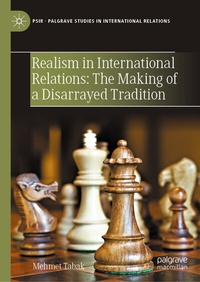
Realism in International Relations: The Making of a Disarrayed Tradition
Description

According to a pervasive view in the discipline of International Relations (IR): a) realism is a historical tradition, stretching all the way back to Thucydides; b) despite the important theoretical differences among themselves, realists uphold the same set of core beliefs about the workings of international politics. Together, these two claims amount to the perspective that realism is a sui generis scholarly tradition with ancient origins. The author critiques both aspects of this view by illustrating that realism is both a relatively recent tradition and a disarrayed one. He shows that the realist tradition entails conscious membership and participation in a common "realist" discourse that has produced fundamentally different, even opposing, methodologies and theories about the same or related phenomena in international politics. In illustrating this argument, the author critically explores a variety of seminal statements of, and debates about, realism. This exploration reveals that the conceptual and theoretical shortcomings of the major statements of realism significantly explain why realism evolved as a disarrayed tradition. Overall, this book makes an important contribution to the understanding of realism in particular and IR in general. The comprehensive and critical analysis of many facets of realism this book offers also yields many didactic elements.
More details
Other editions
Additional editions
Person
Mehmet Tabak is Clinical Assistant Professor, Program in International Relations at New York University.
Content
Chapter 1: INTRODUCTION TO A DISARRAYED TRADITION - VIA A CRITIQUE OF THE CONSENSUS VIEW.- Chapter 2: E. H. CARR'S REALISM.- Chapter 3: HANS J. MORGENTHAU'S REALISM.- Chapter 4: KENNETH N. WALTZ'S REALISM.- Chapter 5: NEOREALISM - AS WALTZ'S THEORY - AND ITS CRITICS.- Chapter 6: DEBATES ON INTERNATIONAL INSTITUTIONS: A TALE OF TWO REALISMS.- Chapter 7: JOHN J. MEARSHEIMER'S OFFENSIVE REALISM.- Chapter 8: VARIETIES OF DEFENSIVE REALISM.- Chapter 9: VARIETIES OF NEOCLASSICAL REALISM.- CONCLUSION.- INDEX.
