

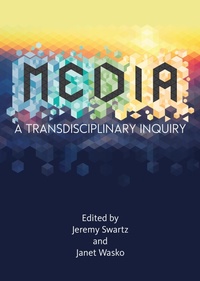
MEDIA
A Transdisciplinary Inquiry
Published on 15. December 2020
336 pages
978-1-78938-267-9 (ISBN)
Description

The first in the Media-Life-Universe trilogy, this volume explores a transdisciplinary notion of media and technology, exploring media as technology, with special attention to its material, historical and ecological ramifications. The authors reconceptualize media from environmental, ecological and systems approaches, drawing not only on media and communication studies, but also philosophy, sociology, political science, biology, art, computer science, information studies and other disciplines.
Featuring a group of internationally known scholars, this collection explores evolving definitions of media and how media technologies are transforming theory and practice. As the current media includes a wider and wider range of concepts, products, services and institutions, the definition of media continues to be in a state of flux. What are media today? How is media studies evolving? How have technologies transformed communication and media theory, and informed praxis? What are some of the futures of media?
The collection challenges traditional notions of media, as well as concepts such as freedom of expression, audience empowerment and participatory media, and explores emergent media including transmedia, virtual reality, online games, metatechnology, remediation and makerspaces.
This is the first volume in the MEDIA * LIFE * UNIVERSE Trilogy. LIFE: A Transdisciplinary Inquiry 9781789382655 follows and builds upon this 2021 collection.
Featuring a group of internationally known scholars, this collection explores evolving definitions of media and how media technologies are transforming theory and practice. As the current media includes a wider and wider range of concepts, products, services and institutions, the definition of media continues to be in a state of flux. What are media today? How is media studies evolving? How have technologies transformed communication and media theory, and informed praxis? What are some of the futures of media?
The collection challenges traditional notions of media, as well as concepts such as freedom of expression, audience empowerment and participatory media, and explores emergent media including transmedia, virtual reality, online games, metatechnology, remediation and makerspaces.
This is the first volume in the MEDIA * LIFE * UNIVERSE Trilogy. LIFE: A Transdisciplinary Inquiry 9781789382655 follows and builds upon this 2021 collection.
Reviews / Votes
'The creative imagination of this book is astonishing. The brilliance of transdisciplinarity in these intellectually innovative chapters represents a historic turning point in media theory and research. Instead of timid steps, we need to urgently reconceptualize mediation, systems, networks, platforms, criticism, and materiality. This collection is an educational earthquake.' -- Clifford G. Christians, University of Illinois at Urbana-Champaign 'Bringing together the natural and exact sciences, humanities and arts, this volume puts forward unexpected conceptual conversations, puzzling inquiries, and dynamic lines of action. Its key motivation is to challenge scholars, students, and the public based on vision, solid knowledge and imagination. This book could not be more timely!' -- Helena Sousa, University of Minho, Portugal 'With a stellar cast of contributors, this insightful volume urges us to reimagine how media can be understood and reconceptualized as more than merely technological artifacts in isolation. The time is right for scholarship and praxis to move beyond binaries and reductions toward magnifying complexity, thus strengthening our critiques.' -- Karin Gwinn Wilkins, University of Miami 'Critical, multifaceted and eye-opening, this kaleidoscopic volume illuminates the past, present and future of communication and media studies. Democratize media or face increasing existential crises - the struggle goes on. This book will be a definitive meeting place for concerned scholars, citizens and activists alike.' -- Jack Linchuan Qiu, National University of Singapore 'This volume contributes exceptional scholarly insights and a significant force urging us to think and act critically, moving beyond narrow conceptualizations. It brings opportunities to build new conversations and encourage cross-cultural inquiries. A must-read piece of contemporary scholarly work.' -- Changfeng Chen, Tsinghua University, China 'Spanning historical perspectives, contemporary concerns, and practical agendas, this volume provides an essential starting point for a transdisciplinary conversation on media and communication as both objects and modes of inquiry.' -- Klaus Bruhn Jensen, University of Copenhagen, Denmark 'If the editors set out to shake up tried and true approaches to understanding media, they have succeeded. This assemblage is an open-ended universe of starting and ending points, patterns, and paradigms. Underlying it all is a quest for advancing towards not more entertaining consumer goods, but more full-throated democratic and just communities.' -- Lana F. Rakow, University of North Dakota 'What are media and their significance in the contemporary complexity of culture, social life, environment, and power today? This provocative book offers cross-cutting and panoramic views on a topic essential to us all. An elegant, compelling, and must-read first installment of an emerging trilogy.' -- Gerard Goggin, Nanyang Technological University, SingaporeMore details
Edition
New edition
Language
English
Place of publication
Bristol
United Kingdom
Publishing group
Intellect
Target group
Professional and scholarly
Edition type
New edition
Illustrations
27 Halftones, black and white
ISBN-13
978-1-78938-267-9 (9781789382679)
Copyright in bibliographic data and cover images is held by Nielsen Book Services Limited or by the publishers or by their respective licensors: all rights reserved.
Schweitzer Classification
Other editions
Persons
Jeremy Swartz is founder of Metamedia @ UofO: A Metadisciplinary Collaboratory and a research associate in the School of Journalism and Communication at the University of Oregon.
Janet Wasko is a professor of Communication Research in the School of Journalism and Communication at the University of Oregon. She is the author or editor of twenty-two books and is past president of the International Association for Media and Communication Research (IAMCR).
Janet Wasko is a professor of Communication Research in the School of Journalism and Communication at the University of Oregon. She is the author or editor of twenty-two books and is past president of the International Association for Media and Communication Research (IAMCR).
Content
Preface to a Trilogy
Introduction
Genealogy
'When Multimedia Meant Democracy', Fred Turner
'Four Reporting Cultures: Designing Humans In and Out of the Future of Journalism', John Markoff
'Dark Materials: Media, Machines, Markets', Graham Murdock
Meanings of Media
'A Community of Media: There Is a There There', Sean Cubitt
'Media as Cultural Techniques: From Inscribed Surfaces to Digitalized Interfaces', Sybille Kramer
'Understanding "Medium" in the Context of the Media Ecology Tradition', Lance Strate
Organs and Organization
'Between Media Studies and Organizational Communication: Organizing as the Creation of Organs', Francois Cooren and Frederik Matte
'Paradigms for Creative Industry Research', Angela McRobbie
'The Politics of Mediation: Colonization to Co-Generative Democracy', Stanley Deetz
Engagement and Extensions
'Phantasmal Selves: Computational Approaches to Understanding Virtual Identities', D. Fox Harrell
'Calm Technology/Media and the Limit of Attention', Amber Case
'The Next Internet', Vincent Mosco
Biomediations
'Biological Dimensions of Media Ecology and Its Relationship to Biosemiotics', Robert K. Logan
'Biomediations: From "Life in Media" to "Living Media"', Joanna Zylinska
'Lynn Hershman Leeson: The Infinity Engine', Ingeborg Reichle
Repair and Metamedia
'No Issues Without Media: The Changing Politics of Public Controversy in Digital Societies', Noortje Marres
'The Poetics and Political Economy of Repair', Steven J. Jackson and Lara Houston
'Metamedia', Jeremy Swartz
Appendix: Exhibition * Experience * Music
Notes on Contributors
Index
Introduction
Genealogy
'When Multimedia Meant Democracy', Fred Turner
'Four Reporting Cultures: Designing Humans In and Out of the Future of Journalism', John Markoff
'Dark Materials: Media, Machines, Markets', Graham Murdock
Meanings of Media
'A Community of Media: There Is a There There', Sean Cubitt
'Media as Cultural Techniques: From Inscribed Surfaces to Digitalized Interfaces', Sybille Kramer
'Understanding "Medium" in the Context of the Media Ecology Tradition', Lance Strate
Organs and Organization
'Between Media Studies and Organizational Communication: Organizing as the Creation of Organs', Francois Cooren and Frederik Matte
'Paradigms for Creative Industry Research', Angela McRobbie
'The Politics of Mediation: Colonization to Co-Generative Democracy', Stanley Deetz
Engagement and Extensions
'Phantasmal Selves: Computational Approaches to Understanding Virtual Identities', D. Fox Harrell
'Calm Technology/Media and the Limit of Attention', Amber Case
'The Next Internet', Vincent Mosco
Biomediations
'Biological Dimensions of Media Ecology and Its Relationship to Biosemiotics', Robert K. Logan
'Biomediations: From "Life in Media" to "Living Media"', Joanna Zylinska
'Lynn Hershman Leeson: The Infinity Engine', Ingeborg Reichle
Repair and Metamedia
'No Issues Without Media: The Changing Politics of Public Controversy in Digital Societies', Noortje Marres
'The Poetics and Political Economy of Repair', Steven J. Jackson and Lara Houston
'Metamedia', Jeremy Swartz
Appendix: Exhibition * Experience * Music
Notes on Contributors
Index
