

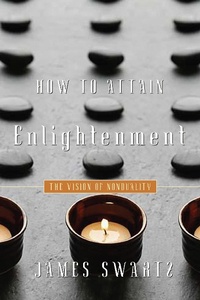
How to Attain Enlightenment
Description

"Goes through the entire gamut of topics covered by the Vedas, making use of yoga, detachment, the ego, karma, dharma, love, meditation and much more." - East and West Magazine
This complete guide to enlightenment presents the wisdom of the ancient science of self-inquiry, a time-tested means for achieving spiritual freedom. The author discusses the purpose of self-inquiry, the quest for lasting happiness, issues of identity and transcendence, the role of wisdom and action, and the subconscious obstacles to freedom. He convincingly refutes the popular view that enlightenment is a unique state of consciousness and debunks a host of other enlightenment myths. In his straightforward style he reveals proven methods for purifying the mind, and includes chapters on love, the science of energy transformation and meditation. He takes the reader from the beginning to the end of the spiritual path, patiently unfolding the logic of self-inquiry.
"Vedanta is the original systemized enlightenment teaching, and James does an extraordinary job of extracting the essential nectar of the teachings from its dusty, ancient, Sanskrit origins and elucidating it with utmost clarity. One review cannot do this teaching, with its rich history and depth, even a modicum of justice. James's book is the best introduction there is to this subject." - Consciousness Junkie
"Explains methods of Vedanta in his survey of spiritual techniques, pairing theory with practice and explaining the myths and realities behind an enlightened state. From reflections on moving to a larger living space and clutter to assimilating experiences, How to Attain Enlightenment is a powerful survey any new age library needs." - The Bookwatch
More details
Other editions
Additional editions
Person
Content
- Cover
- Title Page
- Copyright
- Contents
- Introduction
- 1. Inquiry Into Object Happiness
- Security, Pleasure and Virtue
- Subject and Object
- Limitation of Object Happiness
- Removing the Wall
- Object Happiness Not Permanent
- A Zero-Sum Game
- The Fourth Pursuit - Freedom from Limitation
- 2. What is Enlightenment?
- The Path of Experience
- The Path of Knowledge
- The Value of a Means of Knowledge
- Enlightenment Myths
- No Mind, Blank Mind, Empty Mind, Stopped Mind
- No Ego, Ego Death
- Nirvana
- The Now
- Experience of Oneness
- Transcendental State
- Enlightenment as Eternal Bliss
- Levels of Enlightenment
- Enlightenment Is a Special Status
- Enlightenment as Energy
- Fulfillment of All Desires
- 3. The Means of Knowledge
- What Is Self Inquiry?
- Importance of a Teacher
- Listening, Reflecting, Contemplating
- 4. Qualifications
- An Open Mind
- A Reasonable Mind
- A Discriminating Mind
- A Dispassionate Mind
- A Disciplined, Observant Mind
- Self Duty
- A Patient, Forbearing Mind
- A Balanced Mind
- A Motivated Mind
- A Believing Mind
- A Devoted Mind
- A Masculine Temperament
- The Teacher
- The Grace of God
- 5. The Self
- 6. Obstructions
- Extroversion of Mind
- The Causal Body
- Microcosmic Ignorance
- The Subtle Body
- Ego and the Inner Enemies
- The Separation
- Desire
- Inner Conflict
- 7. Inquiry Into Karma and Dharma
- There is No Doer
- The Factors Involved in Action
- Knowledge Causes Karma
- Action in Inaction and Inaction in Action
- Karma and Dharma
- Three Kinds of Karma
- Karma, Vasanas and Reincarnation
- 8. Inquiry Into Practice
- Karma Yoga
- 9. Love
- Special Relationships
- The Soul Mate
- Marriage
- A Different Kind of Marriage
- Converting Emotion into Devotion
- Spiritual Practice and Psychological Work
- Devotion
- Karma Yoga as Devotion
- Devotional Dispositions
- Devotional Conversion Identities
- Primary Devotion
- 10. The Assimilation of Experience
- The Ropes
- Enlightenment and the Assimilation of Experience
- How Can I Get a Pure Mind?
- The Value of Values
- 11. Lifestyle
- People, Food, Sex and Money
- Money
- Sex
- Diet and Lifestyle
- The Rajas-Tamas Complex
- 12. Knowledge Yoga
- The Methodology of Inquiry
- The Practice of Knowledge
- Cause and Effect
- The Real and the Apparent
- Essential and Non-Essential
- Change and Changelessness
- Subject-Object
- The Three States
- The Five Sheaths
- Why There Is Only You
- The Location of Experience
- Nothing Ever Happened
- The Opposite Thought
- Name and Form
- The Mirror of Awareness
- Something to Work Out
- 13. Meditation
- The Arrested Mind
- Happy Thoughts
- Mantra Meditation
- Insight Meditation
- The Gap
- Meditation Practice
- An Excellent Technique
- The Breath
- The Silence
- 14. After and Beyond Enlightenment
- Pseudo-Enlightenment or Enlightenment Sickness
- The Liberated Person
- More or Less Enlightened?
- Beyond Enlightenment
- 15. The Teachings of Ramana Maharshi
- 16. Neo-Advaita
- Multi-Path Confusion
- Ramana Maharshi, Osho, Papaji and the Rise of Neo-Advaita
- Neo-Advaita Versus Traditional Vedanta
- No Teacher, Seeker, Path, Knowledge or Ignorance
- Being Present, Dropping Suffering
- Qualifications for Enlightenment
- I Am Not the Doer
- Importance of Karma Yoga for Self Inquiry
- Devotion to God
- Where's the Methodology?
- Seeking Emotional Fulfillment
- About the Author
