

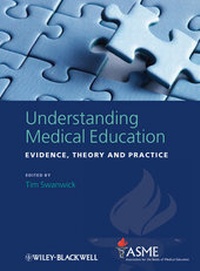
Understanding Medical Education
Evidence, Theory and Practice
Published on 9. February 2010
464 pages
978-1-4443-2029-9 (ISBN)
Description

For the first time in a single core textbook, the Association forthe Study of Medical Education presents a complete andauthoritative guide to medical education. Written by leadingexperts in the field, Understanding Medical Educationprovides a comprehensive resource of the theoretical and academicbases to modern medical education practice.
This accessible and timely reference is designed to meet theneeds of all those working in medical education from undergraduateeducation through postgraduate training to continuing professionaldevelopment. As well as providing practical guidance forclinicians, teachers and researchers, Understanding MedicalEducation will prove an invaluable resource to those studyingat certificate, diploma or masters level and a first'port-of-call' for anyone engaged in medical educationas an academic discipline.
Exploring medical education in all its diversity and containingall you need in one place, Understanding Medical Educationis the ideal reference not only for medical educators, but foranyone involved in the development of healthcare professionals, inwhatever discipline wherever they are in the world.
An on-line edition of the complete book, together withindividual chapter downloads, are available atwww.wileymedicaleducation.com
Understanding Medical Education has been broughttogether and edited by Professor Tim Swanwick, Director ofProfessional Development in the London Deanery, Visiting Fellow atthe Institute of Education and Visiting Professor of MedicalEducation at the University of Bedfordshire.
This accessible and timely reference is designed to meet theneeds of all those working in medical education from undergraduateeducation through postgraduate training to continuing professionaldevelopment. As well as providing practical guidance forclinicians, teachers and researchers, Understanding MedicalEducation will prove an invaluable resource to those studyingat certificate, diploma or masters level and a first'port-of-call' for anyone engaged in medical educationas an academic discipline.
Exploring medical education in all its diversity and containingall you need in one place, Understanding Medical Educationis the ideal reference not only for medical educators, but foranyone involved in the development of healthcare professionals, inwhatever discipline wherever they are in the world.
An on-line edition of the complete book, together withindividual chapter downloads, are available atwww.wileymedicaleducation.com
Understanding Medical Education has been broughttogether and edited by Professor Tim Swanwick, Director ofProfessional Development in the London Deanery, Visiting Fellow atthe Institute of Education and Visiting Professor of MedicalEducation at the University of Bedfordshire.
More details
Other editions
Additional editions
Book
07/2010
1st Edition
Wiley-Blackwell
€57.90
Article exhausted; check for reprint
Person
Tim Swanwick is faculty development lead for the London Deanery and Director of Postgraduate General Practice Education; course leader for an MA in Clinical Education, Institute of Education, London University; Honorary Senior Lecture, Imperial College and Visiting Lecturer Universities of Westminster and Bedfordshire.
Content
List of Contributors.
Foreword.
Preface.
Introduction: Understanding Medical Education (Tim Swanwickand Graham Buckley).
1 Principles of curriculum design (Janet Grant).
2 Teaching and learning in medical education: how theory caninform practice (David M Kaufman and Karen V Mann).
3 Problem-based learning (Mark A Albanese).
4 Interprofessional education (Della Freeth).
5 Work-based learning (Clare Morris and DavidBlaney).
6 Learning medicine from the humanities (J Jill Gordon and HMartyn Evans).
7 Portfolios, personal development and refl ective practice(John Pitts).
8 Supervision, mentoring and coaching (John Launer).
9 Teaching and leading small groups (Peter McCrorie).
10 Lectures and large groups (Andrew Long and BridgetLock).
11 e-Learning (Jean McKendree).
12 Simulation in medical education (Jean Ker and PaulBradley).
13 Patient involvement in medical education (John Spencer andJudy McKimm).
14 How to design a useful test: the principles of assessment(Lambert WT Schuwirth and Cees PM van der Vleuten).
15 Written examinations (Brian Jolly).
16 Workplace assessment (John J Norcini).
17 Structured assessments of clinical competence (KatharineAM Boursicot, Trudie E Roberts and William P Burdick).
18 Formative assessment (Diana F Wood).
19 Self-regulated learning in medical education (Casey BWhite and Larry D Gruppen).
20 Thinking about research: frameworks, ethics and scholarship(Jan Illing).
21 Quantitative research methods in medical education (GeoffNorman and Kevin W Eva).
22 Qualitative research methods in medical education (LoreleiLingard and Tara J Kennedy).
23 Evaluation: improving practice, infl uencing policy (DavidWall).
24 Selection for medical education and training (FionaPatterson and Eamonn Ferguson).
25 Managing remediation (Deborah Cohen, Melody Rhydderch andIan Cooper).
26 Quality in medical education (Oonagh Corrigan, Kate Ellis,Alan Bleakley and Julie Brice).
27 Dealing with diversity (Antony Americano and DineshBhugra).
28 Developing medical educators: a journey, not a destination(Yvonne Steinert).
29 Educational leadership (Judy McKimm and TimSwanwick).
Index.
Foreword.
Preface.
Introduction: Understanding Medical Education (Tim Swanwickand Graham Buckley).
1 Principles of curriculum design (Janet Grant).
2 Teaching and learning in medical education: how theory caninform practice (David M Kaufman and Karen V Mann).
3 Problem-based learning (Mark A Albanese).
4 Interprofessional education (Della Freeth).
5 Work-based learning (Clare Morris and DavidBlaney).
6 Learning medicine from the humanities (J Jill Gordon and HMartyn Evans).
7 Portfolios, personal development and refl ective practice(John Pitts).
8 Supervision, mentoring and coaching (John Launer).
9 Teaching and leading small groups (Peter McCrorie).
10 Lectures and large groups (Andrew Long and BridgetLock).
11 e-Learning (Jean McKendree).
12 Simulation in medical education (Jean Ker and PaulBradley).
13 Patient involvement in medical education (John Spencer andJudy McKimm).
14 How to design a useful test: the principles of assessment(Lambert WT Schuwirth and Cees PM van der Vleuten).
15 Written examinations (Brian Jolly).
16 Workplace assessment (John J Norcini).
17 Structured assessments of clinical competence (KatharineAM Boursicot, Trudie E Roberts and William P Burdick).
18 Formative assessment (Diana F Wood).
19 Self-regulated learning in medical education (Casey BWhite and Larry D Gruppen).
20 Thinking about research: frameworks, ethics and scholarship(Jan Illing).
21 Quantitative research methods in medical education (GeoffNorman and Kevin W Eva).
22 Qualitative research methods in medical education (LoreleiLingard and Tara J Kennedy).
23 Evaluation: improving practice, infl uencing policy (DavidWall).
24 Selection for medical education and training (FionaPatterson and Eamonn Ferguson).
25 Managing remediation (Deborah Cohen, Melody Rhydderch andIan Cooper).
26 Quality in medical education (Oonagh Corrigan, Kate Ellis,Alan Bleakley and Julie Brice).
27 Dealing with diversity (Antony Americano and DineshBhugra).
28 Developing medical educators: a journey, not a destination(Yvonne Steinert).
29 Educational leadership (Judy McKimm and TimSwanwick).
Index.
