

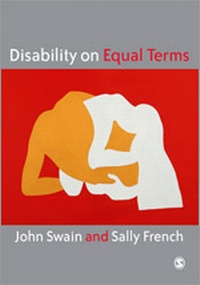
Disability on Equal Terms
1st Edition
Published on 17. March 2008
216 pages
978-1-84920-644-0 (ISBN)
Description

'Disability on Equal Terms is not a Turgid and difficult book despite its accent on complex and challenging themes. It is a lively and important read' - The Skill Journal, June 2009
`[A] collection of highly readable and scholarly essays that reflect both the theoretical and practical implications of recent developments in the field. This book is essential reading for everyone interested in disability: highly recommended' - Colin Barnes, Centre for Disability Studies, University of Leeds
This authoritative collection of writings examines and challenges traditional notions of disability. Edited and written by leading experts in the field, it offers a multidisciplinary approach to disability studies, incorporating perspectives from a wide range of health and social care services, as well as a distinct and unique emphasis on the views, experiences, work and personal testimonies of disabled people themselves.
The book is divided into three sections, each of which is prefaced by an editorial introduction which brings together the key themes and issues under discussion. Each section:
" Examines the dominant assumptions about disability and impairment and their historical and cultural contexts
" Documents the challenges to such presumptions generated by disabled people themselves
" Explores the implications of such challenges for professional policy and practice
This ground-breaking book will be essential reading for those studying disability studies, social work, nursing, and allied health and social care at all levels. It will also be a thought-provoking and inspiring read for disabled people and activists, professionals and policy makers.
John Swain is based in the School of Health, Community and Education Studies at Northumbria Univeristy. Sally French is based at the Open Univeristy. Previous publications include the co-edited Disabling Barriers, Enabling Environments, Second Edition (SAGE, 2004).
`[A] collection of highly readable and scholarly essays that reflect both the theoretical and practical implications of recent developments in the field. This book is essential reading for everyone interested in disability: highly recommended' - Colin Barnes, Centre for Disability Studies, University of Leeds
This authoritative collection of writings examines and challenges traditional notions of disability. Edited and written by leading experts in the field, it offers a multidisciplinary approach to disability studies, incorporating perspectives from a wide range of health and social care services, as well as a distinct and unique emphasis on the views, experiences, work and personal testimonies of disabled people themselves.
The book is divided into three sections, each of which is prefaced by an editorial introduction which brings together the key themes and issues under discussion. Each section:
" Examines the dominant assumptions about disability and impairment and their historical and cultural contexts
" Documents the challenges to such presumptions generated by disabled people themselves
" Explores the implications of such challenges for professional policy and practice
This ground-breaking book will be essential reading for those studying disability studies, social work, nursing, and allied health and social care at all levels. It will also be a thought-provoking and inspiring read for disabled people and activists, professionals and policy makers.
John Swain is based in the School of Health, Community and Education Studies at Northumbria Univeristy. Sally French is based at the Open Univeristy. Previous publications include the co-edited Disabling Barriers, Enabling Environments, Second Edition (SAGE, 2004).
Reviews / Votes
`Sally French and John Swain have put together a collection of highly readable and scholarly essays that reflect both the theoretical and practical implications of recent developments in the field. This book is essential reading for everyone interested in disability: highly recommended' - Colin Barnes, Centre for Disability Studies, University of LeedsAll prices
More details
Language
English
Place of publication
London
United Kingdom
Target group
College/higher education
ISBN-13
978-1-84920-644-0 (9781849206440)
Copyright in bibliographic data and cover images is held by Nielsen Book Services Limited or by the publishers or by their respective licensors: all rights reserved.
Schweitzer Classification
Other editions
Additional editions
John Swain | Sally French
Disability on Equal Terms
Book
03/2008
1st Edition
SAGE Publications Inc
€104.20
Shipment within 10-20 days
John Swain | Sally French
Disability on Equal Terms
Book
03/2008
1st Edition
SAGE Publications Inc
€196.40
Shipment within 10-20 days
Persons
John Swain is Professor of Disability and Inclusion at Northumbria University. Sally French is an associate lecturer at the Open University.
Content
PART ONE: THE TRAGEDY VIEW OF IMPAIRMENT AND DISABILITY
There But For Fortune - Sally French and John Swain
Disability, Genetics and Eugenics - Tom Shakespeare
Disabled in Images and Language - Margaret Taylor
Institutional Abuse - Colin Goble
The Narratives of Disabled Survivors of Childhood Sexual Abuse - Martina Higgins
PART TWO: FROM A DIFFERENT VIEWPOINT
Affirming Identity - John Swain and Sally French
Choices, Rights and Cabaret - Alan Sutherland
Disability Arts and Collective Identity
The Art of Affirming Identity - Toby Brandon and Alice Elliot
An Exploration of the Quality of Life of Adults with Haemophilia - Karen Beeton
Disabled People's Testimonies - Jasvinder, Arlene, Geoff and Alice
PART THREE: ON EQUAL TERMS
On Equal Terms - John Swain and Sally French
In Practice from the Viewpoint of an Occupational Therapist - Elaine Ballantyne and Andrew Muir
In Practice from the Viewpoint of a Physiotherapist - Anna-Stina with Sally French and John Swain
Communication Disability - Carole Pound
Exploring New Personal and Professional Narratives
In Practice from the Viewpoint of a Disabled Nurse - Rachael Spain
In Practice from the Viewpoint of a Social Worker - Maureen Gillman
In Practice from the Viewpoint of Disabled People - Clare Evans
There But For Fortune - Sally French and John Swain
Disability, Genetics and Eugenics - Tom Shakespeare
Disabled in Images and Language - Margaret Taylor
Institutional Abuse - Colin Goble
The Narratives of Disabled Survivors of Childhood Sexual Abuse - Martina Higgins
PART TWO: FROM A DIFFERENT VIEWPOINT
Affirming Identity - John Swain and Sally French
Choices, Rights and Cabaret - Alan Sutherland
Disability Arts and Collective Identity
The Art of Affirming Identity - Toby Brandon and Alice Elliot
An Exploration of the Quality of Life of Adults with Haemophilia - Karen Beeton
Disabled People's Testimonies - Jasvinder, Arlene, Geoff and Alice
PART THREE: ON EQUAL TERMS
On Equal Terms - John Swain and Sally French
In Practice from the Viewpoint of an Occupational Therapist - Elaine Ballantyne and Andrew Muir
In Practice from the Viewpoint of a Physiotherapist - Anna-Stina with Sally French and John Swain
Communication Disability - Carole Pound
Exploring New Personal and Professional Narratives
In Practice from the Viewpoint of a Disabled Nurse - Rachael Spain
In Practice from the Viewpoint of a Social Worker - Maureen Gillman
In Practice from the Viewpoint of Disabled People - Clare Evans
