

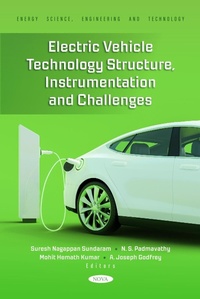
Electric Vehicle Technology Structure, Instrumentation and Challenges
Published on 12. June 2024
197 pages
979-8-89113-784-4 (ISBN)
Description

This book explores critical technologies advancing electric vehicles' design, efficiency, and infrastructure. Across five chapters, the book examines crucial topics underpinning the ongoing EV revolution. The first chapter provides an extensive look at the development of electric vehicle infrastructure worldwide. It details various initiatives, policies, and progress across regions in establishing networks of EV charging stations. Discussion ranges from factors driving infrastructure rollout to optimal planning methodologies and equipment standards. Moving to vehicle systems, chapter two delves into hybrid electric vehicles (HEVs). It provides a comprehensive background on HEV configurations, working principles, control strategies, and design optimizations. The transformational potential of HEVs for sustainable transportation is also analyzed in depth. Regenerative braking forms the focus of chapter three. The technical discussion encompasses the design, control systems, energy recovery efficiency, battery wear impacts, and performance benefits of regen braking in EV and HEV contexts. Comparative analysis is provided on different motor-based approaches. The pivotal role of civil engineering in enabling EV adoption forms the basis of the fourth chapter. Key integration opportunities are elucidated, from smart power grids to road construction suited for EVs. Civil engineers' knowledge base and skillsets toward advancing charging infrastructure is also covered. Finally, chapter five outlines battery management system technology for EVs. Guiding optimal battery usage, this system component plays an indispensable role in performance, efficiency, and safety. Parameter monitoring, charging control, cell balancing, and thermal management are aspects examined. Comprehensively addressing multiple technologies essential to the EV landscape, this book will benefit engineering professionals, researchers, and policymakers working to usher in sustainable electric transportation.
More details
Other editions
Additional editions
Suresh Nagappan Sundaram
Electric Vehicle Technology Structure, Instrumentation and Challenges
Book
06/2024
Nova Science Publishers Inc
€126.26
Shipment within 3-4 weeks
Content
- Intro
- Contents
- Preface
- Chapter 1
- Paving the Way for Electric Vehicle Infrastructure Worldwide
- Introduction
- Charging Infrastructure
- Battery Technology
- Policy Initiatives
- Global Impact
- Conclusion
- Advancing Electric Vehicle Infrastructure in the American Countries
- Introduction
- Charging Infrastructure
- Government Initiatives
- Battery Technology and Manufacturing
- Unique Challenges
- Conclusion
- Advancing Electric Vehicle Infrastructure in European Nations
- Introduction
- Charging Infrastructure
- Government Initiatives
- Battery Technology and Manufacturing
- Unique Challenges
- Conclusion
- Accelerating Electric Vehicle Infrastructure Development in Asian Countries
- Introduction
- Charging Infrastructure
- Government Initiatives
- Battery Technology and Local Manufacturing
- Unique Challenges
- Conclusion
- Empowering the Future: Electric Vehicle Infrastructure in Australia
- Introduction
- Charging Infrastructure
- Government Initiatives
- Battery Technology and Manufacturing
- Unique Challenges
- Conclusion
- Driving Forward: The Electric Vehicle Infrastructure in China
- Introduction
- Charging Infrastructure
- Government Initiatives
- Battery Technology and Manufacturing
- Unique Challenges
- Conclusion
- Analysis of Roof Top Solar PV System Available for EV - Grid Integration in India
- Introduction
- Solar PV System, Metering and Ownership Configurations
- Power System Infrastructure for Electric Vehicle in India an Overview
- Introduction
- Power Quality Components
- Frequency Variation
- Voltage Variation
- Voltage Distortion
- Harmonics and Inter-Harmonics Subgroup
- Flicker
- Hybrid Electric Vehicles
- References
- Chapter 2
- Hybrid Electric Vehicles (HEVs): Transforming Modern Transportation
- Abstract
- Introduction
- Definition and Types of HEVs
- Definition of HEVs
- Types of HEVs
- Parallel Hybrid
- Series Hybrid
- Plug-In Hybrid (PHEV)
- Mild Hybrid
- Hydrogen Fuel Cell Hybrid
- Significance of HEVs in Modern Transportation
- Fuel Efficiency
- Emissions Reduction
- Transition to Sustainable Transportation
- Enhanced City Driving
- Battery Technology Advancements in Hybrid Electric Vehicles (HEVs)
- Evolution of HEV Battery Technology
- Early Battery Technologies
- Advancements in NiMH Batteries
- Transition to Lithium-Ion Batteries
- Advancements in Li-Ion Batteries
- Solid-State Batteries
- Cost Reduction and Widespread Adoption
- Economies of Scale
- Improved Manufacturing Techniques
- Battery Recycling
- Research and Development
- Incentives and Subsidies
- Competitive Market
- Plug-In Infrastructure Development: Charging Infrastructure for PHEVs
- Growth of Charging Infrastructure for PHEVs
- Charging Station Networks
- Government and Industry Initiatives
- Government Initiatives
- Industry Initiatives
- Impact on Plug-In Hybrid Adoption
- Commercial Applications of Hybrid Powertrains
- HEVs in Commercial Vehicles
- Benefits for Buses
- Benefits for Trucks
- Benefits for Industrial Equipment
- Case Studies of Successful Implementations
- Solar Powered Hybrid Electric Vehicles
- Solar Energy's Potential for Use in Transportation:
- Benefit of Driving a Solar-Powered Transportation
- Solar Powered Bicycle
- Solar Powered Cars
- Solar Powered Electric Train
- Solar Powered Boats
- Conclusion
- References
- Chapter 3
- Regenerative Braking in BLDC-Driven Electric Vehicles: Efficiency, Control, Battery Life, Design, and Comparison
- Abstract
- Introduction
- Efficiency of Regenerative Braking in BLDC Driven Electric Vehicles
- Control Strategies for Regenerative Braking in BLDC Driven Electric Vehicles
- Impact of Regenerative Braking on the Battery Life of BLDC Driven Electric Vehicles
- Design and Implementation of Regenerative Braking Systems for BLDC Driven Electric Vehicles
- Comparison of Regenerative Braking Performance of BLDC Driven Electric Vehicles to Other Types of Electric Vehicles
- Research Analysis and Studies of Regenerative Braking System
- Drawbacks of EV
- How to Enhance the Driving Range of EV?
- Regenerative Braking System
- Regenerative Braking in BLDC Motors
- Regenerative Braking Using DC-DC Converter
- Regenerative Braking Using Ultracapacitor
- Regenerative Braking Using Electronic Gearshift
- RB with Mechanical Braking
- Disadvantages of RB Schemes
- Regenerative Braking Using Single Stage Converter.
- Operation of Single Stage Braking Methods
- Single Switch Method
- Two Switch Method
- Three Switch Method
- Performance Evaluation of Single Stage Regenerative Braking Methods
- Simulation Results
- Stopping Time
- Energy Recovery
- Experimental Results
- Future Trends
- Conclusion
- References
- Chapter 4
- Driving the Future: Civil Engineering's Integrated Role in Electric Vehicle Technology and Infrastructure
- Abstract
- Introduction
- The Rise of Electric Vehicles
- Environmental Concerns
- Developments in Battery Technology
- Government Regulations and Incentives
- Consumer Demand
- Technological Advancements
- Transportation and Civil Engineering's Role
- Infrastructure for Charging
- Integration of Roadways and Highways
- Bridge and Tunnel Adaptations
- Urban Planning for EV-Friendly Cities
- Sustainability in Transportation
- The Value of Environmentally Friendly Transportation
- Cutting Emissions of Greenhouse Gases
- Air Quality and Public Health
- Resource Conservation
- Economic Benefits
- Electric Vehicles (E.V.s) and Their Impact
- Environmental Imperative
- Developments in Battery Technology
- Rules and Incentives from the Government
- Customer Demand
- Technological Developments
- Environmental Benefits of E.V.
- Zero Tailpipe Emissions
- Lower Greenhouse Gas Emissions
- Energy Efficiency
- Conservation of Resources
- Noise Reduction
- Introduction : Electric Vehicle Technology
- Motor Electric
- Battery Pack
- Power Electronics
- Inverter
- Charging Connector
- Onboard Charger
- Regenerative Braking System
- Battery Technology and Advancements
- Lithium-Ion Batteries
- Solid-State Batteries
- Energy Density
- Fast Charging
- Battery Longevity
- Sustainability and Recycling
- Infrastructure for Charging
- Level 1 Input
- Level 2 Charging
- DC Fast Charging (Level 3)
- Home Charging Options
- Public Charging Network
- Smart Charging
- Wireless Charging
- Sustainable Transportation and Civil Engineering
- Infrastructure for Charging
- Integration of Roadways and Highways
- Bridge and Tunnel Adaptations
- Urban Planning for EV-Friendly Cities
- Sustainability in Transportation
- The Importance of Sustainable Transportation Practices
- Reducing Greenhouse Gas Emissions
- Air Quality and Public Health
- Resource Conservation
- Economic Benefits
- Global Mobility Solutions
- EV-Friendly Roadways and Highways
- Strategic Location of Charging Infrastructure
- Highway Corridors
- Urban Integration
- Compatibility and Standardization
- Renewable Energy Integration
- Public-Private Partnerships
- Smart Roads for E.V.s
- Dynamic Wireless Charging
- Vehicle-to-Grid (V2G) Integration
- Roadway Sensors and Communication
- Real-Time Traffic Management
- Enhanced Safety Features
- Energy-Efficient Lighting
- Environmental Sustainability
- Bridge and Tunnel Infrastructure for E.V.s
- Weight-Bearing Capacity
- Height Clearance
- Lightweight Materials
- Integrated Charging Infrastructure
- Energy-Efficient Lighting
- Durability and Weather Resistance
- Structural Considerations for EV- Supportive Infrastructure
- Design of Bridges and Tunnels
- Material Selection
- Retrofitting and Reinforcement
- Regular Inspections and Maintenance
- Weatherproofing and Drainage
- Advanced Monitoring Systems
- Urban Planning and Smart Cities
- E.V. Charging Infrastructure
- Multimodal Mobility
- Connected Infrastructure
- Urban Planning for E.V. Adoption
- Data-Driven Mobility
- Sustainable Urban Transportation Models
- Public Transit Expansion
- Active Transportation
- EV-Sharing and Ride-Hailing
- Transit-Oriented Development
- Urban Mobility Hubs
- Electrification of Public Transportation
- Car-Free Zones
- Data-Driven Transportation Management
- Public Transport and Electric Mobility
- Electric Buses
- Infrastructure for Charging
- Fleet Electrification
- Battery Technology
- Sustainability Initiatives
- Accessibility and Inclusivity
- Urban Integration
- High-Speed Rail and E.V. Integration
- Complementary Transportation Modes
- Last-Mile Connectivity
- Intermodal Stations
- Reduced Emissions
- Charging Infrastructure at Stations
- Reduced Congestion
- Environmental Benefits
- Economic Opportunities
- Case Studies and Best Practices
- Urban E.V. Charging Networks
- High-Speed Rail Systems
- Public Transit Electrification
- Smart City Initiatives
- Electric Vehicle Fleets in Corporate Settings
- Public-Private Collaborations
- Lessons Learned in EV-Ready Civil Engineering
- Scalable Infrastructure
- Standardization
- Integration with Urban Design
- Adaptive Regulation
- Incentive and Education
- Battery Technology
- Public-Private Partnerships
- Sustainability and Resilience
- Challenges and Future Prospects
- Charging Infrastructure
- Range Anxiety
- Battery Technology
- Charging Time
- Infrastructure Compatibility
- Environmental Impact
- Urban Planning and Zoning
- Consumer Adoption
- Public Perception
- Energy Supply
- Electric Vehicles and Civil Engineering in the Future
- Intelligent Infrastructure
- Sustainable Materials
- Energy Efficiency
- EV-Friendly Urban Development
- Improved Battery Technology
- Zero-Emission Transportation
- Electrified Public Transportation
- Intermodal Transportation
- Environmental Resilience
- Global Cooperation
- Conclusion
- Sustainability at the Core
- Interconnected Infrastructure
- Battery Technology Advancement
- Expansion of the Charging Infrastructure
- Urban Design for Electric Mobility
- Electrification of Public Transportation
- High-Speed Rail Integration
- Global Cooperation
- Adaptive Regulation
- Environmental Resilience
- The Ongoing Evolution of E.V. Technology and Infrastructure
- Innovation and Research
- Grid Integration
- Vehicle-to-Grid Technology
- Transportation and Smart Cities
- Infrastructure Resilience
- Global Electrification
- Inclusivity and Accessibility
- Public Awareness
- Electrification of Commercial Transport
- Economic Growth
- Appendix
- Glossary of Terms
- Additional Resources and References
- References
- Chapter 5
- Battery Management
- Abstract
- Introduction
- The Chemistry of Batteries at Its Core: Energy Contained in Chemical Processes
- Revealing the Chemical Mechanisms of Battery Functions
- Types of Batteries and Their Chemistry
- Lithium-Ion Batteries: Modern Electronics' Powerhouse
- Lithium-Ion Batteries' Ascent
- Lithium-Ion Battery Chemistry
- Investigating Up-and-Coming Battery Technologies: Beyond Lithium-Ion
- Solid State Batteries: The Potential for Increased Energy Density and Safety
- Batteries with Lithium-Sulfur: An Advance in Energy Density
- The Pursuit of Energy Density: The Engine Powering Battery Development
- Definition of Energy Density
- The Effect of Energy Density on Electric Vehicles
- Battery Chemistry Safety Considerations
- Safety Issues and Thermal Runaway
- Rendering
- Conductive Bridge: Electrolytes
- Lithium-ion Battery Liquid Electrolytes
- Sturdy Electrolytes: The Secret to Battery Safety
- Battery Management Systems (BMS): Guaranteeing Durability And Security
- Overview of BMS
- Electric Vehicle BMS
- Recycling and Sustainability: Battery Second Life
- The Battery Production's Environmental Footprint
- Battery Recycling: An Increasing Need
- Advanced Batteries: Commercial and Industrial Uses
- Energy Storage at the Utility Scale
- Aviation and Aerospace
- Upcoming Aspects of Battery Chemistry
- A Look into the Future with Quantum Batteries
- Battery Chemistry: Environmental Considerations
- Rendering
- Power Density: The Key to Outstanding Efficiency
- The Power Density Revealed
- EV Experience Elevation
- Cycle Life: The Length and Dependability Metric
- Comprehending Life Cycles
- Consequences for the Economy
- Cost: Juggling Affordability and Efficiency
- The Complexities of Expense Factors
- Economies of Scale and Mass Production
- The Effect of Battery Energy Density on Power Density
- Energy Density and Power Density's Relationship
- Progress in Power Density and Energy
- Electric Vehicle Performance and Power Density
- Power Density's Function in Electric Car Acceleration
- Implications for the Design of Electric Vehicles
- Cycle Life: The Secret To Sustainability and Longevity
- Battery Chemistry's Cycle Life
- Consequences for Electric Cars
- Expense: Judging between Cost and Value
- The Complicated Cost Formula
- Economies of Scale and Mass Production
- Charging Velocity: Increasing Electric Vehicle Progression
- How Faster Charging Helps Electric Cars
- Charging Types
- Level 1 Charging
- Level 2 Charging
- DC Fast Charging
- Range of Electric Vehicles and Charging Speed
- Range: Getting Past the Fear of the Unknown
- Electric Vehicle Range Definition
- Range-Influential Factors
- Battery Energy Density
- Driving Conditions
- Aerodynamics
- Driver Behavior
- Extension of the Range of Electric Vehicles
- Weight: Juggling Efficiency and Performance
- Weighing Issues for Electric Cars
- Weight of Battery
- Vehicle Design and Lightweight Materials
- How Weight, Range, and Charging Speed Interact
- The Equilibrium Partnership
- The Pursuit of Excellence
- Speed of Charging: Increasing Electric Mobility
- The Significance of Charging Velocity
- Charging Types and Their Effects
- First-Level Charging
- Charging at Level Two
- DC Fast Charging
- The Effect of Charging Speed on the Uptake of Electric Vehicles
- Range: The Guarantee of Usability for Electric Vehicles
- Range: An Important Factor for Electric Vehicles
- Variables Affecting the Range of Electric Vehicles
- Density of Battery
- Conditions for Driving
- Aerodynamics
- Action of the Driver
- Progress in the Range of Electric Vehicles
- Future Developments and Infrastructure
- Extension of the Charging Infrastructure
- Technology for Wireless Charging
- Advances in Battery Technology
- Recycling and Sustainability
- Electric Vehicle Technology Safety
- The Safety of Electric Vehicles Is Crucial
- Thermal Management and Battery Safety
- Structural Safety of Electric Vehicles
- Managing Elevated Voltage
- Standards and Regulations' Role
- Scalability of Manufacturing for Electric Vehicles
- The Difficulty of Manufacturing
- Production of Batteries
- Automobile Component
- Scalability of Charging Infrastructure
- Teamwork Initiatives
- Technology of Packaging and Integration for Electric Vehicles
- The Importance of Integration and Packaging
- Space Efficiency and Compact Design
- Management of Heat
- Safety Points to Remember
- Comparing Cell-to-Vehicle (CTV) with Cell-to-Pack (CTP)
- Integration of Cell-to-Pack (CtP)
- Integration of Cell-to-Vehicle (CtV)
- Benefits and Constraints
- Supply Chain Factors in the Production of Electric Vehicles
- Complexity of the Supply Chain
- Difficulties with Battery Supply
- Dependencies Abroad
- Localization and Scalability
- Sustainability in the Environment
- Adherence to Regulations in Electric Car Technology
- The Environment of Regulations
- Property Guidelines
- Carbon Emissions and Fuel Economy
- Efficiency of Energy
- Safety of Batteries
- Impact on the Environment
- The Function of State Grants
- International Harmonization
- Automobile Technology Testing and Validation
- The Significance of Validation and Testing
- Safety Validation and Crash Testing
- Thermal Management and Battery Testing
- Testing for Efficiency and Performance
- Testing for Regulatory Compliance
- Testing for Durability and Reliability
- User Experience Testing
- Upcoming Advances in Electric Vehicle Technology Technology
- Advances in Battery Technology
- Expansion of the Charging Infrastructure
- Connected and Autonomous Features
- Vehicle Design and Lightweight Materials
- Recycling and Sustainability
- Electric Vehicle Technology User Experience
- Comfort for Drivers and Passengers
- Connectivity and Infotainment
- Mitigation of Anxiety
- Convenience of Charging
- Remote Control and App Integration
- Driver Assistance and Autonomy
- Eco-Driving and Environmental Awareness
- Conclusion
- References
- About the Editors
- Index
- Blank Page
