

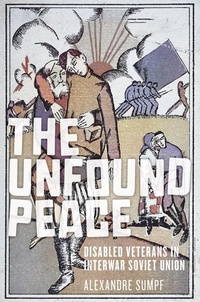
The Unfound Peace
Disabled Veterans in Interwar Soviet Union
Published on 15. March 2025
330 pages
978-1-5017-7771-4 (ISBN)
Description

The Unfound Peace is the first book dealing with disabled former servicemen of tsarist Russia in all regards-socioeconomic status, healthcare, social reintegration into families and communities, self-representation-and the only one comparing World War I and Russian Civil War veterans. Alexandre Sumpf considers the ways disabled Great War veterans tried to live under the Bolsheviks and compares their experiences with those of the Red Army veterans who received special considerations from the new regime.
Offering a history of the body and health in relation to work, The Unfound Peace also compares the situation of disabled veterans with that of disabled workers who were subject to the same demands of extreme productivity but benefited from better social protection, though they dealt with accusations that they were faking their disabilities.
Sumpf's exploration of disabled veterans, with transnational comparisons, offers the possibility of rereading the history of the first generation of Soviets through the collective and private memory of war, in the USSR and in exile.
Offering a history of the body and health in relation to work, The Unfound Peace also compares the situation of disabled veterans with that of disabled workers who were subject to the same demands of extreme productivity but benefited from better social protection, though they dealt with accusations that they were faking their disabilities.
Sumpf's exploration of disabled veterans, with transnational comparisons, offers the possibility of rereading the history of the first generation of Soviets through the collective and private memory of war, in the USSR and in exile.
More details
Series
Language
English
Place of publication
United States
Publishing group
Cornell University Press
Product notice
Reflowable
Illustrations
19 b&w halftones - 19 Halftones, black and white
File size
9,12 MB
ISBN-13
978-1-5017-7771-4 (9781501777714)
Copyright in bibliographic data and cover images is held by Nielsen Book Services Limited or by the publishers or by their respective licensors: all rights reserved.
Schweitzer Classification
Other editions
Additional editions
Book
03/2025
Northern Illinois University Press
€84.38
Shipment within 15-20 days
Person
Alexandre Sumpf is Assistant Professor at Strasbourg University in France and Head of the Institute for the Contemporary History. His scholarship includes studies about wars in Russia/USSR, health history, disability studies, and propaganda.
Content
Introduction
1. A New Class of Citizens (1914-1919)
2. Civil War as a Dead End (1918-1923)
3. Ascribing Identity to "Victims of the Imperialist War"
4. Thou Shalt Work
5. Useful Bodies, Perfectible Minds
6. Showcasing Disability
Conclusion
1. A New Class of Citizens (1914-1919)
2. Civil War as a Dead End (1918-1923)
3. Ascribing Identity to "Victims of the Imperialist War"
4. Thou Shalt Work
5. Useful Bodies, Perfectible Minds
6. Showcasing Disability
Conclusion
