


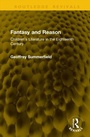
Fantasy and Reason
Children's Literature in the Eighteenth Century
Will be published approx. on 1. July 2026
342 pages
978-1-040-94067-9 (ISBN)
Description

First published in 1984, Fantasy and Reason (now with a new foreword by Judith Summerfield) retraces the major philosophical, moral and social factors bearing on children's development in the eighteenth century, leading up to the poetic expression in book V of Wordsworth's Prelude of a sustained analysis of children's growth, their mental health, and the life of their imaginations.
Wordsworth's poem is the starting point for this book, which goes back to examine major reputations in the field-not only publishers such as Newbery but also writers such as Locke, Addison, Steele, Crabbe, Clare, Goldsmith, Sarah Fielding, Watts, Blake, Lamb, Godwin, Maria Edgeworth and Coleridge. In doing so, it uncovers a permanent dialectic-one that recurs in various societies at various times-a tension between the claims of fantasy in childhood and the supervening and denying authority of the moralists; implicitly, it re-affirms the 'truth' of the great folktales and fairy tales, and the legitimacy of imaginative freedom. This book will be a valuable read for students and researchers of children's literature.
Wordsworth's poem is the starting point for this book, which goes back to examine major reputations in the field-not only publishers such as Newbery but also writers such as Locke, Addison, Steele, Crabbe, Clare, Goldsmith, Sarah Fielding, Watts, Blake, Lamb, Godwin, Maria Edgeworth and Coleridge. In doing so, it uncovers a permanent dialectic-one that recurs in various societies at various times-a tension between the claims of fantasy in childhood and the supervening and denying authority of the moralists; implicitly, it re-affirms the 'truth' of the great folktales and fairy tales, and the legitimacy of imaginative freedom. This book will be a valuable read for students and researchers of children's literature.
More details
Series
Language
English
Place of publication
London
United Kingdom
Publishing group
Taylor & Francis Ltd
Target group
College/higher education
File size
47,87 MB
ISBN-13
978-1-040-94067-9 (9781040940679)
Copyright in bibliographic data and cover images is held by Nielsen Book Services Limited or by the publishers or by their respective licensors: all rights reserved.
Schweitzer Classification
Other editions
Additional editions
Book
approx. 07/2026
1st Edition
Routledge
€185.50
Not yet published
Person
Geoffrey Summerfield (1931-1991), teacher and writer, believed intensely in the vivifying power of the imagination. Much of his work as an educator and writer was devoted to making the case for nurturing imaginative awareness in children and young people. After teaching at the University of York for several years, he went on to teach in Australia, Canada, and the United States, ultimately concluding his career at New York University.
Content
1. High-ranging Spaniels and Philosophical Dispositions 2. 'Maggots in a Madman's Brain' 3. Teaching the Young Idea How to Shoot 4. Father, Daughter, and Learned Lunations 5. Refractions of the Light of Day 6. Huffing, Puffing, and Pausing for Thought 7. Apotheosis of the Chap-book 8. Eternal Archetypes and Temporal Enervations: Lamb and Godwin 9. 'Reponse sans Replique'
