


Imagination and Social Perspectives
Approaches from Phenomenology and Psychopathology
Published on 3. October 2017
368 pages
978-1-315-41152-1 (ISBN)
Description

Our experience of other individuals as minded beings goes hand in hand with the awareness that they have a unique epistemic and emotional perspective on the experienced objects and situations. The same object can be seen from many different points of view, an event can awaken different emotional reactions in different individuals, and our position-takings can in part be mediated by our belonging to some social or cultural groups. All these phenomena can be described by referring to the metaphor of perspective. Assuming that there are different, and irreducible, perspectives we can take on the experienced world, and on others as experiencing the same world, the phenomenon of mutual understanding can consistently be understood in terms of perspectival flexibility. This edited volume investigates the different processes in which perspectival flexibility occurs in social life and particularly focuses on the constitutive role of imagination in such processes. It includes original works in philosophy and psychopathology showing how perspectival flexibility and social cognition are grounded on the interplay of direct perception and imagination.
Reviews / Votes
"This collection is welcome indeed since it draws into sharp relief the important but often overlooked connections among imagination, intersubjectivity, and perspective-taking of all kinds. While those schooled in the phenomenological tradition are well aware that these interlocking themes were of central concern to Husserl, Stein, Sartre and company, it has, with some exceptions, taken a little more time for analytical philosophers of mind and cognitive scientists to realize just how crucial perspective-taking is to understanding the structures and functions of consciousness . . . The book is highly recommended." - Notre Dame Philosophical Reviews"An outstanding and innovative book, which absolutely needs to be read and studied by researchers and students." - Natalie Depraz, University of Rouen, France
"This book covers a wide range of intriguing and original contributions to the role of imagination in perspective-taking, and the sociality of imagination." - Anika Fiebich, University of Duisburg-Essen, Germany
More details
Series
Language
English
Place of publication
London
United Kingdom
Publishing group
Taylor & Francis Ltd
Target group
College/higher education
Illustrations
1 Tables, black and white
File size
1,59 MB
ISBN-13
978-1-315-41152-1 (9781315411521)
Copyright in bibliographic data and cover images is held by Nielsen Book Services Limited or by the publishers or by their respective licensors: all rights reserved.
Schweitzer Classification
Other editions
Additional editions

Michela Summa | Thomas Fuchs | Luca Vanzago
Imagination and Social Perspectives
Approaches from Phenomenology and Psychopathology
Book
09/2020
1st Edition
Routledge
€68.20
Shipment within 15-20 days
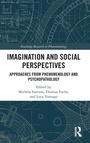
Michela Summa | Thomas Fuchs | Luca Vanzago
Imagination and Social Perspectives
Approaches from Phenomenology and Psychopathology
Book
10/2017
1st Edition
Routledge
€232.60
Shipment within 10-20 days
Persons
Michela Summa is a post-doc researcher and lecturer at the Philosophy Department of Julius Maximilians Universitaet Wuerzburg. Research interests include: the phenomenology of sensible experience, the phenomenology and the psychopathology of self- and other-experience, the phenomenology of memory and imagination, aesthetic and ontology of fiction.
Thomas Fuchs is Karl Jaspers Professor of Philosophy and Psychiatry at Heidelberg University, Germany. Areas of expertise: phenomenological philosophy, psychology and psychopathology, with a focus on embodiment, temporality, spatiality, and intersubjectivity. Clinical work focus: diagnosis, psychopathological assessment and treatment of adults with severe psychiatric disorders.
Luca Vanzago is a professor of Theoretical Philosophy and of Theory of Knowledge at the University of Pavia, Italy. Areas of expertise: phenomenology, philosophy of mind, and ontology, with focus on temporality, bodily subjectivity, the experience of pain, and the "hard problem" of consciousness.
Thomas Fuchs is Karl Jaspers Professor of Philosophy and Psychiatry at Heidelberg University, Germany. Areas of expertise: phenomenological philosophy, psychology and psychopathology, with a focus on embodiment, temporality, spatiality, and intersubjectivity. Clinical work focus: diagnosis, psychopathological assessment and treatment of adults with severe psychiatric disorders.
Luca Vanzago is a professor of Theoretical Philosophy and of Theory of Knowledge at the University of Pavia, Italy. Areas of expertise: phenomenology, philosophy of mind, and ontology, with focus on temporality, bodily subjectivity, the experience of pain, and the "hard problem" of consciousness.
Content
1. Imagination and Social Perspectives. Approaches from Phenomenology and Psychopathology
Michela Summa, Thomas Fuchs, and Luca Vanzago
Section I: Imagination and the As-If: Experiencing Multiple Realities
2. Imagining Oneself
Andrea Altobrando
3. Experiencing Reality and Fiction: Discontinuity and Permeability
Michela Summa
4. As-if I Were You: Imagining the Other in Aesthetic Experience from Kant to Husserl
Serena Feloj
Section II: Imagination and Intersubjectivity in Psychopathology
5. The "As-if" Function and Its Loss in Schizophrenia
Thomas Fuchs
6. Intersubjective Expression in Autism and Schizophrenia
Till Grohmann
7. The Phenomenology of Intersubjective Reality in Schizophrenia
Zeno Van Duppen
Section III: Imagination and the Experience of Others
8. Spinoza on the Role of Feelings, Imagination and Knowledge in Sex, Love, and Social Life
Rudolf Bernet
9. Sartre and the Role of Imagination in Mutual Understanding
Jens Bonnermann
10. Intersubjectivity and Imagination. On Merleau-Ponty's Conception of Intercorporeality as Foundation of Community
Luca Vanzago
11. The Minded Other and the Work of the Imagination
Anita Avramides
12. Empathy without Simulation
Matthew Ratcliffe
Section IV: The Sociality of Imagination
13. Collective Imagination: A Normative Account
Thomas Szanto
14. Shared imagining: Beyond extension, distribution, and commitment
Julia Jansen
15. Beyond the Dichotomy of "Social Direct Perception" and "Simulation Theory".
Scheler's Account of Social Cognition Revisited
Emanuele Caminada
Section V. Aesthetic, Ethical, and Socio-Political Grounds of Perspective-Taking
16. We-Perspective on Aesthetic Grounds: Gemeinsinn and UEbereinstimmung in Kant and Wittgenstein
Silvana Borutti
17. Social Perspectivity. From the Anonymous Social Order to Individual and Social Awareness
Karl Mertens
18. The Ethico-Political Turn of Phenomenology. Reflections on Otherness in Husserl and Levinas
Matthias Flatscher and Sergej Seitz
Michela Summa, Thomas Fuchs, and Luca Vanzago
Section I: Imagination and the As-If: Experiencing Multiple Realities
2. Imagining Oneself
Andrea Altobrando
3. Experiencing Reality and Fiction: Discontinuity and Permeability
Michela Summa
4. As-if I Were You: Imagining the Other in Aesthetic Experience from Kant to Husserl
Serena Feloj
Section II: Imagination and Intersubjectivity in Psychopathology
5. The "As-if" Function and Its Loss in Schizophrenia
Thomas Fuchs
6. Intersubjective Expression in Autism and Schizophrenia
Till Grohmann
7. The Phenomenology of Intersubjective Reality in Schizophrenia
Zeno Van Duppen
Section III: Imagination and the Experience of Others
8. Spinoza on the Role of Feelings, Imagination and Knowledge in Sex, Love, and Social Life
Rudolf Bernet
9. Sartre and the Role of Imagination in Mutual Understanding
Jens Bonnermann
10. Intersubjectivity and Imagination. On Merleau-Ponty's Conception of Intercorporeality as Foundation of Community
Luca Vanzago
11. The Minded Other and the Work of the Imagination
Anita Avramides
12. Empathy without Simulation
Matthew Ratcliffe
Section IV: The Sociality of Imagination
13. Collective Imagination: A Normative Account
Thomas Szanto
14. Shared imagining: Beyond extension, distribution, and commitment
Julia Jansen
15. Beyond the Dichotomy of "Social Direct Perception" and "Simulation Theory".
Scheler's Account of Social Cognition Revisited
Emanuele Caminada
Section V. Aesthetic, Ethical, and Socio-Political Grounds of Perspective-Taking
16. We-Perspective on Aesthetic Grounds: Gemeinsinn and UEbereinstimmung in Kant and Wittgenstein
Silvana Borutti
17. Social Perspectivity. From the Anonymous Social Order to Individual and Social Awareness
Karl Mertens
18. The Ethico-Political Turn of Phenomenology. Reflections on Otherness in Husserl and Levinas
Matthias Flatscher and Sergej Seitz
