

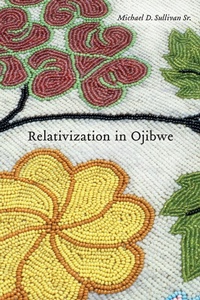
Relativization in Ojibwe
1st Edition
Published on 1. January 2020
384 pages
978-1-4962-1888-9 (ISBN)
Description

In Relativization in Ojibwe, Michael D. Sullivan Sr. compares varieties of the Ojibwe language and establishes subdialect groupings for Southwestern Ojibwe, often referred to as Chippewa, of the Algonquian family. Drawing from a vast corpus of both primary and archived sources, he presents an overview of two strategies of relative clause formation and shows that relativization appears to be an exemplary parameter for grouping Ojibwe dialect and subdialect relationships.
Specifically, Sullivan targets the morphological composition of participial verbs in Algonquian parlance and categorizes the variation of their form across a number of communities. In addition to the discussion of participles and their role in relative clauses, he presents original research linking geographical distribution of participles, most likely a result of historic movements of the Ojibwe people to their present location in the northern midwestern region of North America.
Following previous dialect studies concerned primarily with varieties of Ojibwe spoken in Canada, Relativization in Ojibwe presents the first study of dialect variation for varieties spoken in the United States and along the border region of Ontario and Minnesota. Starting with a classic Algonquian linguistic tradition, Sullivan then recasts the data in a modern theoretical framework, using previous theories for Algonquian languages and familiar approaches such as feature checking and the split-CP hypothesis.
Specifically, Sullivan targets the morphological composition of participial verbs in Algonquian parlance and categorizes the variation of their form across a number of communities. In addition to the discussion of participles and their role in relative clauses, he presents original research linking geographical distribution of participles, most likely a result of historic movements of the Ojibwe people to their present location in the northern midwestern region of North America.
Following previous dialect studies concerned primarily with varieties of Ojibwe spoken in Canada, Relativization in Ojibwe presents the first study of dialect variation for varieties spoken in the United States and along the border region of Ontario and Minnesota. Starting with a classic Algonquian linguistic tradition, Sullivan then recasts the data in a modern theoretical framework, using previous theories for Algonquian languages and familiar approaches such as feature checking and the split-CP hypothesis.
Reviews / Votes
"Breaking new ground with some of the world's best tribal language speakers, Michael Sullivan has forged a powerful tool for revitalization of Ojibwe. The Ojibwe language is in motion. From linguists in the ivory tower to the staff of the immersion schools sprouting up across Ojibwe country, this is required reading."-Anton Treuer, professor of Ojibwe at Bemidji State UniversityMore details
Language
English
Place of publication
Lincoln
United States
Target group
Professional and scholarly
Illustrations
45 tables, 1 figure, syntax trees, index
File size
8,26 MB
ISBN-13
978-1-4962-1888-9 (9781496218889)
Copyright in bibliographic data and cover images is held by Nielsen Book Services Limited or by the publishers or by their respective licensors: all rights reserved.
Schweitzer Classification
Other editions
Additional editions
Michael D. Sullivan
Relativization in Ojibwe
Book
02/2021
University of Nebraska Press
€34.00
Shipment within 15-20 days

Michael D. Sullivan
Relativization in Ojibwe
Book
01/2020
University of Nebraska Press
€117.80
Shipment within 15-20 days
Person
Michael D. Sullivan Sr. (Lac Courte Oreilles Ojibwe) is the school linguist at the Waadookodaading Ojibwe Language Immersion School. He previously served as the community language curator for the Ojibwe People's Dictionary, among other publications.
Content
List of Illustrations and Tables
Acknowledgments
List of Abbreviations
1. A Basic Introduction to the Study
1.1. Purpose and Goals
1.2. Ojibwe Relative Clauses
1.2.1. What Is a Relative Clause?
1.2.2. Linguistic Preliminaries
1.2.3. Ojibwe RCs
1.2.3.1. Core versus Relative Root Arguments
1.2.4. Variation in SW Ojibwe
1.3. Algonquian Dialectology
1.3.1. Ojibwe Dialects
1.3.2. Implications of Classifications
1.3.3. Southwestern Ojibwe
1.3.4. Literature Review: Dialect Studies
1.3.4.1. Rhodes and Todd (1981)
1.3.4.2. Valentine (1994)
1.3.4.3. Nichols (2011, 2012)
1.4. Literature Review: Algonquian RCs
1.4.1. Rhodes (1996)
1.4.2. Johns (1982)
1.4.3. Johansson (2011)
1.4.4. Johansson (2013)
1.4.5. Lochbihler and Mathieu (2013)
1.5. Theoretical Preliminaries
1.5.1. Nonconfigurationality
1.5.1.1. The Pronominal Argument Hypothesis (PAH)
1.5.2. The Mirror Principle and the Minimalist Program
1.5.2.1. Feature Checking
1.5.2.2. Independent versus Conjunct
1.5.3. Split-CP Hypothesis (Rizzi 1997)
1.6. Conclusion
1.6.1. Concluding Remarks
2. Ojibwe Morphosyntax
2.1. Typological Preliminaries
2.2. The Sound System
2.2.1. The Vowels
2.2.2. Consonant Inventory
2.3. Morphology
2.3.1. Nouns
2.3.2. Pronouns
2.3.3. Verbal Morphology
2.3.3.1. Palatalization
2.3.3.2. Nominalization
2.3.4. Preverbs
2.4. Inflectional Subsystems
2.4.1. Modes
2.5. Topicality Hierarchy
2.5.1. Obviation
2.6. Initial Change
2.6.1. Wh-questions
2.6.2. Participles
2.6.3. Past/Completive
2.7. Word Order and Clause Structure
2.7.1. The Noun Phrase
2.7.2. Basic Constituency Order
2.7.3. The Left Periphery
2.7.3.1. Focus
2.7.3.2. Topic
3. Methodology
3.1. Survey Apparatus
3.2. Archival Data
3.3. Findings
3.3.1. ji-/da- Complementizer, jibwaa/dabwaa
3.3.2. Preterit Peripheral Suffixes
3.3.3. Neutralization of Inanimate Plural in Conjunct
3.3.4. Number under Obviation
3.3.5. Restructuring of Dependent Stems
3.3.6. Core Demonstratives
3.3.7. Phonological Variation
3.3.7.1. Nasal Behavior
3.3.7.1.1. Initial /n/
3.3.7.1.2. Final Nasal in Negation Suffix -sii(n)
3.3.7.1.3. Final Nasal /n/ Behavior
3.3.7.1.4. Nasal Spreading
3.3.7.2. Initial /g/
3.3.7.3. Vowel and Glide Quality
3.3.7.3.1. Labialization and Rounding
3.3.7.3.2. Vowel Height /i/ versus /a/
3.3.7.3.3. Articulation of Glides /y/ and /w/
3.3.7.4. Other Points of Variation
3.3.7.4.1. Women's Names -k(we)
3.3.7.4.2. /t/ Epenthesis
3.3.7.4.3. Syncope
3.3.8. Lexical Variation
3.3.8.1. Body-Part-Incorporating Suffix -e
3.3.8.2. -ngwaam(i) Verbs
3.3.8.3. -aadage/-aadagaa Verbs
3.3.9. Animacy Status
3.3.10. TA -aw Stem Contraction
3.3.11. Initial Vowel Change
3.3.12. Iterative Suffix
3.3.13. Participles
3.3.13.1. Southern Strategies
3.3.13.2. Innovations
3.3.13.3. gaa- Participles
3.4. Discussion
3.4.1. Geographic Variation
3.4.1.1. Leech Lake as a Transitional Area
3.4.1.2. Intelligibility
3.4.2. Age-Graded Variation
3.4.3. Free Variation
4. Relativization in Ojibwe
4.1. Ojibwe Relative Clauses
4.1.1. Findings: Core Argument versus Relative Root Arguments
4.1.2. Variation in Relativization Strategies
4.2. Theoretical Framework
4.2.1. Plain Conjunct Morphosyntax
4.2.1.1. Brittain (2001)
4.2.2. Split-CP Hypothesis (Rizzi 1997)
4.2.2.1. FinP as Host to Conjunct
4.2.2.2. FocP Host to IC
4.2.2.3. ForceP and RCs
4.2.3. Cyclicity and Phases (Bruening 2001)
4.3. Refining the Analysis
4.3.1. Feature Bundles
4.3.2. The Structure of the Ojibwe CP
4.3.3. Internally versus Externally Headed RCs
4.3.4. Concluding Remarks
5. Conclusions
5.1. Review
5.1.1. Implications of the Findings
5.2. Limitations
5.2.1. Obsolescence
5.2.2. Access
5.2.3. L2 Interference
5.3. Comparisons within the Algonquian Family
5.3.1. IC
5.3.2. Algonquian Participles
5.3.2.1. PA Participles
5.4. Directions for Future Research
Appendix: VTA Paradigms
Notes
References
Index
Acknowledgments
List of Abbreviations
1. A Basic Introduction to the Study
1.1. Purpose and Goals
1.2. Ojibwe Relative Clauses
1.2.1. What Is a Relative Clause?
1.2.2. Linguistic Preliminaries
1.2.3. Ojibwe RCs
1.2.3.1. Core versus Relative Root Arguments
1.2.4. Variation in SW Ojibwe
1.3. Algonquian Dialectology
1.3.1. Ojibwe Dialects
1.3.2. Implications of Classifications
1.3.3. Southwestern Ojibwe
1.3.4. Literature Review: Dialect Studies
1.3.4.1. Rhodes and Todd (1981)
1.3.4.2. Valentine (1994)
1.3.4.3. Nichols (2011, 2012)
1.4. Literature Review: Algonquian RCs
1.4.1. Rhodes (1996)
1.4.2. Johns (1982)
1.4.3. Johansson (2011)
1.4.4. Johansson (2013)
1.4.5. Lochbihler and Mathieu (2013)
1.5. Theoretical Preliminaries
1.5.1. Nonconfigurationality
1.5.1.1. The Pronominal Argument Hypothesis (PAH)
1.5.2. The Mirror Principle and the Minimalist Program
1.5.2.1. Feature Checking
1.5.2.2. Independent versus Conjunct
1.5.3. Split-CP Hypothesis (Rizzi 1997)
1.6. Conclusion
1.6.1. Concluding Remarks
2. Ojibwe Morphosyntax
2.1. Typological Preliminaries
2.2. The Sound System
2.2.1. The Vowels
2.2.2. Consonant Inventory
2.3. Morphology
2.3.1. Nouns
2.3.2. Pronouns
2.3.3. Verbal Morphology
2.3.3.1. Palatalization
2.3.3.2. Nominalization
2.3.4. Preverbs
2.4. Inflectional Subsystems
2.4.1. Modes
2.5. Topicality Hierarchy
2.5.1. Obviation
2.6. Initial Change
2.6.1. Wh-questions
2.6.2. Participles
2.6.3. Past/Completive
2.7. Word Order and Clause Structure
2.7.1. The Noun Phrase
2.7.2. Basic Constituency Order
2.7.3. The Left Periphery
2.7.3.1. Focus
2.7.3.2. Topic
3. Methodology
3.1. Survey Apparatus
3.2. Archival Data
3.3. Findings
3.3.1. ji-/da- Complementizer, jibwaa/dabwaa
3.3.2. Preterit Peripheral Suffixes
3.3.3. Neutralization of Inanimate Plural in Conjunct
3.3.4. Number under Obviation
3.3.5. Restructuring of Dependent Stems
3.3.6. Core Demonstratives
3.3.7. Phonological Variation
3.3.7.1. Nasal Behavior
3.3.7.1.1. Initial /n/
3.3.7.1.2. Final Nasal in Negation Suffix -sii(n)
3.3.7.1.3. Final Nasal /n/ Behavior
3.3.7.1.4. Nasal Spreading
3.3.7.2. Initial /g/
3.3.7.3. Vowel and Glide Quality
3.3.7.3.1. Labialization and Rounding
3.3.7.3.2. Vowel Height /i/ versus /a/
3.3.7.3.3. Articulation of Glides /y/ and /w/
3.3.7.4. Other Points of Variation
3.3.7.4.1. Women's Names -k(we)
3.3.7.4.2. /t/ Epenthesis
3.3.7.4.3. Syncope
3.3.8. Lexical Variation
3.3.8.1. Body-Part-Incorporating Suffix -e
3.3.8.2. -ngwaam(i) Verbs
3.3.8.3. -aadage/-aadagaa Verbs
3.3.9. Animacy Status
3.3.10. TA -aw Stem Contraction
3.3.11. Initial Vowel Change
3.3.12. Iterative Suffix
3.3.13. Participles
3.3.13.1. Southern Strategies
3.3.13.2. Innovations
3.3.13.3. gaa- Participles
3.4. Discussion
3.4.1. Geographic Variation
3.4.1.1. Leech Lake as a Transitional Area
3.4.1.2. Intelligibility
3.4.2. Age-Graded Variation
3.4.3. Free Variation
4. Relativization in Ojibwe
4.1. Ojibwe Relative Clauses
4.1.1. Findings: Core Argument versus Relative Root Arguments
4.1.2. Variation in Relativization Strategies
4.2. Theoretical Framework
4.2.1. Plain Conjunct Morphosyntax
4.2.1.1. Brittain (2001)
4.2.2. Split-CP Hypothesis (Rizzi 1997)
4.2.2.1. FinP as Host to Conjunct
4.2.2.2. FocP Host to IC
4.2.2.3. ForceP and RCs
4.2.3. Cyclicity and Phases (Bruening 2001)
4.3. Refining the Analysis
4.3.1. Feature Bundles
4.3.2. The Structure of the Ojibwe CP
4.3.3. Internally versus Externally Headed RCs
4.3.4. Concluding Remarks
5. Conclusions
5.1. Review
5.1.1. Implications of the Findings
5.2. Limitations
5.2.1. Obsolescence
5.2.2. Access
5.2.3. L2 Interference
5.3. Comparisons within the Algonquian Family
5.3.1. IC
5.3.2. Algonquian Participles
5.3.2.1. PA Participles
5.4. Directions for Future Research
Appendix: VTA Paradigms
Notes
References
Index
