

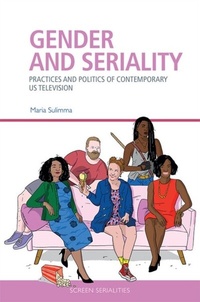
Gender and Seriality
Description

Offers the first book-length study to commit to gender and television as driven by seriality
- Provides an introduction to seriality in both gender studies and cultural/media studies
- Identifies shortcomings of seriality studies and gender studies and suggests remedies
- Traces a massive body of material, 3 different shows with a combined total of 237 episodes over 18 seasons, as well as extensive research on various paratexts and viewer practices
- Develops methods and terminology to analyze gender performances as ongoing and interconnected with practices of reception and production
- Allows for an understanding of serial television's complex, ambiguous commercial cooption of cultural-political discourses, especially activism and thought
- Considers serial, ongoing television authorship as unfolding alongside a television show
- Examines the changed conditions and implications of television writing (journalistic and academic) for current television storytelling
- Approaches second-screen/social media viewing, specifically racialized practices of online humor and politicization on Twitter
The notion of seriality and serial identity performance runs as a strong undercurrent through much of the fields of feminist theory, gender studies and queer studies. Defining gender as a serial and discursively produced entanglement of different practices and agencies, this book argues that serial storytelling can offer such complex negotiations of identity that the 'results' of televisual gender performances are rarely separate from the processes that produce them. As such, gender performances are not restricted to individual television programmes themselves, but are also located in official paratexts, such as making-of documentaries, interviews with writers and actors, and in cultural sites like online viewer discussions, recaps and fan fiction. With case studies of series such as Girls, How to Get Away With Murder and The Walking Dead, this book seeks to understand how gender as a practice is generated by television narratives in the overlapping of text, reception and production, and explores the viewer practices that these narratives seek to trigger and draw on in the process.
More details
Other editions
Additional editions
Content
- Intro
- List of Figures
- Acknowledgements
- Introduction: Serial Genders, Gendered Serialities
- Part I Serial TV Criticism and Girls
- 1 The Thinkpiece Seriality of Girls
- 2 Carousel: Gendering through Controversy
- 3 Navigating Discourses of Universality and Specificity: The (Feminist) Voice of a Generation?
- Part II Television Audience Engagement and How to Get Away with Murder
- 4 The Looped Seriality of How to Get Away with Murder
- 5 Outward Spiral: Gendering through Recognisability
- 6 Evoking Discourses of Progressivism, Social Activism, and Identity Politics: Such an Important Episode!
- Part III Television Authorship and The Walking Dead
- 7 The Paratext Seriality of The Walking Dead
- 8 Palimpsest: Gendering through Accountability
- 9 Neoliberalising Discourses of Serialised Survivalism: You Make It . . . Until You Don't
- Conclusion: Archiving Snapshots
- Bibliography
- Index
