

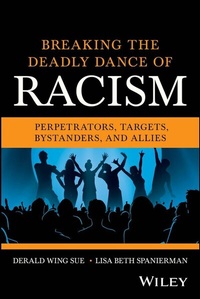
Breaking the Deadly Dance of Racism
Description

Break the silence and inaction that perpetuate racism in everyday life
When racist incidents occur, they're too often met with silence - perpetrators remain unaware, targets feel powerless, bystanders freeze, and allies hesitate. Breaking the Deadly Dance of Racism provides a comprehensive framework for understanding how these four roles maintain racism and offers concrete intervention strategies. Drawing on decades of research, psychologists Derald W. Sue and Lisa B. Spanierman reveal the hidden scripts keeping racism thriving.
The book examines unique barriers each role faces - from perpetrators' defensive reactions to targets' racial trauma to bystanders' diffusion of responsibility to allies' performative gestures. Readers discover how cultural scripts like color-blind ideology protect racism from challenge, and learn detailed microintervention strategies for making racism visible, disarming biased behavior, educating offenders, and mobilizing support.
The book also offers:
- Evidence-based guidance for developing critical consciousness about how racism operates at individual, institutional, and cultural levels
- Concrete strategies for overcoming the fear, uncertainty, and social costs that prevent people from taking anti-racist action
- Detailed intervention tactics tailored to the specific challenges faced by perpetrators, targets, bystanders, and allies
- Practical approaches for combating both everyday microaggressions and systemic macroaggressions in organizations and society
- Foundational practices for racial socialization that help parents and educators raise antiracist children through microprotections
Essential reading for educators, mental health practitioners, diversity consultants, and activists, Breaking the Deadly Dance of Racism transforms abstract commitments into actionable strategies. By revealing how silence makes us complicit and providing specific intervention tools, this book empowers readers to break the deadly dance.
DERALD WING SUE, PHD, Professor of Psychology and Education in the Department of Counseling and Clinical Psychology at Teachers College, Columbia University.
LISA BETH SPANIERMAN, PHD, Professor in the School of Counseling and Counseling Psychology at Arizona State University.
More details
Other editions
Additional editions
Persons
DERALD WING SUE, PHD, Professor of Psychology and Education in the Department of Counseling and Clinical Psychology at Teachers College, Columbia University.
LISA BETH SPANIERMAN, PHD, Professor in the School of Counseling and Counseling Psychology at Arizona State University.
Content
Preface xiii
Acknowledgments xix
Part One: Introduction
Chapter One The Dance of Racism: Perpetrators, Targets, Bystanders, and White Allies 3
Challenge, Change, and Transformation: The Racial Revolution 5
The Rise of Whiteness and White Supremacy 6
Addressing Racism 9
Critical Consciousness 10
Self- Reckoning 16
Anti- Racism (Words and Deeds) 19
The Dance of Racism 25
The Dance Metaphor 25
Final Words 28
References 29
Part Two: The Dancers
Chapter Two Barriers to Perpetrator Awareness and Reparative Action 37
Overcoming Perpetrator Unawareness 39
Cognitive Barriers 40
Affective/emotional Barriers 50
Behavioral Barriers 58
Spiritual Barriers 60
When Perpetrators Are Called Out 61
Strategies for Perpetrators to Break the Deadly Dance of Racism 63
Conclusion 66
References 66
Chapter Three Target Survival and Resilience: Overcoming Racism 73
The Prevalence of Racism Experienced by Targets: Who Are People of Color? 74
Discrimination Against African Americans 75
Discrimination Against Asian Americans 77
Discrimination Against Latinx (Hispanic) Americans 79
Discrimination Against Native Americans 81
Discrimination Against American Arab, Middle Eastern, and North African (AMENA) 83
Impact of Racism on People of Color 85
Microaggressive Harm to People of Color 86
Macroaggressive Harm to People of Color 87
The Consequences of Racial Trauma 89
Target Survival and Coping 93
Consciousness Raising 94
Self- Care Coping 95
Empowering for Action 98
References 100
Chapter Four Barriers to White Bystander Awareness and Anti- Racist Action 107
Forces Shaping Bystander Inaction or Action 108
The Bystander Effect: Silence and Inaction 109
Diffusion of Responsibility 110
Social Proof 111
Evaluation Apprehension 112
Costs/Benefits Explanation 113
Similarities and Relationships 114
The Racialization of Bystander Interventions 118
Conformity and Obedience to Authority 119
Isolation, Group Loyalty, Power, Secrecy, and Racism: Societal Implications 124
Everyday Racism and Microaggressions: Impact on Bystanders 128
Conclusions 136
References 137
Chapter Five Barriers to Ally Awareness: A Call for Courage 143
Aspirational Characteristics of White Allies 144
Demonstrate a Nuanced Understanding of Structural Racism and White Privilege 144
Enact a Continual Process of Self- Reflection About Their Positionality and Privilege 145
Experience a Sense of Responsibility to Use Their Racial Privilege to Facilitate Equity 145
Engage in Actions to Disrupt Individual and Structural Racism in Their Own Communities 146
Participate in Coalitions and Work in Solidarity with POC 146
Encounter Resistance, Prepare for Backlash, and Shore Up Resources to Persist 146
Potential Hazards of White Allyship: Reinforcing the Status Quo 147
Engaging in Superficial and Performative Gestures 147
Acting Paternalistically 148
Overidentifying with People of Color 149
Performative Allyship as a Starting Point? 150
Motivations for Ally Work 151
Childhood and Family Background 152
Critical Incidents or Turning Points 153
POC Perspectives of White Racial Justice Allies 154
White Allies Are Few and Far Between (Structural Barriers to Becoming an Ally) 156
The Emotional Labor of Allyship 158
Hesitancy to Act: White Ally Paralysis 160
Response Uncertainty 160
Fear of Punitive Consequences 161
Summary and Synthesis: the Hazards of White Racial Justice Allyship 162
How to Be an Effective White Ally: Strategies to Break the Dance 165
Educate Yourself 165
Engage in Continual Reflexivity and Personal Growth 166
Work in White Communities 166
Develop Meaningful Relationships with POC 167
Amplify POC Voices, Listen, and Decenter Whiteness 168
Move Beyond Intention to Action 168
Develop Self- Care Strategies to Persist 169
Visualizing Sustained and Accountable White Allyship 170
Conclusion 171
References 171
Part Three: Social, Systemic, and Cultural Influences That Facilitate Racism
Chapter Six The Deadly Dance of Racism: Symbiotic Roles, Scripts, and Ground Rules 181
Unintended Consequences of Silence and Inaction 183
False Consensus Effect 184
Social/Bias Contagion Effect 186
The Role Relationships in the Dance of Racism 189
Communication and Intervention Styles 191
Sincerity, Authenticity, and Trust 193
Cultural Scripts and Ground Rules in the Dance of Racism 197
Cultural Narratives (Storytelling) and Racial Scripts 198
Protecting Racism: Ground Rules for Racial Interactions 202
Conclusion 207
References 208
Chapter Seven Overcoming Cultural, Systemic, and Institutional Racism 215
Cultural Racism and White Supremacy 216
Whiteness and White Racial Superiority 217
Systemic, Structural, and Institutional Racism 219
Microaggressions and Macroaggressions: Distinctions and Focus 220
Microaggressions and Macroaggressions: The Myth of Meritocracy 224
Microaggressions and Macroaggressions: Standard Operating Procedures (SOPs) 225
The Interlocking Relationship of Racism 226
Institutional and Cultural Change 228
Disarming Institutional Racism: General Guidelines 229
Cultural Racism and Societal Change: General Lessons 234
Conclusions- Looking Ahead 237
References 238
Part Four: Anti-bias Strategies and Actions To Challenge Individual, Institutional, and Cultural Racism
Chapter Eight Microintervention Strategies to Disrupt, Diminish, and Dismantle Racism: Arming Targets, Bystanders, and White Allies 245
Microinterventions: What Are They? 247
Microinterventions 248
Strategies and Tactics to Combat Individual Microaggressions 253
Strategic Goal #1: Making the "Invisible" Visible 255
Strategic Goal #2: Disarm the Microaggression 264
Strategic Goal #3: Educate the Perpetrator 268
Strategic Goal #4: Seeking Outside Support and Validation 273
Conclusion 277
References 277
Chapter Nine Microintervention Strategies to Disrupt, Diminish, and Dismantle Systemic Racism (Macroaggressions): Arming Targets, Bystanders, and White Allies 281
The Current Political Climate and the Rise of Overt Racism 282
Systemic Racism and Macroaggressions: Threat, Intimidation, and Silencing of Dissent 283
Civil Courage: Resistance and Social Change 286
Strategies and Tactics to Combat Macroaggressions (Systemic Racism) 288
Strategic Goal #1: Making Macroaggressions Visible 289
Strategic Goal # 2: Challenging Macroaggressions Through Education 294
Strategic Goal # 3: Challenging and Disarming Macroaggressions 297
Strategic Goal #4: Seeking External Support in Fighting Macroaggressions 304
References 308
Chapter Ten Racial Socialization and the Microprotections that Shape Antiracist Development 315
Applying Racial Microprotections: A Framework for Prevention 317
Learning Race: How Children Are Taught to Reproduce Social Hierarchies 318
Developmental Pathways for Understanding Race 318
The Myths that Undermine Antiracist Socialization 319
The Myth of Racial Colorblindness 319
The Myth of Exposure as Enough 320
The Myth That Talking About Race Causes Bias 320
Moving Beyond the Myths 320
The Science of Racial Socialization 321
Youth of Color: A Rich Tradition of Ethnic- Racial Socialization 322
White Racial Socialization: What We Know 323
The Urgency of Intentional WRS 324
Enacting Racial Microprotections: Foundational Practices for Antiracist Socialization 325
Foundational Practice 1: Be Purposeful- Commit to Your Own Racial Learning 326
Foundational Practice 2: Break the Silence- Don't Avoid Race Talk 330
Foundational Practice 3: Make Race Talk Normative- Incorporate It Naturally 331
Foundational Practice 4: Practice and Role- Play- Build Racial Dialogue Fluency 333
Foundational Practice 5: Anticipate and Prepare- Script Responses to Common Racial Incidents 335
Foundational Practice 6: Take the Lead- Instigate Everyday Race Lessons 337
Foundational Practice 7: Recover from Mistakes- Model Imperfection and Growth 339
Foundational Practice 8: Validate and Reinforce- Reward Antiracist Actions 340
Summary 342
Systems- Level Opportunities: Extending Racial Microprotections Beyond the Home 343
Schools 343
Community Institutions 345
Media and Technology 345
Peer Networks and Youth Spaces 346
Conclusion: Reimagining the Future of Racial Socialization 347
References 347
Author Index 353
Subject Index 361
Preface
Throughout US history, periods of racial progress have often been met with swift and aggressive backlash. We are once again living through such a moment. The Make America Great Again (MAGA) movement has actively dismantled hard-won anti-discrimination laws and policies, creating a chilling effect across federal agencies, education, law, healthcare, and civil society. These rollbacks not only stifle discourse but also carry profound consequences for People of Color (POC) and other marginalized communities, who face escalating threats to their rights, safety, and dignity. With Trump's re-election, these threats have intensified through executive orders aimed at ending birthright citizenship, promoting mass deportations of immigrants, suppressing DEI programs, restricting research funds, and banning terms such as "bias," "discrimination," and "racism" in public documents. Federal agencies have purged references to key civil rights concepts and removed public commemorations of Black military history, such as memorials and photographs of the Tuskegee Airmen. These 21st-century developments do not signal a return to the past but instead affirm the persistence of racial domination through tactics of erasure, censorship, and authoritarian control.
These policy changes have not only reshaped institutions but have also emboldened a cultural climate of grievance, entitlement, and racial resentment. Across the country, individuals have adopted a rebranded posture of white victimhood, embracing a zero-sum view of equity that treats demands for justice as threats to their status. Hate crimes and identity-based violence have surged alongside a rise in dehumanizing rhetoric and normalized bias by political leaders, media figures, and everyday citizens. These dynamics reflect not only the persistence of racial and gendered oppression but also the widespread passivity of those who choose silence over action. Indifference to injustice, as history reminds us, is a form of complicity.
Moral leaders have long warned of the dangers of neutrality in the face of injustice. Nobel Peace Prize laureates Dr. Martin Luther King Jr. and Archbishop Desmond Tutu both challenged the myth that decency alone is enough and called on individuals to act with conviction. As Dr. King warned, "We will have to repent in this generation not merely for the hateful words and actions of the bad people but for the appalling silence of the good people." Similarly, Tutu reminded us that "To be neutral is to take the side of the oppressor." When racist incidents occur-whether overt or covert, intentional or unintentional-they are far too often allowed to unfold without being challenged. Silence allows racial injustice to persist, signals passive approval, and erodes the promise of equity in a multiracial democracy.
Even in the face of escalating violence and political persecution, we are not without strength. The current wave of racial retrenchment is not new. Our ancestors and elders have endured similar threats and refused to capitulate. We draw inspiration from a long tradition of resistance-from Ida B. Wells's fearless crusade against racial terror to Gerald Vizenor's concept of survivance, which affirms Indigenous presence and resistance in the face of colonization, to Dolores Huerta's organizing for the dignity and rights of farmworkers. These figures refused silence, bore witness, and modeled what it means to act with moral clarity in the face of systemic injustice. Their legacies offer a roadmap for our own actions. Today, we must draw on that lineage and challenge racism at all levels. Interrupting racism means naming it, resisting it, and disrupting the institutional and relational conditions that allow it to flourish. This is the moral imperative of our time.
In this spirit, we offer this book as one contribution to the long and unfinished struggle for racial justice. Breaking the Deadly Dance of Racism emerges amid a resurgence of white grievance, growing authoritarianism, and widespread efforts to silence those who challenge injustice. We wrote it not only to name the patterns that uphold racism, but also to help readers recognize their place within those patterns, reflect on their roles, and take informed action. The framework we offer is grounded in decades of scholarship, practice, and lived experience and shaped by our shared commitment to speak with clarity, resist complicity, and build on the legacies of those who came before us. Our aim is to support those who are ready to step into this legacy of resistance with courage, clarity, and a commitment to collective action.
At the heart of this framework is our guiding metaphor that racism operates like a dance. It is not simply a matter of individual bias or intent, but a patterned set of roles, rhythms, and responses that are repeated, learned, and reinforced across relationships and systems. In this choreography, perpetrators, targets, bystanders, and white allies each move in ways that either sustain or disrupt racial injustice. These roles are interactive and shaped by institutional scripts and cultural ground rules that elevate whiteness while diminishing other ways of knowing and being. We chose this metaphor because it illuminates how racism is relational and systemic, and because it gives us language to explore how people can learn new steps, change their role, or disrupt the choreography altogether.
A distinguishing feature of this book is its emphasis on action. While conceptual clarity is vital, it is not enough. Across the chapters, we extend the concept of microinterventions-small, everyday acts that individuals can use to disarm bias, interrupt racism, and shift harmful dynamics in real time. We also introduce the concept of racial microprotections, which are developmentally grounded practices that help children resist internalizing racial dominance and instead cultivate resilience rooted in antiracist values. These tools, featured in Part IV, are designed for use in education, healthcare, human resources, and community settings for those seeking ways to move from awareness to accountability. Throughout the book, we offer strategies that support readers in translating intention into action, whether they are addressing racism in the moment or preparing the next generation to confront it with clarity and courage.
We envision this book reaching a wide range of readers who seek to deepen their critical consciousness and take part in the collective work of dismantling racism. Our framework speaks to educators, mental health practitioners, healthcare providers, human resource professionals, and everyday citizens. Breaking the Deadly Dance of Racism can serve as a primary or supplemental text in programs across education, social work, counseling and clinical psychology, communication, and medicine. It is also relevant for workshops, trainings, and courses that address white allyship, bystander intervention, systemic oppression, bullying, harassment, and workplace equity. Because of its metaphorical framing and practical emphasis, we hope the book resonates beyond the classroom, especially with those working to build inclusive institutions and empowered communities. Whether readers are just beginning their racial justice journey or seeking deeper clarity and courage, we offer these insights as a path toward reflection and action-and as a shared language for disrupting the choreography of racism in everyday life.
ORGANIZATION
Breaking the Deadly Dance of Racism is organized into four major sections and ten chapters. Each section represents a core dimension of racism and antiracism, progressing from individual expressions to institutional, systemic, and cultural patterns, and from remediation to prevention. This structure allows us to trace how racism is enacted, internalized, avoided, resisted, and reproduced, while also offering a scaffolded approach to personal growth, collective action, and structural transformation. In the chapters that follow, we build on the metaphor of the dance to explore how these roles and systems operate in concert. The chapters are designed to move readers from understanding to action, providing both conceptual tools and practical strategies for interrupting the rhythms of racism at every level of society.
Part I-Introduction
Chapter 1-The Dance of Racism: Perpetrators, Targets, Bystanders and White Allies
Part I introduces the central metaphor of racism as a dance, a set of patterned and interactive movements shaped by history, systems, and social roles. Chapter 1 lays the conceptual foundation for the book, presenting the four primary roles (perpetrator, target, bystander, and white ally) and situating them within the broader choreography of racism. We explore how these roles are learned, normalized, and reinforced through cultural messages and institutional practices, and how they operate in concert to uphold racial injustice. This chapter also frames racism not only as individual acts of bias but also as a collective performance embedded in everyday life. By naming the roles, rhythms, and ground rules of this deadly dance, we begin the process of interrupting it.
Part II-The Dancers
Chapter 2-Barriers to Perpetrator Awareness and Reparative Action
Chapter 3-Target Survival and Resilience: Overcoming Racism
Chapter 4-Barriers to White Bystander Awareness and Anti-Racist...
