

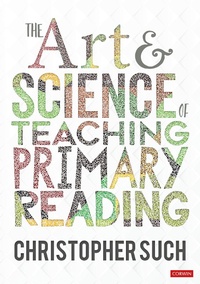
The Art and Science of Teaching Primary Reading
1st Edition
Published on 7. July 2021
192 pages
978-1-5297-6924-1 (ISBN)
Description

The essential guide to the science behind reading and its practical implications for classroom teaching in primary schools.
Teaching children to read is one of the most important tasks in primary education and classroom practice needs to be underpinned by a secure foundation of knowledge. Teachers need to know what reading entails, how children learn to read and how it can be taught effectively.
This book is an essential guide for primary teachers that explores the key technical and practical aspects of how children read with strong links to theory and how to translate this into the classroom. Bite-size chapters offer accessible research-informed ideas across all major key topics including phonics, comprehension, teaching children with reading difficulties and strategies for the classroom.
Key features include:
? Discussions of implications for the classroom
? Questions for further professional discussions
? Retrieval quizzes
? Further reading suggestions
? Glossary of key terms
Christopher Such is a primary school teacher and the author of the education blog Primary Colour. He can be found on Twitter via @Suchmo83.
Teaching children to read is one of the most important tasks in primary education and classroom practice needs to be underpinned by a secure foundation of knowledge. Teachers need to know what reading entails, how children learn to read and how it can be taught effectively.
This book is an essential guide for primary teachers that explores the key technical and practical aspects of how children read with strong links to theory and how to translate this into the classroom. Bite-size chapters offer accessible research-informed ideas across all major key topics including phonics, comprehension, teaching children with reading difficulties and strategies for the classroom.
Key features include:
? Discussions of implications for the classroom
? Questions for further professional discussions
? Retrieval quizzes
? Further reading suggestions
? Glossary of key terms
Christopher Such is a primary school teacher and the author of the education blog Primary Colour. He can be found on Twitter via @Suchmo83.
Reviews / Votes
With an erudite synergy of complex research and firsthand experience, The Art and Science of Teaching Primary Reading is sure to become an essential manual for ensuring every pupil becomes a fluent reader. It's the book I didn't realise I'd been waiting for. -- Robbie Burns * Schools Week *More details
Series
Edition
1. Auflage
Language
English
Place of publication
United Kingdom
Publishing group
Sage Publications Ltd
Target group
Professional and scholarly
Product notice
Reflowable
ISBN-13
978-1-5297-6924-1 (9781529769241)
Copyright in bibliographic data and cover images is held by Nielsen Book Services Limited or by the publishers or by their respective licensors: all rights reserved.
Schweitzer Classification
Other editions
Additional editions
Christopher Such
The Art and Science of Teaching Primary Reading
Book
07/2021
1st Edition
SAGE Publications Ltd
€46.30
Shipment within 15-20 days
Christopher Such
The Art and Science of Teaching Primary Reading
Book
07/2021
1st Edition
SAGE Publications Ltd
€101.10
Shipment within 15-20 days
Person
Christopher Such is a primary school teacher, school leader, teacher educator and consultant who has worked in schools since 2006. As part of Ambition Institute's learning design team, he co-designed their National Professional Qualification in Leading Literacy (NPQLL). He has contributed to the initial teacher training programmes for Teach East, Torch SCITT and Ambition Institute, focusing on reading instruction and mathematics pedagogy. In his work as an education consultant, he has worked with schools, multi-academy trusts, English hubs and wider organisations to develop teachers' understanding of reading and implement approaches to evidence-informed classroom teaching that prioritise meaningful experiences with texts. His first book, The Art and Science of Teaching Primary Reading, is required reading on many initial teacher training programmes and higher education courses. He is the author of the education blog Primary Colour, and he can be found on social media platforms via the username @Suchmo83.
Content
PART 1: READING AND ITS ORIGINS
Chapter 1: A brief history of reading and writing
Chapter 2: Useful frameworks for reading
Chapter 3: The trouble with English
PART 2: DECODING
Chapter 4: Phonics
Chapter 5: Fluency
PART 3: LANGUAGE COMPREHENSION
Chapter 6: Listening comprehension
Chapter 7: Situation models
Chapter 8: Comprehension monitoring
Chapter 9: Inference
Chapter 10: Text structure
Chapter 11: Vocabulary
Chapter 12: Background knowledge
Chapter 13: How the different elements of comprehension combine
PART 4: OPPORTUNITIES TO ENHANCE READING
Chapter 14: Independent reading / reading for pleasure
Chapter 15: Reading across the curriculum
Chapter 16: Writing
PART 5: ADDRESSING READING DIFFICULTIES
Chapter 17: Dyslexia
Chapter 18: Assessment
Chapter 19: Intervention
PART 6: THE READING DIET
Chapter 20: The current situation
Chapter 21: Getting the balance right
Chapter 22: Questioning and discussion
Chapter 23: Text choice
Chapter 24: Action plan for classroom teachers
Chapter 25: Action plan for reading coordinators
Chapter 1: A brief history of reading and writing
Chapter 2: Useful frameworks for reading
Chapter 3: The trouble with English
PART 2: DECODING
Chapter 4: Phonics
Chapter 5: Fluency
PART 3: LANGUAGE COMPREHENSION
Chapter 6: Listening comprehension
Chapter 7: Situation models
Chapter 8: Comprehension monitoring
Chapter 9: Inference
Chapter 10: Text structure
Chapter 11: Vocabulary
Chapter 12: Background knowledge
Chapter 13: How the different elements of comprehension combine
PART 4: OPPORTUNITIES TO ENHANCE READING
Chapter 14: Independent reading / reading for pleasure
Chapter 15: Reading across the curriculum
Chapter 16: Writing
PART 5: ADDRESSING READING DIFFICULTIES
Chapter 17: Dyslexia
Chapter 18: Assessment
Chapter 19: Intervention
PART 6: THE READING DIET
Chapter 20: The current situation
Chapter 21: Getting the balance right
Chapter 22: Questioning and discussion
Chapter 23: Text choice
Chapter 24: Action plan for classroom teachers
Chapter 25: Action plan for reading coordinators
