


Hijacked Justice
Dealing with the Past in the Balkans
1st Edition
Published on 15. December 2010
224 pages
978-0-8014-5934-4 (ISBN)
Description

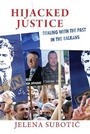
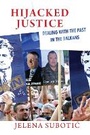
What is the appropriate political response to mass atrocity? In Hijacked Justice, Jelena Subotic traces the design, implementation, and political outcomes of institutions established to deal with the legacies of violence in the aftermath of the Yugoslav wars. She finds that international efforts to establish accountability for war crimes in the former Yugoslavia have been used to pursue very different local political goals. Responding to international pressures, Serbia, Croatia, and Bosnia have implemented various mechanisms of "transitional justice"-the systematic addressing of past crimes after conflicts end. Transitional justice in the three countries, however, was guided by ulterior political motives: to get rid of domestic political opponents, to obtain international financial aid, or to gain admission to the European Union. Subotic argues that when transitional justice becomes "hijacked" for such local political strategies, it fosters domestic backlash, deepens political instability, and even creates alternative, politicized versions of history.
That war crimes trials (such as those in The Hague) and truth commissions (as in South Africa) are necessary and desirable has become a staple belief among those concerned with reconstructing societies after conflict. States are now expected to deal with their violent legacies in an institutional setting rather than through blanket amnesty or victor's justice. This new expectation, however, has produced paradoxical results. In order to avoid the pitfalls of hijacked justice, Subotic argues, the international community should focus on broader and deeper social transformation of postconflict societies, instead on emphasizing only arrests of war crimes suspects.
That war crimes trials (such as those in The Hague) and truth commissions (as in South Africa) are necessary and desirable has become a staple belief among those concerned with reconstructing societies after conflict. States are now expected to deal with their violent legacies in an institutional setting rather than through blanket amnesty or victor's justice. This new expectation, however, has produced paradoxical results. In order to avoid the pitfalls of hijacked justice, Subotic argues, the international community should focus on broader and deeper social transformation of postconflict societies, instead on emphasizing only arrests of war crimes suspects.
Reviews / Votes
Subotic argues that... international and national courts and truth commissions... have been used... to dispose of political opponents, secure economic assistance, or grease the way into the European Union. How this has happened and what those committed to making the new norms stick should do about it drive this book. Subotic goes about her study in an exceedingly clearheaded fashion; not only is she in full command of the relevant theoretical literature, but she deploys and then extends it in compact, crystal-clear paragraphs. The writing and argumentation are a model of what social science should be.- Robert Legvold (Foreign Affairs)
More details
Language
English
Place of publication
Ithaca
United States
Edition type
Digital original
ISBN-13
978-0-8014-5934-4 (9780801459344)
Copyright in bibliographic data and cover images is held by Nielsen Book Services Limited or by the publishers or by their respective licensors: all rights reserved.
Schweitzer Classification
Other editions
Additional editions
Book
11/2016
Cornell University Press
€50.99
Shipment within 15-20 days
Book
07/2009
Cornell University Press
€43.31
Shipment within 10-20 days
Person
Jelena Subotic is Assistant Professor of Political Science at Georgia State University. She was formerly a human rights coordinator for Open Society Institute and a contributor at Radio B-92 in Belgrade.
Content
- Cover
- HIJACKED JUSTICE
- Title
- Copyright
- Dedication
- Contents
- Preface and Acknowledgments
- List of Abbreviations
- Introduction: The Importance of Dealing with the Past
- 1. The Politics of Hijacked Justice
- 2. The Past Is Not Yet Over
- 3. The Truth Is in Croatia's Favor
- 4. Who Lives in Your Neighborhood?
- Conclusion: Hijacked Justice beyond the Balkans
- Index
