

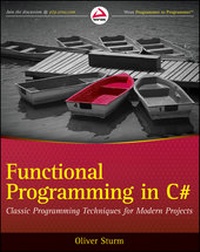
Functional Programming in C#
Classic Programming Techniques for Modern Projects
Published on 28. March 2011
288 pages
978-0-470-97028-7 (ISBN)
Description

Take advantage of the growing trend in functionalprogramming.
C# is the number-one language used by .NET developers and one ofthe most popular programming languages in the world. It has manybuilt-in functional programming features, but most are complex andlittle understood. With the shift to functional programmingincreasing at a rapid pace, you need to know how to leverage yourexisting skills to take advantage of this trend.
Functional Programming in C# leads you along a path thatbegins with the historic value of functional ideas. Inside, C# MVPand functional programming expert Oliver Sturm explains the detailsof relevant language features in C# and describes theory andpractice of using functional techniques in C#, including currying,partial application, composition, memoization, and monads. Next, heprovides practical and versatile examples, which combine approachesto solve problems in several different areas, including complexscenarios like concurrency and high-performance calculationframeworks as well as simpler use cases like Web Services andbusiness logic implementation.
* Shows how C# developers can leverage their existing skills totake advantage of functional programming
* Uses very little math theory and instead focuses on providingsolutions to real development problems with functional programmingmethods, unlike traditional functional programming titles
* Includes examples ranging from simple cases to more complexscenarios
Let Functional Programming in C# show you how to get infront of the shift toward functional programming.
C# is the number-one language used by .NET developers and one ofthe most popular programming languages in the world. It has manybuilt-in functional programming features, but most are complex andlittle understood. With the shift to functional programmingincreasing at a rapid pace, you need to know how to leverage yourexisting skills to take advantage of this trend.
Functional Programming in C# leads you along a path thatbegins with the historic value of functional ideas. Inside, C# MVPand functional programming expert Oliver Sturm explains the detailsof relevant language features in C# and describes theory andpractice of using functional techniques in C#, including currying,partial application, composition, memoization, and monads. Next, heprovides practical and versatile examples, which combine approachesto solve problems in several different areas, including complexscenarios like concurrency and high-performance calculationframeworks as well as simpler use cases like Web Services andbusiness logic implementation.
* Shows how C# developers can leverage their existing skills totake advantage of functional programming
* Uses very little math theory and instead focuses on providingsolutions to real development problems with functional programmingmethods, unlike traditional functional programming titles
* Includes examples ranging from simple cases to more complexscenarios
Let Functional Programming in C# show you how to get infront of the shift toward functional programming.
More details
Other editions
Additional editions
Book
04/2011
Wrox Press
€29.90
Article exhausted; check different version
Person
Oliver Sturm has over 20 years experience developing professional software. He is a well-known expert in various areas of application architecture, programming languages and the third-party .NET tools made by DevExpress. His main focus since 2002 has been on the .NET platform.
Content
INTRODUCTION.
PART I: INTRODUCTION TO FUNCTIONAL PROGRAMMING.
CHAPTER 1: A LOOK AT FUNCTIONAL PROGRAMMING HISTORY.
CHAPTER 2: PUTTING FUNCTIONAL PROGRAMMING INTO A MODERNCONTEXT.
PART II: C# FOUNDATIONS OF FUNCTIONAL PROGRAMMING.
CHAPTER 3: FUNCTIONS, DELEGATES, AND LAMBDA EXPRESSIONS.
CHAPTER 4: FLEXIBLE TYPING WITH GENERICS.
CHAPTER 5: LAZY LISTING WITH ITERATORS.
CHAPTER 6: ENCAPSULATING DATA IN CLOSURES.
CHAPTER 7: CODE IS DATA.
PART III: IMPLEMENTING WELL-KNOWN FUNCTIONAL TECHNIQUES INC#.
CHAPTER 8: CURRYING AND PARTIAL APPLICATION.
CHAPTER 9: LAZY EVALUATION.
CHAPTER 10: CACHING TECHNIQUES.
CHAPTER 11: CALLING YOURSELF.
CHAPTER 12: STANDARD HIGHER ORDER FUNCTIONS.
CHAPTER 13: SEQUENCES.
CHAPTER 14: CONSTRUCTING FUNCTIONS FROM FUNCTIONS.
CHAPTER 15: OPTIONAL VALUES.
CHAPTER 16: KEEPING DATA FROM CHANGING.
CHAPTER 17: MONADS.
PART IV: PUTTING FUNCTIONAL PROGRAMMING INTO ACTION.
CHAPTER 18: INTEGRATING FUNCTIONAL PROGRAMMING APPROACHES.
CHAPTER 19: THE MAPREDUCE PATTERN.
CHAPTER 20: APPLIED FUNCTIONAL MODULARIZATION.
CHAPTER 21: EXISTING PROJECTS USING FUNCTIONAL TECHNIQUES.
INDEX.
PART I: INTRODUCTION TO FUNCTIONAL PROGRAMMING.
CHAPTER 1: A LOOK AT FUNCTIONAL PROGRAMMING HISTORY.
CHAPTER 2: PUTTING FUNCTIONAL PROGRAMMING INTO A MODERNCONTEXT.
PART II: C# FOUNDATIONS OF FUNCTIONAL PROGRAMMING.
CHAPTER 3: FUNCTIONS, DELEGATES, AND LAMBDA EXPRESSIONS.
CHAPTER 4: FLEXIBLE TYPING WITH GENERICS.
CHAPTER 5: LAZY LISTING WITH ITERATORS.
CHAPTER 6: ENCAPSULATING DATA IN CLOSURES.
CHAPTER 7: CODE IS DATA.
PART III: IMPLEMENTING WELL-KNOWN FUNCTIONAL TECHNIQUES INC#.
CHAPTER 8: CURRYING AND PARTIAL APPLICATION.
CHAPTER 9: LAZY EVALUATION.
CHAPTER 10: CACHING TECHNIQUES.
CHAPTER 11: CALLING YOURSELF.
CHAPTER 12: STANDARD HIGHER ORDER FUNCTIONS.
CHAPTER 13: SEQUENCES.
CHAPTER 14: CONSTRUCTING FUNCTIONS FROM FUNCTIONS.
CHAPTER 15: OPTIONAL VALUES.
CHAPTER 16: KEEPING DATA FROM CHANGING.
CHAPTER 17: MONADS.
PART IV: PUTTING FUNCTIONAL PROGRAMMING INTO ACTION.
CHAPTER 18: INTEGRATING FUNCTIONAL PROGRAMMING APPROACHES.
CHAPTER 19: THE MAPREDUCE PATTERN.
CHAPTER 20: APPLIED FUNCTIONAL MODULARIZATION.
CHAPTER 21: EXISTING PROJECTS USING FUNCTIONAL TECHNIQUES.
INDEX.
