

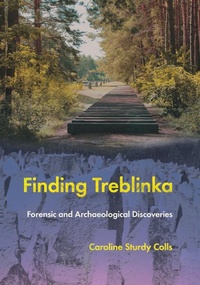
Finding Treblinka
Description

Finding Treblinka challenges the long-held belief that Treblinka, the second-deadliest extermination camp operated by Nazi Germany in occupied Poland, was completely destroyed. Even though Nazis demolished buildings, exhumed and burned victims' bodies, and planted trees to obscure the site, Caroline Sturdy Colls uncovers what still lies beneath the surface and what this material evidence reveals about the camp's operations, evolution, and afterlife.
Sturdy Colls combines archival insight through newly uncovered and unpublished documents, photographs, maps, and testimonies with the first noninvasive archaeological surveys and excavations ever conducted at Treblinka. Developed in accordance with Jewish burial law (Halacha), her methods allow for ethical access to Holocaust landscapes long considered off limits to archaeologists and offer powerful material counterpoint to the myth of Treblinka's disappearance.
Sturdy Colls not only demonstrates that traces of atrocity continue to shape how we remember and understand the Holocaust but also how archaeology can confront absence with presence, silence with proof. Finding Treblinka reveals how genocide inscribes itself into the land, and how, with the right tools, we can still read it.
More details
Other editions
Additional editions
Person
Caroline Sturdy Colls is Professor of Holocaust Archaeology and Genocide Investigation, and the Director of the Centre of Archaeology at the University of Huddersfield. She was awarded the European Archaeological Heritage Prize in 2016 and the Dan David Prize in 2025.
