

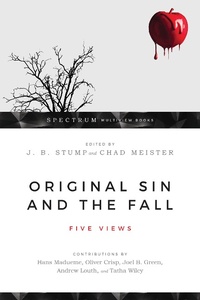
Original Sin and the Fall
Description

"What is this that you have done?"
Throughout the church's history, Christians have largely agreed that God's good creation of humanity was marred by humanity's sinful rebellion, resulting in our separation from God and requiring divine intervention in the saving work of Christ.
But Christians have disagreed over many particular questions surrounding humanity's fall, including the extent of original sin, the nature of the fall, the question of guilt, how to interpret the narratives from Genesis, and how these questions relate to our understanding of human origins and modern science.
This Spectrum Multiview book presents five views on these questions: Augustinian-Reformed, Moderate Reformed, Wesleyan, Eastern Orthodox, and a Reconceived view. Each contributor offers both an articulation of their own view and responses to the other views in question. The result is a robust reflection on one of the most central-and controversial-tenets of the faith.
Views and Contributors:
- An Augustinian-Reformed View (Hans Madueme, Covenant College)
- A Moderate Reformed View (Oliver Crisp, The University of St. Andrews)
- A Wesleyan View (Joel B. Green, Fuller Theological Seminary)
- An Eastern Orthodox View (Andrew Louth, Durham University)
- A Reconceived View (Tatha Wiley, University of St. Thomas)
Spectrum Multiview Books offer a range of viewpoints on contested topics within Christianity, giving contributors the opportunity to present their position and also respond to others in this dynamic publishing format.
More details
Other editions
Additional editions
Person
J. B. (Jim) Stump (PhD, Boston University) is vice president at BioLogos, where he oversees the development of new content and hosts the Language of God podcast. He is the author of Science and Christianity: An Introduction to the Issues, coauthor of Christian Thought: A Historical Introduction, and coeditor of How I Changed My Mind About Evolution, and The Blackwell Companion to Science and Christianity.
Chad Meister (PhD, Marquette University) is professor of philosophy and theology and chair of the department of religion and philosophy at Bethel University in Mishawaka, Indiana. His publications include God and the Problem of Evil: Five Views, Evil: A Guide for the Perplexed, Contemporary Philosophical Theology, The Oxford Handbook of Religious Diversity, and the six-volume work The History of Evil.
Content
Introduction, J. B. Stump and Chad Meister Part One: Perspectives on Original Sin and the Fall 1. An Augustinian-Reformed View, Hans Madueme 2. A Moderate Reformed View, Oliver D. Crisp 3. A Wesleyan View, Joel B. Green 4. An Eastern Orthodox View, Andrew Louth 5. A Reconceived View, Tatha Wiley Part Two: Responses 6. An Augustinian-Reformed Response, Hans Madueme 7. A Moderate Reformed Response, Oliver D. Crisp 8. A Wesleyan Response, Joel B. Green 9. A Eastern Orthodox Response, Andrew Louth 10. A Reconceived Response, Tatha Wiley List ofContributors General Index Scripture Index
