

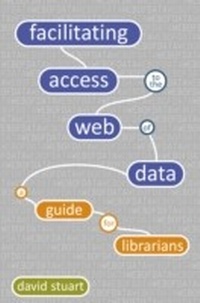
Facilitating Access to the Web of Data
Description

The web is changing from a web of documents to a web of data; from a web that can be read by humans, to one that can be read by machines. These are fascinating advances for anyone interested in the changing nature of the web and the way we access information. The technologies being forged in this new landscape will provide a host of opportunities for library and information professionals to shape the information landscape of the future.
This book is a wide-ranging introduction to the emerging web of data and the semantic web, exploring technologies including APIs, microformats and linked data. Its topical commentary and practical examples drawn from the international LIS community explore how information professionals can harness the power of this new phenomenon to inform strategy and become facilitators of access to data.
Key topics covered include
- open data: a semantic web - one that's meaningful to computers data silos
- the semantic web- the RDF vision embedded semantics
- the library and the web of data the future of the librarian and the web of data.
Readership: This is essential reading for library and information professionals and for LIS students and researchers. It will also be of value to information architects, web developers and all those interested in making sure that people have access to the information they need.
All prices
More details
Other editions
Additional editions
Person
Dr David Stuart is currently a researcher in the Centre for e-Research at King's College London, and an honorary research fellow in the Statistical Cybermetrics Research Group at the University of Wolverhampton, where he was previously Web 2.0 Research Fellow. He has a PhD in information science and regularly writes about library and information science topics for professional journals and magazines.
Content
1. Open data
- Introduction
- Open science
- Commercial sector
- Government data
- Library data
- Conclusion
2. A semantic web: one that's meaningful to computers
- Introduction
- Web 1.0
- Web 2.0
- Web 3.0 - a semantic web
- Conclusion
3. Data silos
- Introduction
- What is a data silo?
- Data documents
- Application programming interfaces (APIs)
- Programming librarians?
- The advantages and disadvantages of data silos
- Conclusion
4. The semantic web: the RDF vision
- Introduction
- Linked RDF
- Linked Data: old wine in new bottles?
- The semantic web stack
- Making use of Linked Data
- Conclusion
5. Embedded semantics
- Introduction
- Why embed semantic data?
- Microformats
- COinS
- Embedding RDF in attributes
- Microdata
- Selecting the right format
- Interacting with embedded semantics
- Conclusion
6. The library and the web of data
- Introduction
- Books are for use
- Every reader their book
- Every book its reader
- Save the time of the reader
- The library is a growing organism
- Conclusion
7. The future of the librarian and the web of data
- Introduction
- Embracing the web of data
- Ignoring the web of data
- Lessons from the newspaper industry
- Becoming a data librarian
- Conclusion
- Bibliography
