


Design and Analysis in Educational Research Using jamovi
ANOVA Designs
1st Edition
Published on 29. July 2021
302 pages
978-1-000-41412-7 (ISBN)
Description

Design and Analysis in Educational Research Using jamovi is an integrated approach to learning about research design alongside statistical analysis concepts. Strunk and Mwavita maintain a focus on applied educational research throughout the text, with practical tips and advice on how to do high-quality quantitative research.
Based on their successful SPSS version of the book, the authors focus on using jamovi in this version due to its accessibility as open source software, and ease of use. The book teaches research design (including epistemology, research ethics, forming research questions, quantitative design, sampling methodologies, and design assumptions) and introductory statistical concepts (including descriptive statistics, probability theory, sampling distributions), basic statistical tests (like z and t), and ANOVA designs, including more advanced designs like the factorial ANOVA and mixed ANOVA.
This textbook is tailor-made for first-level doctoral courses in research design and analysis. It will also be of interest to graduate students in education and educational research. The book includes Support Material with downloadable data sets, and new case study material from the authors for teaching on race, racism, and Black Lives Matter, available at www.routledge.com/9780367723088.
Based on their successful SPSS version of the book, the authors focus on using jamovi in this version due to its accessibility as open source software, and ease of use. The book teaches research design (including epistemology, research ethics, forming research questions, quantitative design, sampling methodologies, and design assumptions) and introductory statistical concepts (including descriptive statistics, probability theory, sampling distributions), basic statistical tests (like z and t), and ANOVA designs, including more advanced designs like the factorial ANOVA and mixed ANOVA.
This textbook is tailor-made for first-level doctoral courses in research design and analysis. It will also be of interest to graduate students in education and educational research. The book includes Support Material with downloadable data sets, and new case study material from the authors for teaching on race, racism, and Black Lives Matter, available at www.routledge.com/9780367723088.
Reviews / Votes
"This text seems to capture the elements often found in multiple, separate sources (e.g., epistemology, research design, analysis, use of statistical software, and considerations for social justice/equity) and combines them in one text. This is so helpful, useful, and needed!" -- Sara R. Gordon, Ph.D., Associate Professor, Center for Leadership and Learning, Arkansas Tech University, USA"Strunk and Mwavita introduce fundamental elements of the research process and illustrate statistical analyses in the context of research design. Strunk and Mwavita provide illustrative examples that are realistic and accessible to those seeking a strong foundation in good research practices." -- Forrest C. Lane, Ph.D., Associate Professor and Chair, Department of Educational Leadership, Sam Houston State University, USA
"Strunk and Mwavita provide a sound introductory text that is easily accessible to readers learning applied analysis for the first time." -- James Schreiber, Ph.D., Professor, School of Nursing, Duquesne University, USA "It is clear the authors have worked to write in a way that learners of all levels can understand and benefit from the content. Notations are commonly recognized, clear, and easy to follow. Figures and tables are appropriate and useful. I especially appreciate that the authors took the time not only to address important topics and steps for conducting NHST and various ANOVA designs but also to address social justice and equity issues in quantitative research as well as epistemologies and how they connect to research methods. These are important considerations and ones that are not included in many design/analysis textbooks.
This text seems to capture the elements often found in multiple, separate sources (e.g., epistemology, research design, analysis, use of statistical software, and considerations for social justice/equity) and combines them in one text.
This is so helpful, useful, and needed!" -- Sara R. Gordon, Ph.D., Associate Professor, Center for Leadership and Learning, Arkansas Tech University, USA
"The ability to analyze data has never been more important given the volume of information available today. A challenge is ensuring that individuals understand the connectedness between research design and statistical analysis. Strunk and Mwavita introduce fundamental elements of the research process and illustrate statistical analyses in the context of research design. This provides readers with tangible examples of how these elements are related and can affect the interpretation of results.
Many statistical analysis and research design textbooks provide depth but may not situate scenarios in an applied context. Strunk and Mwavita provide illustrative examples that are realistic and accessible to those seeking a strong foundation in good research practices." -- Forrest C. Lane, Ph.D., Associate Professor and Chair, Department of Educational Leadership, Sam Houston State University, USA
"Strunk and Mwavita provide a sound introductory text that is easily accessible to readers learning applied analysis for the first time.
The chapters flow easily through traditional topics of null hypothesis testing and p-values. The chapters include hand calculations that assist students in understanding where the variance is and case studies at the end to develop writing skills related to each analysis. In addition, software is integrated toward the end of the chapters after readers have seen and learned to interpret the techniques by hand. Finally, the length of the book is more manageable for readers as a first introduction to educational statistics." -- James Schreiber, Ph.D., Professor, School of Nursing, Duquesne University, USA
More details
Edition
1. Auflage
Language
English
Place of publication
London
United Kingdom
Publishing group
Taylor & Francis Ltd
Target group
College/higher education
Product notice
Reflowable
Illustrations
59 Tables, black and white; 36 Line drawings, black and white; 44 Halftones, black and white; 80 Illustrations, black and white
ISBN-13
978-1-000-41412-7 (9781000414127)
Copyright in bibliographic data and cover images is held by Nielsen Book Services Limited or by the publishers or by their respective licensors: all rights reserved.
Schweitzer Classification
Other editions
Additional editions
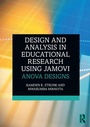
Kamden K. Strunk | Mwarumba Mwavita
Design and Analysis in Educational Research Using jamovi
ANOVA Designs
Book
07/2021
1st Edition
Routledge
€73.20
Shipment within 15-20 days
Kamden K. Strunk | Mwarumba Mwavita
Design and Analysis in Educational Research Using jamovi
ANOVA Designs
Book
07/2021
1st Edition
Routledge
€179.51
Shipment within 15-20 days
Persons
Kamden K. Strunk is an Associate Professor of Educational Research at Auburn University, where he primarily teaches quantitative methods. His research focuses on intersections of racial, sexual, and gender identities, especially in higher education. He is also a faculty affiliate of the Critical Studies Working Group at Auburn University.
Mwarumba Mwavita is an Associate Professor of Research, Evaluation, Measurement, and Statistics at Oklahoma State University where he teaches quantitative methods. He is also the founding Director of Center for Educational Research and Evaluation (CERE) at Oklahoma State University.
Mwarumba Mwavita is an Associate Professor of Research, Evaluation, Measurement, and Statistics at Oklahoma State University where he teaches quantitative methods. He is also the founding Director of Center for Educational Research and Evaluation (CERE) at Oklahoma State University.
Content
PART 1. BASIC ISSUES 1. Basic Issues in Quantitative Educational Research 2. Sampling & Basic Issues in Research Design 3. Basic Educational Statistics; PART 2. NULL HYPOTHESIS SIGNIFICANCE TESTING 4. Introducing the Null-Hypothesis Significance Test 5. Comparing a Single Sample to the Population using the one-sample z-test and one-sample t-test; PART 3. BETWEEN-SUBJECTS DESIGNS 6. Comparing Two Samples Means: The Independent Samples t-test 7. Independent Samples t-test Case Studies 8. Comparing More Than Two Means Using the One-Way ANOVA 9. One-way ANOVA Case Studies 10. Comparing Means Across Two Independent Variables: The Factorial ANOVA 11. Factorial ANOVA Case Studies; PART 4. WITHIN-SUBJECTS DESIGNS 12. Comparing Two Within-Subjects Scores using the Paired Samples t-test 13. Paired Samples t-test Case Studies 14. Comparing More than Two Points from Within the Same Sample: The Within-Subjects ANOVA 15. Within-Subjects ANOVA Case Studies 16. Mixed Between- and Within-Subjects Designs using the Mixed ANOVA 17. Mixed ANOVA Case Studies; PART 5. CONSIDERING EQUITY IN QUANTITATIVE RESEARCH 18. Quantitative Methods for Social Justice and Equity
