

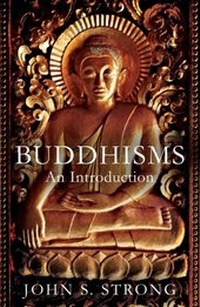
Buddhisms
An Introduction
1st Edition
Published on 2. July 2015
480 pages
978-1-78074-506-0 (ISBN)
Description

A comprehensive survey of Buddhism's rich and diverse religious traditions
Buddhism or Buddhisms? By the time they move on to Buddhism in Japan, many students who have studied its origins in India ask whether this is in fact the same religion, so different can they appear. In Buddhisms: An Introduction, Professor John S. Strong provides an overview of the Buddhist tradition in all its different forms around the world. Beginning at the modern day temples of Lumbini, where the Buddha was born, Strong takes us through the life of the Buddha and a study of Buddhist Doctrine, revealing how Buddhism has changed just as it has stayed the same. Finally, Strong examines the nature of Buddhist community life and its development today in the very different environments of Thailand, Japan, and Tibet.
Enriched by the author's own insights gathered over forty years, Buddhisms never loses sight of the personal experience amidst the wide-scope of its subject. Clear in its explanations, replete with tables and suggestions for further reading, this is an essential new work that makes original contributions to the study of this 2,500 year-old religion.
'Strong guides the reader through complex topics with precision, clarity, and insight... readers eager to dive into a rigorous, well-organized investigation of Buddhism's intricate 2500-year-old history will find much to reward them.' Publishers Weekly
'A Brueghalian masterpiece, which conveys the age-old religious themes in a setting of lived reality touched with hints of humour, offering intriguing perspectives on all of Buddhism's bewildering diversity.' Kate Crosby, Professor of Buddhist Studies, King's College London
Buddhism or Buddhisms? By the time they move on to Buddhism in Japan, many students who have studied its origins in India ask whether this is in fact the same religion, so different can they appear. In Buddhisms: An Introduction, Professor John S. Strong provides an overview of the Buddhist tradition in all its different forms around the world. Beginning at the modern day temples of Lumbini, where the Buddha was born, Strong takes us through the life of the Buddha and a study of Buddhist Doctrine, revealing how Buddhism has changed just as it has stayed the same. Finally, Strong examines the nature of Buddhist community life and its development today in the very different environments of Thailand, Japan, and Tibet.
Enriched by the author's own insights gathered over forty years, Buddhisms never loses sight of the personal experience amidst the wide-scope of its subject. Clear in its explanations, replete with tables and suggestions for further reading, this is an essential new work that makes original contributions to the study of this 2,500 year-old religion.
'Strong guides the reader through complex topics with precision, clarity, and insight... readers eager to dive into a rigorous, well-organized investigation of Buddhism's intricate 2500-year-old history will find much to reward them.' Publishers Weekly
'A Brueghalian masterpiece, which conveys the age-old religious themes in a setting of lived reality touched with hints of humour, offering intriguing perspectives on all of Buddhism's bewildering diversity.' Kate Crosby, Professor of Buddhist Studies, King's College London
Reviews / Votes
'An original contribution and approach to this 2,500 year-old religion, with its precise explanations fortified by tables and information on further reading'. * East and West Series * 'This substantial study is a near-comprehensive digest of the history of Buddhism in its multiple forms... Exemplary for its organization and writing, this work is likely to become the standard single-volume text on Buddhism for the student, whether within the walls of the academy or without.' * Library Journal * 'Deftly selecting material from a vast tradition, Strong guides the reader through complex topics with precision, clarity, and insight... readers eager to dive into a rigorous, well-organized investigation of Buddhism's intricate 2500-year-old history will find much to reward them.' * Publishers Weekly * 'Buddhisms: An Introduction is a Brueghalian masterpiece, which conveys the age-old religious themes in a setting of lived reality touched with hints of humour, offering intriguing perspectives on all of Buddhism's bewildering diversity. The effect is somewhat breathtaking - so much covered so apparently effortlessly.' -- Kate Crosby, Professor of Buddhist Studies, King's College London 'Written with great clarity and sensitivity... this work is a welcome addition to the genre of books that survey the development of Buddhism across Asia.' -- Stephen C. Berkwitz, Missouri State UniversityMore details
Language
English
Place of publication
Oxford
United Kingdom
File size
31,63 MB
ISBN-13
978-1-78074-506-0 (9781780745060)
Copyright in bibliographic data and cover images is held by Nielsen Book Services Limited or by the publishers or by their respective licensors: all rights reserved.
Schweitzer Classification
Other editions
Additional editions
Book
07/2015
Oneworld Publications
€46.60
Shipment within 3-4 weeks
Person
John S. Strong is the Charles A. Dana Professor of Religion, Bates College, in Maine, USA. Specializing in history of religions, Asian religions, and Buddhist Studies, with a focus on Buddhist legendary and cultic traditions in India and South Asia. He is the author of numerous books and articles including The Buddha: A Beginner's Guide (Oneworld).
Content
Preface
Schemes and Themes
Technicalities
Note on abbreviations
Chapter 1 Introduction: Lumbini, a Buddhist World Exposition
1.1 Theravada and Mahayana
1.2 Lumbini's Eastern Monastic Zone: South and Southeast Asian Traditions
1.2.1 The Maha Bodhi Society
1.2.2 The Sri Lanka Monastery
1.2.3 The Gautami Center for Nuns
1.2.4 Myanmar (Burma)
1.2.5 Meditation Centers
1.3 Lumbini's Western Monastic Zone: East Asian Traditions
1.3.1 China
1.3.2 Korea
1.3.3 Japan
1.3.4 Vietnam
1.4 Lumbini's Western Monastic Zone: Tibetan Vajrayana Traditions
1.4.1 The Great Lotus Stupa
1.4.2 The Lumbini Udyana Mahachaitya
Part I: Foundations of the Triple Gem: Buddha/s, Dharma/s, and Sa?gha/s
Chapter 2 Sakyamuni, Lives and Legends
2.1 The Historical Buddha
2.2 The Buddha's World
2.3 The Buddha of Story
2.4 Past Buddhas and the Biographical Blueprint
2.5 The Start of Sakyamuni's Career
2.6 Previous Lives (Jatakas)
2.6.1 The Donkey in the Lion's Skin
2.6.2 Vessantara Jataka
2.6.3 The Tigress Jataka
2.7 A Lifestory of Sakyamuni
2.7.1 Birth and Childhood
2.7.2 Life in the Palace
2.7.3 The Beginnings of Discontent
2.7.4 The Great Departure
2.7.5 Paths Not Taken
2.7.6 Awakening
2.7.7 After Enlightenment
2.7.8 The First Sermon
2.7.9 Various Conversions and Miracles
2.7.10 Death and Parinirva?a
Chapter 3 Overcoming the Buddha's Absence
3.1 Seeing the Buddha in the Dharma
3.1.1 Excursus on the Buddhist Canon/s
3.2 Places of Pilgrimage
3.3 Relics
3.4 Buddha Images
3.5 The Masters of the Dharma
3.6 The Arhat Dharma-Protectors
3.7 Meeting Maitreya
Chapter 4 Some Permutations of the Middle Way
4.1 The Middle Way
4.2 Karma and Sa?sara
4.2.1 Why Do Good Deeds?
4.2.2 Contexts of Karma I: Neither Free Will nor Determinism
4.2.3 Contexts of Karma II: Both Jain and Upani?adic Views
4.3 The Doctrine of Non-Self (Anatman)
4.3.1 Breaking Down the False Sense of Self: the Five Aggregates and Impermanence
4.3.2 The Elements (Dharmas)
4.3.3 Countering the Breakdown of Self: Personal Continuity
4.3.4 Explications of Continuity: Pseudo-Selves and Ersatz Atmans
4.4 Summary
Chapter 5 The Four Truths
5.1 The First Truth: Stress
5.2 The Second Truth: the Continual Arising of Stress and Interdependent Origination
5.2.1 The Double Bind of Sa?sara
5.3 The Third Truth: the Cessation of Stress - Nirva?a
5.4 The Fourth Truth: the Path to the Cessation of Stress
5.4.1 Moral Discipline
5.4.2 Meditation
5.4.3 Wisdom
5.5 Other Systematizations of the Path
5.5.1 The Seven Factors Conducive to Enlightenment
5.5.2 The Graduated Training
5.5.3 The Four Divine Abidings
5.5.4 The Four Fruits of the Path
5.6 Summary
Chapter 6 The Establishment and Character of the Early Buddhist Community
6.1 Monastic-Lay Interactions
6.1.1 Dana (Giving) and Other Forms of Making Merit
6.1.2 Lay Ethics
6.1.3 Magical Protection
6.1.4 Laypersons and the Monastic Rules
6.1.5 Royal Supporters
6.1.6 King Asoka
6.2 The Monastics: Wandering and Settling
6.2.1 Monastic Lifestyles
6.2.2 Monasteries
6.3 Mahaprajapati and the Establishment of the Order of Nuns
6.4 Common Moral Commitments
6.5 Initiation Rituals: Wandering Forth and Ordination
6.6 Monastic Rules
6.6.1 The Elaboration of the Disciplinary Code
6.6.2 Enforcement of the Rules: Pratimok?a Recitation and Pravara?a
6.7 Some Exemplary Disciples of the Buddha
6.7.1 Sariputra and Maudgalyayana
6.7.2 Pa?acara
6.7.3 The Laypersons Nakulapit? and Nakulamat?
6.7.4 Visakha, Preeminent Laywoman
6.8 Summary
Chapter 7 Visions and Divisions of the Sa?gha
7.1 Council Stories
7.1.1 The Council at Rajag?ha
7.1.2 Vinaya Disputes: the Council of Vaisali
7.1.3 The Councils of Pa?aliputra
7.1.4 Other Council Traditions
7.2 The Flowering of Mainstream Factionalism
7.3 Other Divisional Issues
7.3.1 Practice vs. Study
7.3.2 Meditators and Merit Makers
7.3.3 Forest Monks and Town Monks
7.3.4 The Question of Asceticism
7.3.5 The Question of Bon-Vivant Monks
7.3.6 Sect vs. Sect
7.4 The Origins of the Mahayana
7.5 Proliferation of Mahayana Schools
7.5.1 Mahayana Schools in India
7.5.2 Mahayana Schools in China
7.5.3 Mahayana Schools in Japan
7.5.4 Mahayana Schools in Tibet
7.6 Summary
Part II: Further Elaborations of the Triple Gem
Chapter 8 Mahayana and Vajrayana Ways of Meeting the Buddha/s
8.1 Changes in the View of the Buddha: the Lotus Sutra and Sakyamuni's Lifespan
8.2 Three Bodies of the Buddha/s
8.3 Meeting the Buddha/s in Their Pure Lands
8.3.1 Ak?obhya
8.3.2 Bhai?ajyaguru
8.4 Amitabha
8.4.1 Meeting Amitabha through Visualization
8.4.2 Rebirth in the Pure Land
8.5 Meeting the Buddha in the Great Bodhisattvas
8.5.1 Avalokitesvara
8.5.2 Other Great Bodhisattvas
8.6 Meeting the Buddha/s in the Vajrayana
8.6.1 Ma??alas and the Five Tathagatas
8.6.2 Ritual Consecration (Abhi?eka)
8.6.3 Merging with the Buddha
8.6.4 Visions: Meeting the Buddha/s in Bardo
8.6.5 Buddha Embodiments in This World: Gurus and Tuelkus
8.7 Summary
Chapter 9 Mahayana Doctrinal Developments
9.1 Emptiness: the Selflessness of Dharmas
9.2 Nagarjuna and the Madhyamaka
9.3 The Expansion of Provisional Truth: Expedient Means (Upaya)
9.4 Tiantai Doctrines
9.5 The Ongoing Dialectic: the Yogacara School
9.5.1 Asanga and Vasubandhu and the Development of the School
9.5.2 Yogacara Doctrines
9.6 Avata?saka Doctrines
9.6.1 Applications of Interpenetration
9.7 The Buddha Womb/Embryo (Tathagatagarbha) Teachings
9.7.1 Resurgence of the True Self
9.8 Buddha-Nature Controversies
9.8.1 Limitations to the Buddha-Nature: the Icchantika Debate
9.8.2 The End of the Dharma
9.8.3 Expansions of the Buddha-Nature Doctrine
9.9 Summary
Chapter 10 The Bodhisattva Path, Tantra, and Zen
10.1 The Bodhisattva Path
10.2 Sudden and Gradual
10.2.1 Disagreements over the Nature of the Path: the Debate at Samye
10.2.2 Disagreements over the Nature of Enlightenment
10.3 Graduated Paths
10.3.1 Compassion and Bodhicitta
10.3.2 The Stages of the Path, the Perfections, the Five Paths
10.3.3 Routinization and Ritualization
10.4 Path Shortcuts
10.5 Tantra
10.5.1 Uniting the Poles
10.5.2 Tantric Physiology
10.5.3 Mahamudra and Dzokchen (Rdzogs chen)
10.6 Direct Experiences: Chan/Zen
10.6.1 Koans
10.6.2 Critical Phrases (Huatou)
10.7 Summary
Chapter 11 Sa?gha Situations: Places, Persons, and Practices in Thai Buddhism/s
11.1 Buddhism in Thailand
11.2 Thai Monastic Life: Temporary Ordination
11.2.1 Life as a Novice
11.2.2 Experiences as a Monk
11.3 The Lives of Two Charismatic Thai Monks
11.3.1 Acharn Mun
11.3.2 Khruba Siwichai
11.4 The End of the Rains-Retreat in a Northern Thai Village
11.5 A Thai Temple in Wimbledon, England
Chapter 12 Sa?gha Situations: Places, Persons, and Practices in Japanese Buddhism/s
12.1 The Hexagonal Hall (Rokkakudo)
12.1.1 Prince Shotoku
12.1.2 Shinran
12.1.3 Kannon, Jizo, and Fudo
12.2 The Ritual Year at Shinnyodo
12.2.1 New Year's
12.2.2 ?akini and the Recitation of the Great Perfection of Wisdom Sutra
12.2.3 Main Hall Rituals
12.2.4 Goma
12.2.5 The Killing Stone
12.3 The Ryoanji Rock Garden
12.4 The Buddha's Birthday at the Morgan Bay Zendo
12.5 The Japan Temple in Lumbini
12.6 Conclusion
Chapter 13 Sa?gha Situations: Places, Persons, and Practices in Tibetan Buddhism/s
13.1 Lhasa Jokhang
13.1.1 Pinning Down the Demoness
13.1.2 Flood Control
13.1.3 Grand Prostrations
10.1.4 The Great Prayer Festival
13.2 The Potala and the Dalai Lamas
13.2.1 Finding a New Dalai Lama
13.3 Scholars and Mad Saints
13.3.1 Drepung Monastery and Monastic Studies
13.3.2 Mad Monks: the Case of Tangtong Gyalpo
13.4 Samding: Female Incarnations and a Contemporary Buddhist
13.5 A Tibetan Dharma Center in Vermont, U.S.A.
13.6 Conclusion
Appendices
Appendix A: A Short Chronology of Buddhism in India
Appendix B: A Short Chronology of Buddhism in Sri Lanka
Appendix C: A Short Chronology of Buddhism in Myanmar (Burma)
Appendix D: A Short Chronology of Buddhism in Cambodia
Appendix E: A Short Chronology of Buddhism in Thailand
Appendix F: A Short Chronology of Buddhism in China
Appendix G: A Short Chronology of Buddhism in Japan
Appendix H: A Short Chronology of Buddhism in Vietnam
Appendix I: A Short Chronology of Buddhism in Tibet
Bibliography of Works Cited
Index
Schemes and Themes
Technicalities
Note on abbreviations
Chapter 1 Introduction: Lumbini, a Buddhist World Exposition
1.1 Theravada and Mahayana
1.2 Lumbini's Eastern Monastic Zone: South and Southeast Asian Traditions
1.2.1 The Maha Bodhi Society
1.2.2 The Sri Lanka Monastery
1.2.3 The Gautami Center for Nuns
1.2.4 Myanmar (Burma)
1.2.5 Meditation Centers
1.3 Lumbini's Western Monastic Zone: East Asian Traditions
1.3.1 China
1.3.2 Korea
1.3.3 Japan
1.3.4 Vietnam
1.4 Lumbini's Western Monastic Zone: Tibetan Vajrayana Traditions
1.4.1 The Great Lotus Stupa
1.4.2 The Lumbini Udyana Mahachaitya
Part I: Foundations of the Triple Gem: Buddha/s, Dharma/s, and Sa?gha/s
Chapter 2 Sakyamuni, Lives and Legends
2.1 The Historical Buddha
2.2 The Buddha's World
2.3 The Buddha of Story
2.4 Past Buddhas and the Biographical Blueprint
2.5 The Start of Sakyamuni's Career
2.6 Previous Lives (Jatakas)
2.6.1 The Donkey in the Lion's Skin
2.6.2 Vessantara Jataka
2.6.3 The Tigress Jataka
2.7 A Lifestory of Sakyamuni
2.7.1 Birth and Childhood
2.7.2 Life in the Palace
2.7.3 The Beginnings of Discontent
2.7.4 The Great Departure
2.7.5 Paths Not Taken
2.7.6 Awakening
2.7.7 After Enlightenment
2.7.8 The First Sermon
2.7.9 Various Conversions and Miracles
2.7.10 Death and Parinirva?a
Chapter 3 Overcoming the Buddha's Absence
3.1 Seeing the Buddha in the Dharma
3.1.1 Excursus on the Buddhist Canon/s
3.2 Places of Pilgrimage
3.3 Relics
3.4 Buddha Images
3.5 The Masters of the Dharma
3.6 The Arhat Dharma-Protectors
3.7 Meeting Maitreya
Chapter 4 Some Permutations of the Middle Way
4.1 The Middle Way
4.2 Karma and Sa?sara
4.2.1 Why Do Good Deeds?
4.2.2 Contexts of Karma I: Neither Free Will nor Determinism
4.2.3 Contexts of Karma II: Both Jain and Upani?adic Views
4.3 The Doctrine of Non-Self (Anatman)
4.3.1 Breaking Down the False Sense of Self: the Five Aggregates and Impermanence
4.3.2 The Elements (Dharmas)
4.3.3 Countering the Breakdown of Self: Personal Continuity
4.3.4 Explications of Continuity: Pseudo-Selves and Ersatz Atmans
4.4 Summary
Chapter 5 The Four Truths
5.1 The First Truth: Stress
5.2 The Second Truth: the Continual Arising of Stress and Interdependent Origination
5.2.1 The Double Bind of Sa?sara
5.3 The Third Truth: the Cessation of Stress - Nirva?a
5.4 The Fourth Truth: the Path to the Cessation of Stress
5.4.1 Moral Discipline
5.4.2 Meditation
5.4.3 Wisdom
5.5 Other Systematizations of the Path
5.5.1 The Seven Factors Conducive to Enlightenment
5.5.2 The Graduated Training
5.5.3 The Four Divine Abidings
5.5.4 The Four Fruits of the Path
5.6 Summary
Chapter 6 The Establishment and Character of the Early Buddhist Community
6.1 Monastic-Lay Interactions
6.1.1 Dana (Giving) and Other Forms of Making Merit
6.1.2 Lay Ethics
6.1.3 Magical Protection
6.1.4 Laypersons and the Monastic Rules
6.1.5 Royal Supporters
6.1.6 King Asoka
6.2 The Monastics: Wandering and Settling
6.2.1 Monastic Lifestyles
6.2.2 Monasteries
6.3 Mahaprajapati and the Establishment of the Order of Nuns
6.4 Common Moral Commitments
6.5 Initiation Rituals: Wandering Forth and Ordination
6.6 Monastic Rules
6.6.1 The Elaboration of the Disciplinary Code
6.6.2 Enforcement of the Rules: Pratimok?a Recitation and Pravara?a
6.7 Some Exemplary Disciples of the Buddha
6.7.1 Sariputra and Maudgalyayana
6.7.2 Pa?acara
6.7.3 The Laypersons Nakulapit? and Nakulamat?
6.7.4 Visakha, Preeminent Laywoman
6.8 Summary
Chapter 7 Visions and Divisions of the Sa?gha
7.1 Council Stories
7.1.1 The Council at Rajag?ha
7.1.2 Vinaya Disputes: the Council of Vaisali
7.1.3 The Councils of Pa?aliputra
7.1.4 Other Council Traditions
7.2 The Flowering of Mainstream Factionalism
7.3 Other Divisional Issues
7.3.1 Practice vs. Study
7.3.2 Meditators and Merit Makers
7.3.3 Forest Monks and Town Monks
7.3.4 The Question of Asceticism
7.3.5 The Question of Bon-Vivant Monks
7.3.6 Sect vs. Sect
7.4 The Origins of the Mahayana
7.5 Proliferation of Mahayana Schools
7.5.1 Mahayana Schools in India
7.5.2 Mahayana Schools in China
7.5.3 Mahayana Schools in Japan
7.5.4 Mahayana Schools in Tibet
7.6 Summary
Part II: Further Elaborations of the Triple Gem
Chapter 8 Mahayana and Vajrayana Ways of Meeting the Buddha/s
8.1 Changes in the View of the Buddha: the Lotus Sutra and Sakyamuni's Lifespan
8.2 Three Bodies of the Buddha/s
8.3 Meeting the Buddha/s in Their Pure Lands
8.3.1 Ak?obhya
8.3.2 Bhai?ajyaguru
8.4 Amitabha
8.4.1 Meeting Amitabha through Visualization
8.4.2 Rebirth in the Pure Land
8.5 Meeting the Buddha in the Great Bodhisattvas
8.5.1 Avalokitesvara
8.5.2 Other Great Bodhisattvas
8.6 Meeting the Buddha/s in the Vajrayana
8.6.1 Ma??alas and the Five Tathagatas
8.6.2 Ritual Consecration (Abhi?eka)
8.6.3 Merging with the Buddha
8.6.4 Visions: Meeting the Buddha/s in Bardo
8.6.5 Buddha Embodiments in This World: Gurus and Tuelkus
8.7 Summary
Chapter 9 Mahayana Doctrinal Developments
9.1 Emptiness: the Selflessness of Dharmas
9.2 Nagarjuna and the Madhyamaka
9.3 The Expansion of Provisional Truth: Expedient Means (Upaya)
9.4 Tiantai Doctrines
9.5 The Ongoing Dialectic: the Yogacara School
9.5.1 Asanga and Vasubandhu and the Development of the School
9.5.2 Yogacara Doctrines
9.6 Avata?saka Doctrines
9.6.1 Applications of Interpenetration
9.7 The Buddha Womb/Embryo (Tathagatagarbha) Teachings
9.7.1 Resurgence of the True Self
9.8 Buddha-Nature Controversies
9.8.1 Limitations to the Buddha-Nature: the Icchantika Debate
9.8.2 The End of the Dharma
9.8.3 Expansions of the Buddha-Nature Doctrine
9.9 Summary
Chapter 10 The Bodhisattva Path, Tantra, and Zen
10.1 The Bodhisattva Path
10.2 Sudden and Gradual
10.2.1 Disagreements over the Nature of the Path: the Debate at Samye
10.2.2 Disagreements over the Nature of Enlightenment
10.3 Graduated Paths
10.3.1 Compassion and Bodhicitta
10.3.2 The Stages of the Path, the Perfections, the Five Paths
10.3.3 Routinization and Ritualization
10.4 Path Shortcuts
10.5 Tantra
10.5.1 Uniting the Poles
10.5.2 Tantric Physiology
10.5.3 Mahamudra and Dzokchen (Rdzogs chen)
10.6 Direct Experiences: Chan/Zen
10.6.1 Koans
10.6.2 Critical Phrases (Huatou)
10.7 Summary
Chapter 11 Sa?gha Situations: Places, Persons, and Practices in Thai Buddhism/s
11.1 Buddhism in Thailand
11.2 Thai Monastic Life: Temporary Ordination
11.2.1 Life as a Novice
11.2.2 Experiences as a Monk
11.3 The Lives of Two Charismatic Thai Monks
11.3.1 Acharn Mun
11.3.2 Khruba Siwichai
11.4 The End of the Rains-Retreat in a Northern Thai Village
11.5 A Thai Temple in Wimbledon, England
Chapter 12 Sa?gha Situations: Places, Persons, and Practices in Japanese Buddhism/s
12.1 The Hexagonal Hall (Rokkakudo)
12.1.1 Prince Shotoku
12.1.2 Shinran
12.1.3 Kannon, Jizo, and Fudo
12.2 The Ritual Year at Shinnyodo
12.2.1 New Year's
12.2.2 ?akini and the Recitation of the Great Perfection of Wisdom Sutra
12.2.3 Main Hall Rituals
12.2.4 Goma
12.2.5 The Killing Stone
12.3 The Ryoanji Rock Garden
12.4 The Buddha's Birthday at the Morgan Bay Zendo
12.5 The Japan Temple in Lumbini
12.6 Conclusion
Chapter 13 Sa?gha Situations: Places, Persons, and Practices in Tibetan Buddhism/s
13.1 Lhasa Jokhang
13.1.1 Pinning Down the Demoness
13.1.2 Flood Control
13.1.3 Grand Prostrations
10.1.4 The Great Prayer Festival
13.2 The Potala and the Dalai Lamas
13.2.1 Finding a New Dalai Lama
13.3 Scholars and Mad Saints
13.3.1 Drepung Monastery and Monastic Studies
13.3.2 Mad Monks: the Case of Tangtong Gyalpo
13.4 Samding: Female Incarnations and a Contemporary Buddhist
13.5 A Tibetan Dharma Center in Vermont, U.S.A.
13.6 Conclusion
Appendices
Appendix A: A Short Chronology of Buddhism in India
Appendix B: A Short Chronology of Buddhism in Sri Lanka
Appendix C: A Short Chronology of Buddhism in Myanmar (Burma)
Appendix D: A Short Chronology of Buddhism in Cambodia
Appendix E: A Short Chronology of Buddhism in Thailand
Appendix F: A Short Chronology of Buddhism in China
Appendix G: A Short Chronology of Buddhism in Japan
Appendix H: A Short Chronology of Buddhism in Vietnam
Appendix I: A Short Chronology of Buddhism in Tibet
Bibliography of Works Cited
Index
