

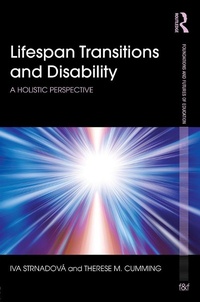
Lifespan Transitions and Disability
A holistic perspective
Published on 7. September 2015
182 pages
978-1-317-81263-0 (ISBN)
Description

This book brings a refreshing perspective to preparing students with disabilities and their families for all aspects of independent life. Many of the transitions experienced by younger children set the stage for future changes, yet do not receive the attention they deserve in the literature. This publication offers a strengths-based approach that includes philosophical perspectives and evidence-based practices to assist this vulnerable population with lifespan changes and challenges.
Each chapter addresses transitional needs and their assessment, and relevant interventions from the perspectives of an application to schools, families and communities. Multicultural perspectives are integral to all these chapters. The book covers transition from:
- home to early childhood education
- early childhood education to primary school
- primary school to secondary school
- primary school to special settings
- juvenile justice settings back into the community
- school to work
- school to further education or training
- post-school settings to retirement.
Lifespan Transitions and Disability: A holistic perspective is a necessary companion for postgraduate education students and researchers who have an interest in exploring the nature and context of special and inclusive education today.
Each chapter addresses transitional needs and their assessment, and relevant interventions from the perspectives of an application to schools, families and communities. Multicultural perspectives are integral to all these chapters. The book covers transition from:
- home to early childhood education
- early childhood education to primary school
- primary school to secondary school
- primary school to special settings
- juvenile justice settings back into the community
- school to work
- school to further education or training
- post-school settings to retirement.
Lifespan Transitions and Disability: A holistic perspective is a necessary companion for postgraduate education students and researchers who have an interest in exploring the nature and context of special and inclusive education today.
More details
Series
Language
English
Place of publication
London
United Kingdom
Publishing group
Taylor & Francis Ltd
Target group
College/higher education
Professional and scholarly
Illustrations
6 s/w Tabellen, 6 s/w Zeichnungen, 6 s/w Abbildungen
6 Tables, black and white; 6 Line drawings, black and white; 6 Illustrations, black and white
File size
1,00 MB
ISBN-13
978-1-317-81263-0 (9781317812630)
Copyright in bibliographic data and cover images is held by Nielsen Book Services Limited or by the publishers or by their respective licensors: all rights reserved.
Schweitzer Classification
Other editions
Additional editions
Book
09/2015
1st Edition
Routledge
€241.40
Shipment within 15-20 days
Book
09/2015
1st Edition
Routledge
€82.10
Shipment within 15-20 days
Persons
Iva Strnadova is Associate Professor at the School of Education, University of New South Wales, Australia. She also holds an honorary position in the Faculty of Education and Social Work at the University of Sydney, Australia.
Therese M. Cumming is Senior Lecturer at the School of Education, University of New South Wales, Australia.
Therese M. Cumming is Senior Lecturer at the School of Education, University of New South Wales, Australia.
Content
1 Introduction
2 Transitions - Historical Perspectives and Current Practices
3 Transitions in the Early Childhood Years
4 Transitions to Primary School
5 Transition from Primary School to Secondary School
6 Transitions to and from Special Settings
7 Transitions from Juvenile Justice Settings Back into the Community
8 Transitions from School to Work
9 Transitions from School to Further Education or Training
10 Transition to Retirement
11 Wraparound Services to Support Lifespan Transitions
12 Conclusion
2 Transitions - Historical Perspectives and Current Practices
3 Transitions in the Early Childhood Years
4 Transitions to Primary School
5 Transition from Primary School to Secondary School
6 Transitions to and from Special Settings
7 Transitions from Juvenile Justice Settings Back into the Community
8 Transitions from School to Work
9 Transitions from School to Further Education or Training
10 Transition to Retirement
11 Wraparound Services to Support Lifespan Transitions
12 Conclusion
